Joint pain and stiffness can make even simple daily movements uncomfortable. Whether caused by injury, surgery, or long-term joint conditions, recovery often becomes challenging when land-based exercises feel painful or unsafe. This is where water-based rehabilitation plays a valuable role. Understanding the aquatherapy benefits helps patients and caregivers make informed decisions about joint recovery options.
This article explains how aquatherapy works, why it supports healing, and which types of joint conditions benefit most from water-based therapy.
What Is Aquatherapy?
Aquatherapy is a rehabilitation approach where exercises are performed in a controlled water environment. Water supports body weight, reduces joint stress, and allows smoother movement compared to exercises done on land. The natural resistance of water also helps improve muscle strength without placing excess strain on joints.
Aquatherapy is commonly used during early recovery stages or when pain limits safe movement on solid surfaces.
Why Water-Based Therapy Helps Joint Recovery
Reduced Joint Load
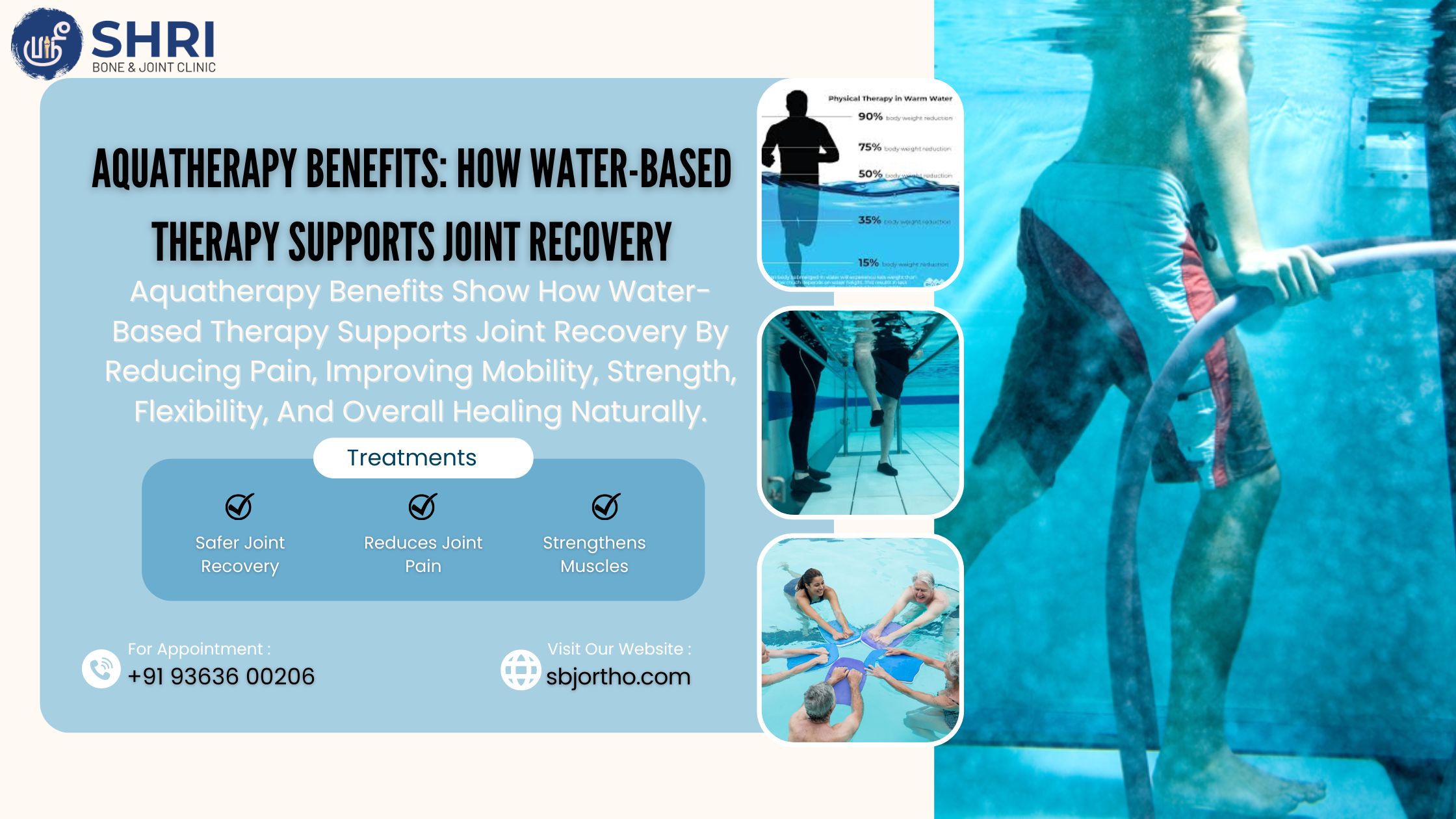
One of the key aquatherapy benefits is buoyancy. Water reduces the effective body weight acting on joints, which lowers pressure on knees, hips, shoulders, and the spine. This allows patients to move joints through a wider range without discomfort.
Controlled Resistance
Water provides gentle, natural resistance in all directions. This helps strengthen muscles around the joints while avoiding sudden or jerky movements that can worsen pain.
Improved Muscle Relaxation
Warm water promotes muscle relaxation and improves blood circulation. Relaxed muscles allow joints to move more freely, reducing stiffness and guarding patterns often seen after injury or surgery.
How Aquatherapy Improves Mobility and Flexibility
Joint stiffness often develops when movement is avoided due to pain. Aquatherapy allows gradual reintroduction of movement in a safe environment. As joints move more freely in water, flexibility improves without the fear of falls or excessive strain.
Patients often find it easier to perform bending, lifting, or rotational movements in water than on land during early recovery phases.
Aquatherapy Benefits for Pain Management
Pain reduction is one of the most noticeable aquatherapy benefits. Water supports the body and cushions movement, reducing stress on sensitive joint surfaces. Many patients experience less pain during and after sessions, which encourages consistency in rehabilitation.
Reduced pain also helps improve confidence in movement, an important factor for long-term recovery.
Conditions That Benefit From Aquatherapy
Aquatherapy is commonly used for a wide range of joint-related conditions, including:
- Knee and hip arthritis
- Shoulder stiffness and limited mobility
- Post-surgical joint recovery
- Ligament and soft tissue injuries
- Spine-related discomfort
- Sports injuries
- Age-related joint degeneration
Patients who struggle with weight-bearing exercises often benefit the most.
Aquatherapy Compared to Land-Based Therapy
While land-based physiotherapy remains important, aquatherapy offers unique advantages during specific recovery stages. Water-based therapy is especially helpful when pain, swelling, or instability makes traditional exercises difficult. As strength and control improve, patients are often transitioned gradually to land-based rehabilitation.
This combined approach supports safer and more effective recovery.
Is Aquatherapy Suitable for Everyone?
Aquatherapy is generally safe for most patients, but suitability depends on individual health conditions. Certain skin conditions, infections, or uncontrolled medical issues may require alternative approaches. A proper clinical evaluation ensures that water-based therapy is appropriate for the patient’s needs.
Accessing Aquatherapy Programs
Structured water-based rehabilitation programs, such as Aquatherapy in Chennai, are designed to support joint recovery using controlled exercises and professional supervision. These programs focus on safety, gradual progression, and patient comfort throughout the rehabilitation process.
Conclusion
Aquatherapy offers clear benefits for joint recovery by reducing pain, improving mobility, and supporting safe movement. By combining buoyancy, resistance, and muscle relaxation, water-based therapy allows patients to regain confidence and function without excessive joint stress.
For individuals struggling with pain or limited movement, aquatherapy can play an important role in a balanced and effective rehabilitation plan.