

What is Aquatherapy for Sports Injury?
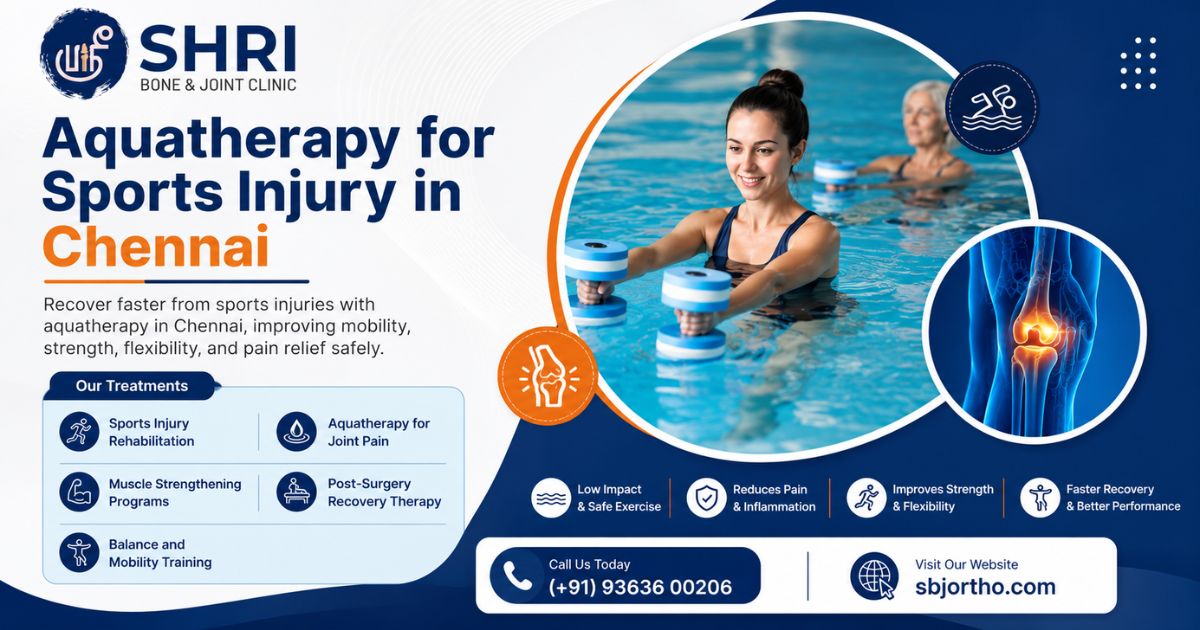
Aquatherapy, also known as water-based rehabilitation, is a form of physiotherapy performed in a specially designed pool. It uses the natural properties of water to help injured athletes and active individuals recover safely while reducing stress on joints, muscles, and ligaments.
Sports injuries often make movement painful. Running, jumping, changing direction, or even walking can become difficult depending on the severity of the injury. Aquatherapy allows patients to begin rehabilitation earlier because water supports a significant portion of body weight, making movement easier and more comfortable.
The buoyancy of water reduces impact on injured tissues while still allowing muscles to work. At the same time, the resistance provided by water helps improve strength, balance, flexibility, and coordination.
Whether the injury involves the knee, ankle, hip, shoulder, or spine, aquatherapy can be an effective part of a structured recovery program.
When is it recommended?
Aquatherapy is commonly recommended during the rehabilitation phase of many sports-related injuries.
It may be beneficial for:
- Ligament injuries and sprains
- Muscle strains and tears
- Knee injuries from sports activities
- Ankle injuries and instability
- Shoulder injuries in athletes
- Running-related overuse injuries
- Post-operative sports rehabilitation
- Tendon injuries
- Joint stiffness after injury
- Athletes returning to sport after recovery
It is especially useful when land-based exercises are painful or difficult to perform during the early stages of rehabilitation.
What are the benefits?
Aquatherapy offers several advantages for sports injury recovery.
Some of the key benefits include:
- Reduces stress on injured joints
- Allows earlier movement after injury
- Improves muscle strength safely
- Enhances flexibility and mobility
- Improves balance and coordination
- Helps reduce pain during exercise
- Supports faster return to physical activity
- Improves confidence during rehabilitation
- Allows functional training with lower risk of re-injury
For athletes, maintaining movement while protecting the injured area is often one of the biggest advantages of water-based rehabilitation.





How is it performed?
Aquatherapy sessions are designed according to the type of injury and stage of recovery.
The treatment usually begins with an assessment of the injury and rehabilitation goals.
Depending on the condition, the program may include:
- Walking exercises in water
- Controlled strengthening exercises
- Balance and stability training
- Range-of-motion exercises
- Functional sports-specific movements
- Core strengthening activities
- Water resistance exercises
The depth of the water and the intensity of exercises are adjusted based on the patient's comfort and recovery progress.
As healing improves, exercises become more challenging to prepare the athlete for a safe return to regular activities and sports participation.
What is the recovery process like?
Recovery through aquatherapy is usually progressive and carefully monitored.
During the initial phase, the focus is on reducing pain, restoring movement, and preventing stiffness.
As symptoms improve, the rehabilitation program shifts toward:
- Improving strength
- Restoring balance
- Increasing endurance
- Rebuilding confidence in movement
One of the biggest advantages is that patients can often perform movements in water that would be uncomfortable on land.
Over time, rehabilitation progresses from basic exercises to more advanced functional activities that mimic real-life and sports-related movements.
How long does it take to recover?
Recovery time depends on several factors, including the type of injury, severity, age, fitness level, and rehabilitation consistency.
General recovery timelines may include:
- Mild sports injuries: 2 to 6 weeks
- Moderate injuries: 6 to 12 weeks
- Significant ligament or muscle injuries: Several months
- Post-surgical rehabilitation: Varies depending on the procedure
The goal is not simply pain reduction but restoring strength, movement, and confidence before returning to sports activities.
Which is the best hospital for Aquatherapy for Sports Injury in Chennai?
For individuals recovering from sports-related injuries, Shri Physio & Rehab offers structured rehabilitation programs that combine water-based therapy with progressive recovery techniques.
Depending on the nature of the injury, rehabilitation plans may also incorporate treatments such as Sciatica Pain Relief Without Surgery in Chennai and Lower Back Pain Non Surgical Treatment in Chennai when spine-related symptoms are contributing to pain or movement limitations.
Who is the best doctor for Aquatherapy for Sports Injury in Chennai?
Sports injuries often require a detailed evaluation to identify the exact structures involved and determine the safest recovery pathway.
Consulting an experienced Orthopedic Specialist in Chennai helps ensure that rehabilitation is based on the underlying cause rather than just symptom management.
Dr. Shriram Krishnamoorthy at Shri Bone & Joint Clinic evaluates sports-related injuries and works closely with rehabilitation programs to support recovery. In cases where neck-related symptoms develop following sports activities or training injuries, Neck Pain Non Surgical Treatment in Chennai may also be considered as part of the overall management approach.
What is the cost of Aquatherapy for Sports Injury in Chennai?
| Category | Approx. Range (₹) |
| Non-surgical care / Diagnostics | ₹3,000 – ₹10,000 |
| Standard Therapy | Varies |
| Advanced Programs | Varies |
| Specialised Rehab | Varies |
| Physiotherapy & Rehab | ₹15,000 – ₹40,000 |
The total cost depends on the severity of the injury, duration of the rehabilitation program, frequency of sessions, and whether additional therapies are included.
Some rehabilitation components may be covered under insurance depending on the policy and provider.

Better Health Care is Our Mission
Phone
Shri Bone & Joint clinic
No.14/31, 3rd Avenue Indira Nagar, Adyar, Chennai-600020
Phone: 044 4505 5509