
What is Chronic Back Pain Therapy?
Back pain is one of the most common health concerns experienced by adults. While many episodes of back pain improve within a few weeks, some people continue to experience discomfort for months or even years. When back pain persists for more than 12 weeks, it is generally referred to as chronic back pain.
Unlike sudden back pain caused by a recent injury, chronic back pain often develops gradually and may involve multiple contributing factors. Poor posture, prolonged sitting, weak core muscles, spinal disc problems, arthritis, previous injuries, repetitive strain, and age-related changes can all play a role.
Living with chronic back pain can affect nearly every aspect of daily life. Sitting for long periods, standing at work, driving, lifting household items, exercising, or even getting a good night's sleep may become increasingly difficult.
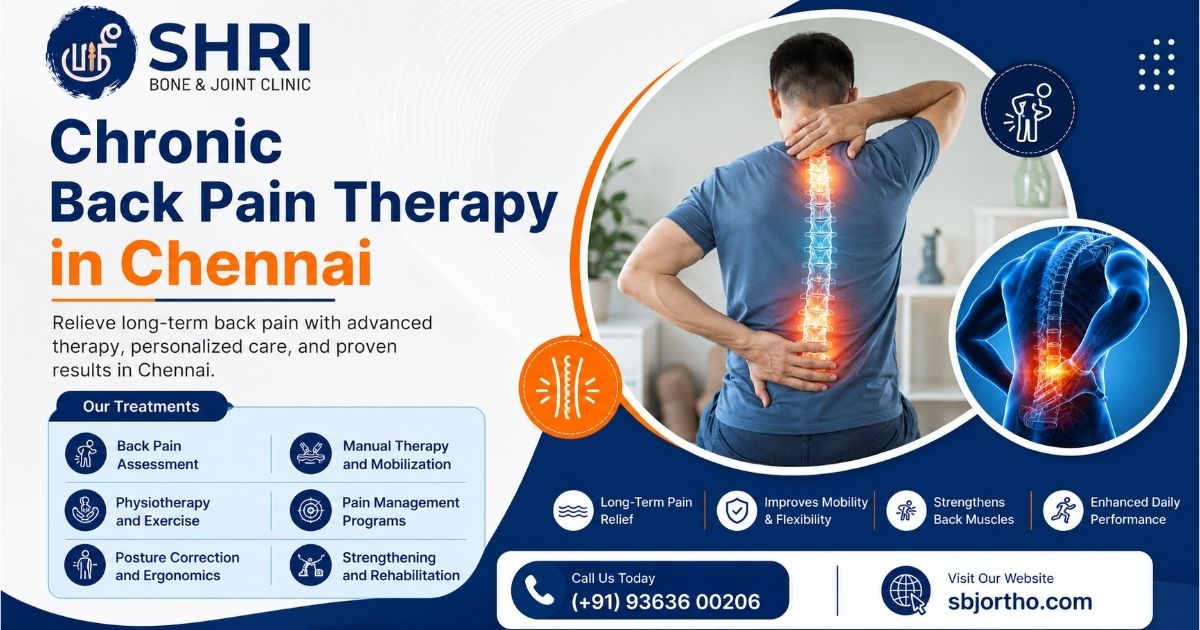
Chronic back pain therapy is a comprehensive rehabilitation program designed to identify the underlying cause of pain and improve the way the spine functions. Rather than focusing only on temporary symptom relief, therapy aims to reduce pain, restore mobility, strengthen supporting muscles, improve posture, and help patients regain confidence in movement.
Every individual experiences chronic back pain differently. For this reason, treatment plans are tailored according to the patient's symptoms, physical condition, activity level, and rehabilitation goals.
When is it recommended?
Chronic back pain therapy may be recommended for individuals whose symptoms continue despite rest or routine pain management.
It is commonly advised for people experiencing:
- Back pain lasting longer than three months
- Recurrent episodes of lower back pain
- Pain that worsens with prolonged sitting or standing
- Stiffness affecting daily movement
- Reduced flexibility of the spine
- Muscle weakness around the back or core
- Disc-related back pain
- Pain after previous spinal injuries
- Difficulty performing routine activities
- Individuals seeking non-surgical rehabilitation
Early rehabilitation often helps improve movement patterns before long-term weakness and stiffness become more pronounced.
What are the benefits?
A structured therapy program offers much more than pain management. It aims to improve the overall function of the spine and reduce the likelihood of recurring symptoms.
Some of the key benefits include:
- Helps reduce long-standing back pain
- Improves spinal flexibility and mobility
- Strengthens muscles supporting the spine
- Improves posture during sitting, standing, and walking
- Enhances balance and body mechanics
- Reduces muscle tightness and stiffness
- Supports better movement during everyday activities
- Improves endurance for work and daily tasks
- Encourages long-term spine health
- Reduces the chances of recurring back pain episodes
The goal is to help patients move more comfortably and remain physically active.


How is it performed?
The first step in chronic back pain therapy is a detailed assessment to understand why the pain has persisted.
During the evaluation, the therapist assesses:
- Pain location and intensity
- Spinal mobility
- Muscle strength
- Core stability
- Walking pattern
- Posture
- Functional limitations
- Daily activity requirements
Based on the findings, an individualised rehabilitation plan is developed.
The treatment program may include:
Therapeutic Exercises
Exercises are prescribed to improve spinal mobility, strengthen weak muscles, and restore normal movement.
Core Strengthening
The abdominal, pelvic, and lower back muscles provide important support to the spine. Improving core stability helps reduce excessive stress on spinal structures.
Mobility Training
Gentle stretching and mobility exercises improve flexibility and reduce stiffness.
Postural Correction
Many patients develop poor posture over time, which can contribute to ongoing pain. Therapy includes education on maintaining proper posture during work and daily activities.
Functional Rehabilitation
Patients gradually progress to movements that reflect everyday activities such as lifting, bending, reaching, climbing stairs, and walking.
Lifestyle Advice
Recommendations may also include activity modification, ergonomic adjustments, and strategies to reduce unnecessary strain on the spine.
Treatment progresses gradually according to each patient's recovery.
What is the recovery process like?
Recovery from chronic back pain usually happens in stages rather than all at once.
Early Stage
The initial focus is on reducing discomfort, improving mobility, and helping patients move with greater confidence.
Intermediate Stage
As pain becomes more manageable, strengthening and endurance exercises become a larger part of rehabilitation.
Patients often notice improvements in:
- Walking comfort
- Sitting tolerance
- Standing endurance
- Daily movement
Advanced Stage
The final phase focuses on restoring normal function and preventing future episodes of back pain.
Patients are encouraged to continue appropriate exercises even after symptoms improve to maintain long-term spinal health.
How long does it take to recover?
Recovery varies depending on:
- The underlying cause of pain
- Duration of symptoms
- Physical fitness
- Age
- Consistency with rehabilitation
General recovery timelines may include:
- Mild chronic back pain: 4 to 8 weeks
- Moderate conditions: 8 to 12 weeks
- Long-standing or complex cases: Several months
Although some individuals notice improvements within a few weeks, long-term success usually depends on maintaining healthy movement habits and continuing prescribed exercises.
Which is the best hospital for Chronic Back Pain Therapy in Chennai?
For individuals looking for a structured rehabilitation program for long-standing back pain, Shri Physio & Rehab offers personalised therapy plans that focus on improving movement, reducing pain, and restoring functional independence.
Depending on the patient's symptoms and rehabilitation goals, treatment programs may also include Aqua Therapy for Low Back Pain in Chennai and Hydrotherapy for Back Pain in Chennai when water-based rehabilitation is considered beneficial for reducing joint loading and improving movement.
Who is the best doctor for Chronic Back Pain Therapy in Chennai?
Chronic back pain can result from several underlying conditions, including muscle weakness, spinal degeneration, disc-related problems, postural issues, or repetitive strain. Identifying the exact cause is important before beginning rehabilitation.
Consulting an experienced Orthopedic Specialist in Chennai helps ensure that treatment is based on an accurate diagnosis and tailored to the individual's condition.
Dr. Shriram Krishnamoorthy at Shri Bone & Joint Clinic evaluates patients with chronic back pain and recommends appropriate non-surgical treatment pathways based on clinical findings and functional assessment. For patients who benefit from movement-based rehabilitation, Yoga Therapy for Back Pain in Chennai may also be incorporated into a comprehensive recovery plan to improve flexibility, posture, and long-term spinal health.
What is the cost of Chronic Back Pain Therapy in Chennai?
| Category | Approx. Range (₹) |
| Non-surgical care / Diagnostics | ₹3,000 – ₹10,000 |
| Standard Therapy | Varies |
| Advanced Programs | Varies |
| Specialised Rehab | Varies |
| Physiotherapy & Rehab | ₹15,000 – ₹40,000 |
The overall cost depends on the severity of the condition, duration of therapy, number of rehabilitation sessions, and whether additional treatment modalities are included.
Some rehabilitation services may be covered under insurance depending on the policy and provider.

Better Health Care is Our Mission
Phone
Shri Bone & Joint clinic
No.14/31, 3rd Avenue Indira Nagar, Adyar, Chennai-600020
Phone: 044 4505 5509