
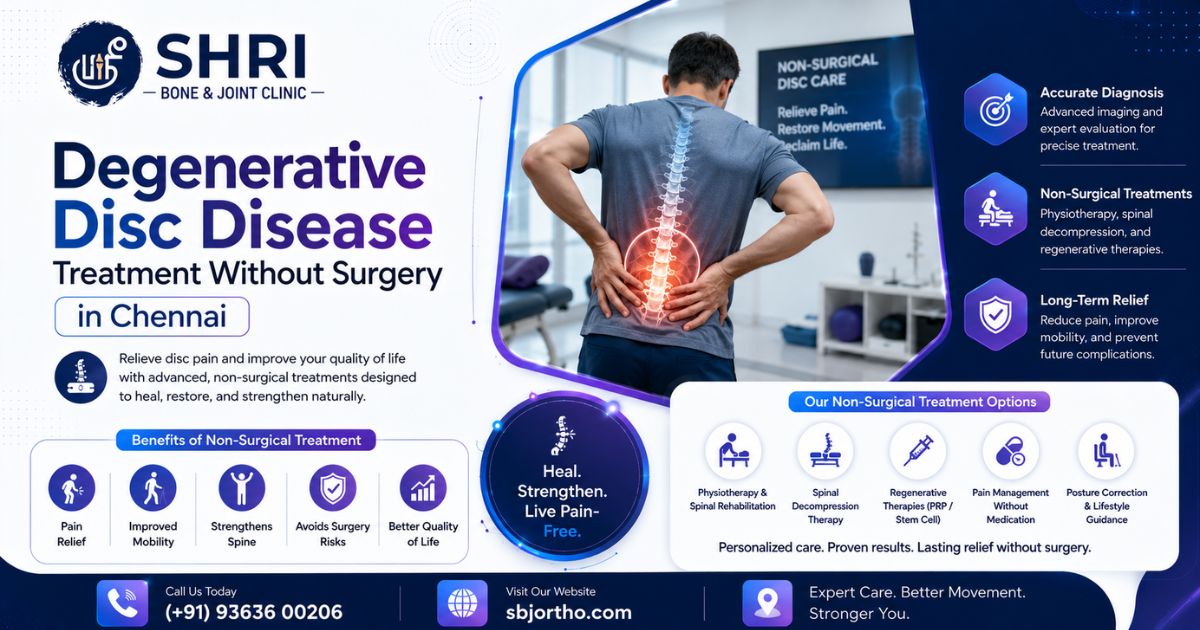
What is Degenerative Disc Disease Treatment Without Surgery?
Degenerative Disc Disease (DDD) is a condition that occurs when the spinal discs gradually lose their flexibility, hydration, and ability to absorb shock. Although the term “disease” is commonly used, it is often a part of the natural ageing process and may also be influenced by lifestyle factors, repetitive strain, previous injuries, and genetics.
The spinal discs act as cushions between the vertebrae. Over time, these discs can become thinner and less effective, leading to pain, stiffness, reduced mobility, and in some cases, nerve-related symptoms.
Non-surgical treatment focuses on managing symptoms, improving spinal function, and helping patients maintain an active lifestyle without undergoing surgery. Rather than attempting to reverse age-related changes, the goal is to improve movement, reduce stress on the spine, and strengthen the structures that support it.
Many individuals with degenerative disc disease are able to manage their symptoms successfully through a structured rehabilitation and physiotherapy program.
When is it recommended?
Non-surgical treatment is often recommended as the first line of management for degenerative disc disease, particularly when symptoms are manageable and there are no serious neurological complications.
It may be recommended for:
- Chronic lower back pain
- Persistent neck pain
- Disc degeneration identified on scans
- Stiffness in the spine
- Pain that increases with prolonged sitting
- Mild nerve irritation
- Reduced spinal flexibility
- Recurring episodes of back discomfort
- Individuals looking to avoid surgery
Many patients experience meaningful improvements through rehabilitation even when degenerative changes are visible on imaging studies.
What are the benefits?
A structured non-surgical treatment program can help improve both symptoms and overall spinal function.
Some of the key benefits include:
- Reduces stress on affected spinal segments
- Improves spinal mobility and flexibility
- Helps manage chronic pain
- Strengthens supporting muscles
- Improves posture and movement patterns
- Supports daily activities with greater comfort
- Reduces dependence on pain medication
- Encourages long-term spine health
- Helps patients remain active and independent
The focus is not only on pain relief but also on improving quality of life and physical function.


How is it performed?
Treatment begins with a detailed assessment to understand the severity of symptoms, movement limitations, and functional challenges.
A rehabilitation plan may include:
- Physiotherapy exercises
- Spinal decompression techniques
- Core strengthening programs
- Posture correction strategies
- Mobility and flexibility exercises
- Functional movement training
- Activity modification guidance
The program is customised based on the patient's age, activity level, and spinal condition.
Rather than relying on a single treatment, multiple approaches are often combined to achieve better long-term outcomes.
What is the recovery process like?
Recovery from degenerative disc disease is usually gradual.
In the early stages, the focus is on reducing pain, stiffness, and movement restrictions. As symptoms improve, rehabilitation shifts toward strengthening, flexibility, and improving overall spinal support.
Patients are often guided on:
- Proper posture
- Safe lifting techniques
- Daily movement habits
- Exercise progression
Many individuals notice improvements in their ability to sit, stand, walk, and perform everyday activities with greater comfort.
Because degenerative changes develop over time, long-term management often involves maintaining healthy movement habits and regular exercise.
How long does it take to recover?
Recovery timelines vary depending on the severity of symptoms, age, physical condition, and treatment consistency.
General expectations may include:
- Mild cases: 4 to 6 weeks
- Moderate symptoms: 6 to 12 weeks
- Long-standing conditions: Several months
While structural disc changes may remain, many patients experience significant improvement in pain, mobility, and function through rehabilitation.
Which is the best hospital for Degenerative Disc Disease Treatment Without Surgery in Chennai?
For individuals seeking a structured non-surgical approach to spine care, Shri Physio & Rehab offers rehabilitation programs focused on improving movement, reducing pain, and supporting long-term spinal health.
Depending on the patient's symptoms and underlying condition, treatment plans may incorporate Robotic Treatment for Disc Bulge in Chennai and Herniated Disc Treatment Without Surgery in Chennai as part of a comprehensive spine rehabilitation strategy.
Who is the best doctor for Degenerative Disc Disease Treatment Without Surgery in Chennai?
Degenerative disc disease can affect different parts of the spine and produce a wide range of symptoms. A thorough evaluation is important to understand the extent of disc degeneration and identify the most appropriate treatment pathway.
Consulting an experienced Orthopedic Specialist in Chennai helps determine whether rehabilitation, decompression techniques, strengthening programs, or other non-surgical interventions are suitable.
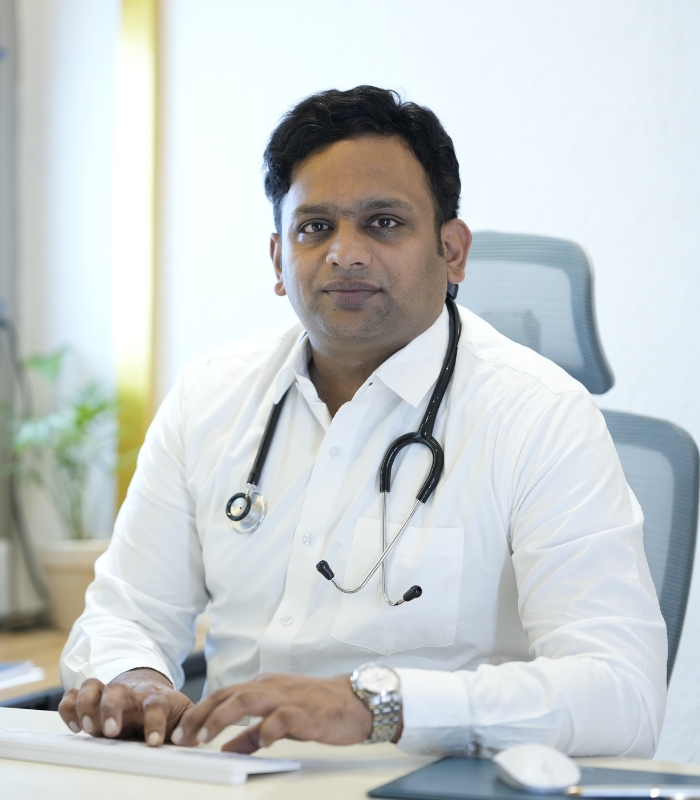
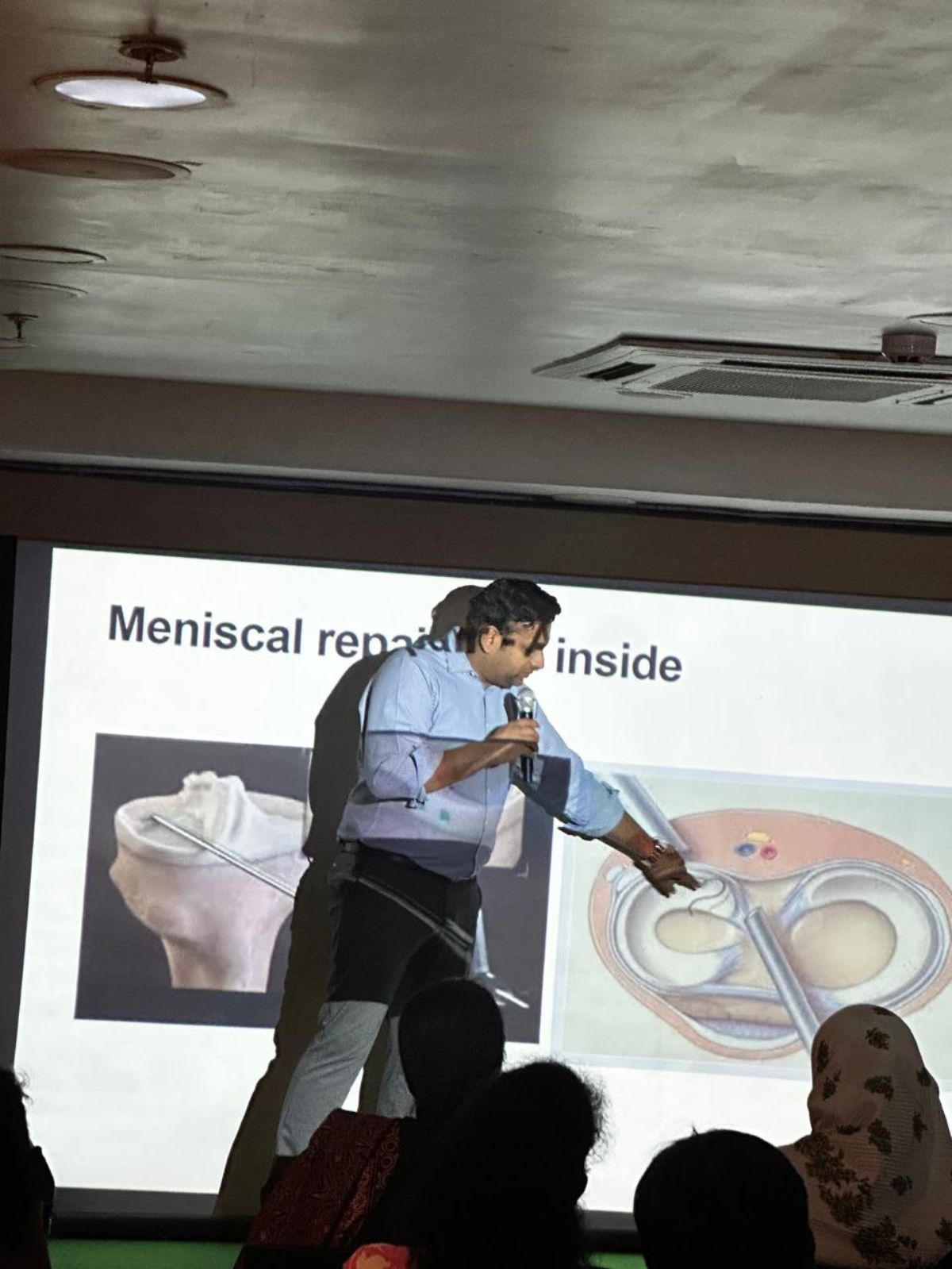
Dr. Shriram Krishnamoorthy at Shri Bone & Joint Clinic evaluates patients with chronic spine conditions and guides them toward evidence-based treatment options. In cases where disc degeneration contributes to disc protrusion or nerve irritation, Bulging Disc Treatment Without Surgery in Chennai may also form part of the overall rehabilitation plan.
What is the cost of Degenerative Disc Disease Treatment Without Surgery in Chennai?
| Category | Approx. Range (₹) |
| Non-surgical care / Diagnostics | ₹3,000 – ₹10,000 |
| Standard Therapy | Varies |
| Advanced Programs | Varies |
| Specialised Rehab | Varies |
| Physiotherapy & Rehab | ₹15,000 – ₹40,000 |
The overall cost depends on the severity of symptoms, duration of treatment, rehabilitation requirements, and any additional therapies included in the program.
Certain aspects of treatment may be covered under insurance depending on the policy and provider.

Better Health Care is Our Mission
Phone
Shri Bone & Joint clinic
No.14/31, 3rd Avenue Indira Nagar, Adyar, Chennai-600020
Phone: 044 4505 5509