
Limb Lengthening Surgery in Chennai – Advanced Bone Growth Treatment
For Emergencies: Call 9363 600 206

Limb lengthening surgery in Chennai is a specialised orthopedic procedure performed to increase the length of a leg or arm, correct differences in limb length, and address selected bone deformities. The procedure uses carefully controlled bone separation and gradual distraction to encourage the formation of new bone tissue.
Limb lengthening may be recommended for patients with congenital limb differences, growth-related deformities, previous fractures, or significant leg length discrepancies that affect walking, posture, and daily activities. In selected circumstances, it may also be considered for individuals seeking an increase in height.
Modern limb lengthening techniques include external fixation systems and internal lengthening nails. The most suitable approach depends on the patient's age, bone condition, treatment goals, medical fitness, and the complexity of the deformity.
Patients considering limb lengthening surgery should undergo a comprehensive orthopedic assessment to understand the expected benefits, treatment duration, rehabilitation requirements, and potential complications.
What Is Limb Lengthening Surgery?
Limb lengthening surgery is an orthopedic procedure designed to increase bone length through a biological process called distraction osteogenesis.
During the procedure, a surgeon carefully divides the selected bone and stabilises it using a specialised fixation device. After an initial healing period, the bone segments are gradually separated at a controlled rate.
As the gap increases, the body produces new bone tissue between the separated segments. The surrounding muscles, nerves, blood vessels, and other soft tissues must also adapt to the gradual lengthening.
The procedure is most commonly performed on the femur (thigh bone) or tibia (shin bone), although certain upper-limb bones may also be treated.
Types of Limb Lengthening Surgery
- External Fixator Limb Lengthening
An external fixation system uses a frame positioned outside the limb. Pins or wires connect the frame to the bone, allowing gradual adjustment during treatment.
- Internal Nail Limb Lengthening
This technique uses a specialised lengthening nail inserted into the bone. Certain systems allow gradual lengthening through an externally controlled mechanism.
- Limb Lengthening With Deformity Correction
Some patients require both bone lengthening and correction of angular or rotational deformities. Treatment may involve specialised fixation systems designed to address these problems together.
The choice of technique depends on the patient's anatomy, bone maturity, treatment requirements, and the availability of appropriate surgical expertise.
When Is Limb Lengthening Surgery Recommended?
Limb lengthening surgery may be recommended when a difference in limb length or bone deformity causes significant functional limitations.
Not every limb length discrepancy requires surgery. Smaller differences may be managed through observation, shoe modifications, or other non-surgical approaches.
1. Leg Length Discrepancy
A leg length discrepancy occurs when one leg is shorter than the other.
Significant differences may contribute to:
- Uneven walking patterns.
- Pelvic imbalance.
- Difficulty standing comfortably.
- Increased muscular effort during walking.
- Functional limitations during sports or daily activities.
Surgery may be considered when the discrepancy is substantial and non-surgical treatment is insufficient.
2. Congenital Limb Length Differences
Some children are born with differences in limb development.
These conditions may affect the length or shape of the bones.
Treatment planning depends on the child's growth potential, predicted final discrepancy, and associated deformities.
3. Growth Plate Injuries
Damage to a growth plate during childhood may affect normal bone growth.
This can result in one limb becoming shorter or developing an angular deformity.
Selected patients may benefit from limb lengthening or other growth-related corrective procedures.
4. Post-Traumatic Limb Shortening
Severe fractures or previous injuries may occasionally lead to bone shortening.
Limb reconstruction procedures may help restore length and improve alignment in appropriately selected patients.
5. Bone Deformities
Certain conditions cause bones to develop with abnormal alignment.
When a deformity is associated with limb shortening, the surgeon may consider a combined correction and lengthening procedure.
6. Selected Height-Lengthening Procedures
Some adults consider bilateral lower-limb lengthening for cosmetic height increase.
These procedures require especially careful evaluation because they involve major surgery, prolonged rehabilitation, substantial expense, and potentially serious complications without an underlying functional limb-length problem.
Not every patient is a suitable candidate.
Benefits of Limb Lengthening Surgery
Limb lengthening surgery may provide meaningful functional benefits when performed for an appropriate medical indication.
1. Correction of Limb Length Discrepancy
The primary benefit is the potential to reduce a clinically significant difference between limb lengths.
Improved limb-length symmetry may support more balanced walking and standing.
2. Improved Walking Mechanics
Patients with substantial leg length differences may develop compensatory walking patterns.
Correcting the discrepancy may improve walking efficiency and functional movement.
3. Correction of Selected Bone Deformities
Limb lengthening techniques can sometimes be combined with deformity correction.
This may improve bone alignment and weight distribution through the affected limb.
4. Improved Functional Independence
Patients who experience difficulty walking or performing everyday activities may benefit from successful correction.
The degree of improvement depends on the underlying condition and rehabilitation outcome.
5. Gradual Bone Regeneration
Distraction osteogenesis uses the body's natural ability to produce new bone tissue.
This allows controlled bone lengthening rather than simply inserting a permanent spacer between bone segments.
6. Individualised Correction
Modern treatment planning allows surgeons to select lengthening strategies according to the patient's anatomy and clinical requirements.
However, successful treatment requires prolonged follow-up, careful monitoring, and consistent rehabilitation.
How Is Limb Lengthening Surgery Performed?
Limb lengthening is a staged procedure involving surgical preparation, gradual distraction, bone consolidation, and rehabilitation.
The exact process varies according to the bone being treated and the fixation system used.
Step 1: Preoperative Orthopedic Assessment
The surgeon evaluates the patient's medical history, limb alignment, joint mobility, muscle strength, and functional limitations.
Investigations may include:
- Standing long-leg X-rays.
- Limb-length measurements.
- Bone alignment assessment.
- Joint examination.
- Blood investigations.
- Additional imaging when necessary.
The surgeon determines the appropriate lengthening target and treatment strategy.
Step 2: Surgical Bone Division
The procedure is performed under suitable anaesthesia.
The surgeon creates a controlled division in the selected bone, commonly called an osteotomy or corticotomy.
The surrounding tissues are protected as carefully as possible.
Step 3: Fixation Device Placement
The bone is stabilised using an external fixator or an internal lengthening nail.
The device maintains alignment while allowing controlled separation of the bone segments.
Step 4: Initial Healing Period
After surgery, a short latency period is usually allowed before active lengthening begins.
The duration depends on the patient's condition and surgical technique.
Step 5: Gradual Bone Lengthening
The fixation system is adjusted gradually according to the surgeon's instructions.
A commonly used distraction rate is approximately 1 mm per day, often divided into smaller increments. However, the actual rate may need adjustment according to bone formation, symptoms, and soft-tissue tolerance.
Regular imaging helps monitor new bone development and alignment.
Step 6: Bone Consolidation
Once the planned length is achieved, active distraction stops.
The newly formed bone then requires time to strengthen and mature.
This consolidation phase may last several months.
Step 7: Device Removal or Completion of Treatment
External fixation systems are removed when the bone has healed sufficiently.
Internal nails may remain in place for a period determined by the surgeon and may require a later removal procedure.
The patient continues rehabilitation throughout the treatment process.


Recovery Process After Limb Lengthening Surgery
Recovery after limb lengthening is more demanding than recovery after many routine orthopedic procedures.
The treatment involves gradual bone formation while muscles, tendons, nerves, and joints adapt to the increasing limb length.
Pain and Swelling Management
Pain, swelling, and discomfort may occur after surgery and during distraction.
Medication, appropriate positioning, and activity modification may help manage symptoms.
Increasing or unusual pain should be reported promptly.
Physiotherapy and Joint Mobility
Physiotherapy is an important part of treatment.
Exercises may focus on:
- Maintaining knee and ankle mobility.
- Preserving hip movement.
- Preventing muscle contractures.
- Maintaining muscle strength.
- Improving circulation.
- Supporting balance.
- Restoring functional movement.
The rehabilitation programme must be adapted to the bone being lengthened and the fixation device.
Walking and Weight-Bearing
Weight-bearing instructions vary significantly between fixation systems.
Some devices allow limited or progressive weight-bearing, while others require stricter restrictions.
Patients may need crutches or a walker during treatment.
Walking should follow the surgeon's specific instructions.
Pin-Site Care
Patients with external fixation systems require regular pin-site monitoring and care.
Redness, discharge, increasing pain, or fever may indicate infection and require medical assessment.
Regular Follow-Up
Follow-up appointments are necessary to monitor:
- New bone formation.
- Bone alignment.
- Joint mobility.
- Nerve function.
- Fixation stability.
- Soft-tissue tolerance.
- Overall treatment progress.
Lengthening may need to be slowed, paused, or modified if complications develop.
Potential Complications
Limb lengthening surgery carries important risks, including:
- Infection.
- Delayed bone formation.
- Poor bone consolidation.
- Joint stiffness.
- Muscle contractures.
- Nerve irritation or injury.
- Blood vessel complications.
- Bone malalignment.
- Device-related problems.
- Fracture after fixation removal.
- Persistent pain or functional limitations.
- Need for additional surgery.
Patients should understand these risks before deciding to proceed.
How Long Does Recovery Take?
Recovery after limb lengthening surgery varies according to the amount of lengthening, the bone treated, the patient's age, bone-healing ability, and the fixation technique.
The complete process generally takes several months and may extend beyond a year.
| Recovery Stage | Approximate Timeline | Main Focus |
| Initial postoperative recovery | First 1–2 weeks | Wound care, pain control, early rehabilitation |
| Gradual lengthening | Several weeks to months | Controlled distraction and monitoring |
| Bone consolidation | Several additional months | Strengthening of newly formed bone |
| Functional rehabilitation | Throughout treatment and afterward | Mobility, strength, walking and balance |
| Return to demanding activities | Often many months or longer | Individualised functional recovery |
For example, achieving 5 cm of lengthening at an average rate of 1 mm per day would require approximately 50 days of active distraction, excluding the initial healing period, pauses, and consolidation.
The total treatment duration is substantially longer than the active lengthening period.
Patients should not expect immediate independent walking or unrestricted physical activity after the planned length has been achieved.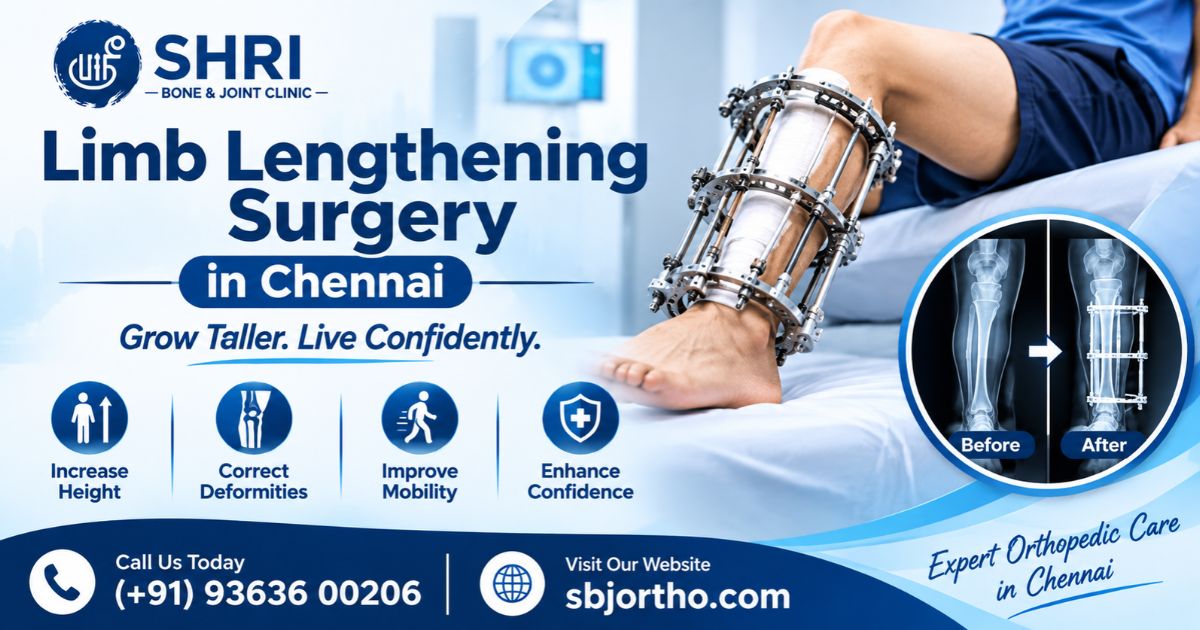
Which is the Best Hospital for Limb Lengthening Surgery in Chennai?
Choosing a hospital for limb lengthening surgery requires careful consideration because the procedure involves specialised surgical planning, long-term monitoring, and extensive rehabilitation.
Patients should look for a facility with access to:
- Experienced limb reconstruction specialists.
- Appropriate orthopedic imaging.
- Specialised fixation systems.
- Comprehensive preoperative assessment.
- Postoperative complication management.
- Physiotherapy and rehabilitation.
- Long-term orthopedic follow-up.
Shri Bone & Joint Clinic in Chennai provides orthopedic consultation and assessment for patients experiencing limb-length differences, bone deformities, and other musculoskeletal concerns.
A detailed evaluation can help determine whether limb lengthening is medically appropriate or whether alternative treatment may be more suitable.
Patients requiring specialised limb lengthening surgery should confirm the availability of the required surgical expertise, equipment, and hospital facilities before proceeding.
The clinic's availability of limb lengthening surgery itself should be verified during consultation rather than assumed.
Who is the Best Doctor for Limb Lengthening Surgery in Chennai?
The selection of a doctor for limb lengthening surgery should be based on relevant surgical training, experience with deformity correction, familiarity with lengthening devices, and the ability to manage complications.
Limb reconstruction is a specialised field, and not every orthopedic surgeon routinely performs these procedures.
Patients should consider whether the treating specialist has experience with:
- Limb length discrepancy assessment.
- Deformity correction planning.
- Distraction osteogenesis.
- External fixation techniques.
- Internal lengthening devices.
- Complex postoperative rehabilitation.
- Management of delayed bone healing and joint contractures.
Dr. Shriram Krishnamoorthy, associated with Shri Bone & Joint Clinic, provides orthopedic evaluation and treatment guidance for musculoskeletal conditions.
Patients looking for an Orthopedic Specialist in Chennai can seek an assessment to understand the cause of limb shortening, available treatment approaches, and whether referral to a dedicated limb reconstruction surgeon is required.
Some patients with lower-limb pain or mobility limitations may have joint degeneration rather than a true limb-length discrepancy.
Depending on the diagnosis, treatment options may include Total Knee Replacement in Chennai, Partial Knee Replacement in Chennai, or Total Hip Replacement in Chennai for appropriately selected patients with advanced joint disease.
These joint replacement procedures are different from limb lengthening surgery and are not substitutes for correcting a genuine bone-length discrepancy.
The appropriate treatment should always be based on an accurate diagnosis.
What is the Cost of Limb Lengthening Surgery in Chennai?
The cost of limb lengthening surgery in Chennai depends on the complexity of the procedure, the fixation device, the amount of lengthening required, and the duration of treatment.
There is no single fixed price applicable to every patient.
Factors Affecting Limb Lengthening Surgery Cost
|
Cost Factor |
How It Affects the Overall Expense |
|
Type of surgery |
External fixation, internal lengthening, or combined deformity correction |
|
Fixation device |
Specialised internal nails may have different costs from external frames |
|
Bone treated |
Femur, tibia, or other bones |
|
Number of limbs |
Single-limb or bilateral procedures |
|
Deformity complexity |
Additional correction may require more extensive planning and surgery |
|
Hospital facilities |
Operating theatre, admission, and postoperative care |
|
Imaging and investigations |
Preoperative assessment and follow-up X-rays |
|
Physiotherapy |
Rehabilitation may continue for several months |
|
Follow-up procedures |
Device removal or additional interventions when necessary |
|
Complications |
Unexpected treatment needs may increase costs |
Does Health Insurance Cover Limb Lengthening Surgery?
Insurance coverage depends on the medical indication and the patient's policy.
Procedures performed to correct medically significant deformities or limb-length discrepancies may be eligible for coverage under certain policies.
Purely cosmetic height-lengthening procedures are commonly excluded.
Patients should obtain written confirmation from their insurer regarding eligibility, exclusions, preauthorisation, and applicable limits.
How to Get an Accurate Cost Estimate
An accurate estimate requires a clinical assessment and a detailed treatment plan.
Patients should request an itemised quotation covering:
- Surgeon and anaesthesia charges.
- Hospital expenses.
- Fixation device costs.
- Investigations.
- Expected follow-up visits.
- Physiotherapy.
- Possible device removal.
- Potential additional expenses.
The total cost should be discussed before treatment, including expenses that may arise during the extended recovery period.
FAQs
1. Is limb lengthening surgery safe?
Limb lengthening surgery is an established orthopedic technique, but it is a major procedure with significant risks. Complications may include infection, joint stiffness, nerve problems, delayed bone healing, and fixation-related issues. Careful patient selection, experienced surgical management, regular monitoring, and rehabilitation are essential for reducing risks.
2. How many centimetres can limb lengthening surgery add?
The amount of lengthening depends on the patient's anatomy, bone condition, treatment indication, and soft-tissue tolerance. Some treatment plans involve several centimetres of lengthening, but there is no universally safe maximum for every patient. Attempting excessive lengthening can increase the risk of complications.
3. Can adults undergo limb lengthening surgery?
Yes. Adults with completed skeletal growth may undergo limb lengthening when medically appropriate. Suitability depends on bone health, joint mobility, medical fitness, treatment goals, and willingness to complete prolonged rehabilitation. A detailed orthopedic assessment is necessary before determining eligibility.
4. Can you walk during limb lengthening treatment?
Many patients can perform some assisted walking during treatment, but the permitted amount of weight-bearing depends on the fixation device and surgical plan. Crutches or a walker may be necessary. Patients should never exceed their surgeon's weight-bearing instructions because premature loading can damage the fixation system or healing bone.
5. Is limb lengthening surgery permanent?
When the new bone consolidates successfully, the achieved bone length is generally permanent. However, the procedure does not guarantee normal function or freedom from complications. Long-term outcomes depend on bone healing, joint mobility, muscle function, alignment, and successful rehabilitation.

Better Health Care is Our Mission
Get an immediate relief to your knee-related problems from Shri Bone & Joint Clinic.
Phone
Shri Bone & Joint clinic
No.14/31, 3rd Avenue Indira Nagar, Adyar, Chennai-600020
Phone: 044 4505 5509