
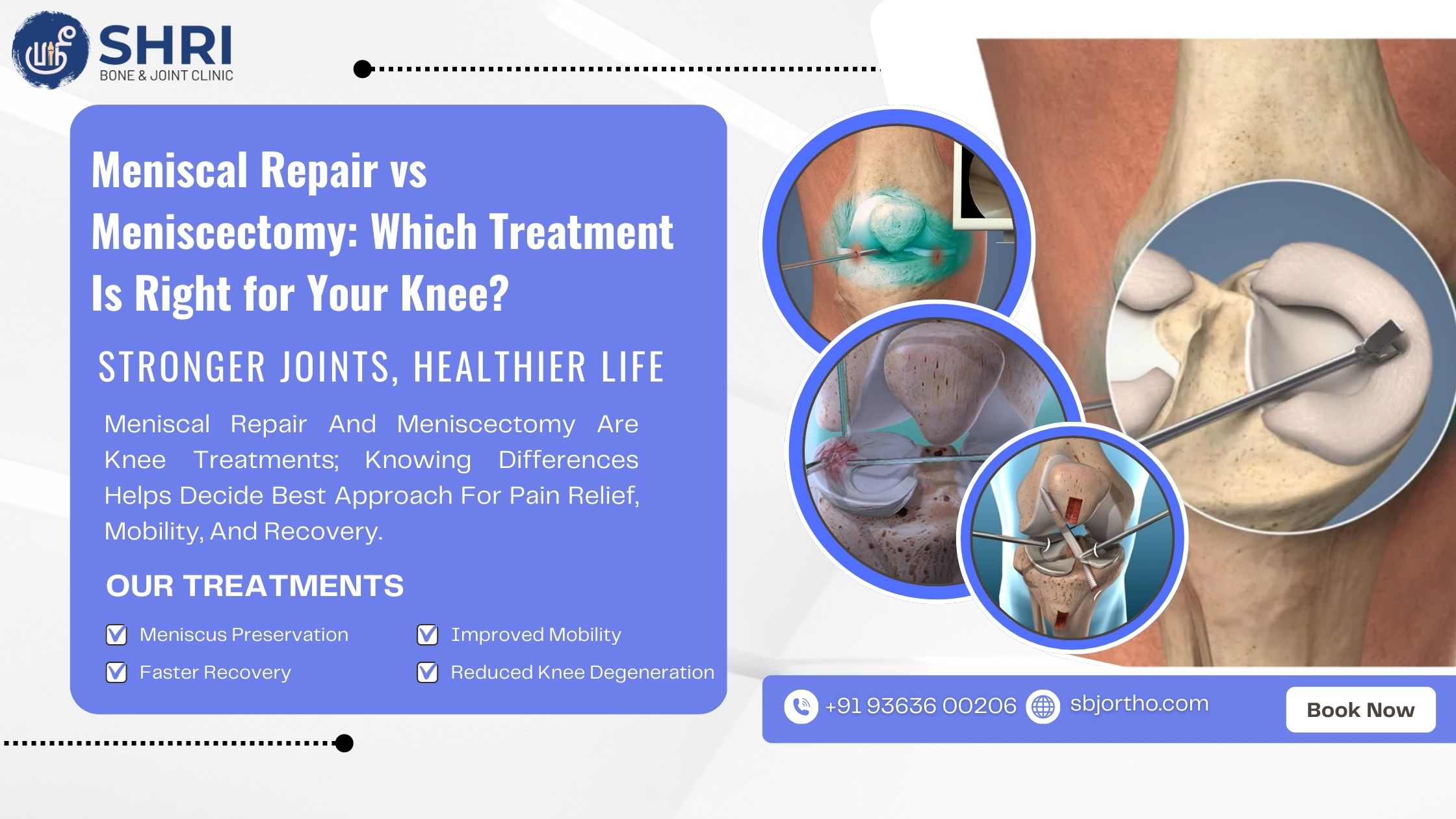
A meniscus tear can limit daily movement and affect long-term knee health if not managed properly. When symptoms persist despite rest and physiotherapy, patients are often advised to consider surgery. At this stage, many people face a common question: Is it better to repair the meniscus or remove the damaged part?
This article explains the differences between meniscal repair and meniscectomy, how each option works, and how the right choice is made for individual knees.
Understanding the Role of the Meniscus
The meniscus is a cartilage structure that cushions the knee joint, distributes body weight, and improves stability. Each knee has two menisci that work together to reduce stress on the bones during walking, running, and bending.
When the meniscus is torn, the knee loses some of this protective function. The aim of treatment is to relieve pain while preserving as much natural cartilage as possible.
What Is Meniscal Repair?
Meniscal repair is a surgical procedure that focuses on stitching the torn cartilage back together rather than removing it. The goal is to allow the meniscus to heal naturally and continue performing its protective role.
Meniscal Repair Surgery is usually recommended when:
- The tear is located in a well-vascularized area
- The cartilage quality is good
- Knee stability is maintained
- Long-term joint preservation is a priority
This option is commonly preferred for younger, active individuals or traumatic tears.
What Is Meniscectomy?
Meniscectomy involves removing the damaged portion of the meniscus that cannot heal on its own. It is performed using minimally invasive arthroscopy to relieve pain and mechanical symptoms such as locking.
Arthroscopic Meniscectomy is generally advised when:
- The tear is complex or degenerative
- Repair is not possible
- Pain persists despite conservative care
- Daily activities are significantly affected
Removing only the damaged tissue helps restore movement while minimizing joint disruption.
What Is Partial Meniscectomy?
In many cases, surgeons remove only the torn section and preserve the healthy remainder of the cartilage.
Partial Arthroscopic Meniscectomy offers:
- Faster recovery than repair
- Preservation of remaining meniscus
- Relief from pain and mechanical symptoms
- Improved knee function with minimal tissue loss
This approach balances symptom relief with joint protection.
Key Differences Between Meniscal Repair and Meniscectomy
Understanding how these treatments differ helps clarify why one may be recommended over the other.
Meniscal Repair
- Preserves natural cartilage
- Longer recovery period
- Better long-term joint protection
- Requires strict rehabilitation
Meniscectomy
- Faster symptom relief
- Shorter recovery time
- Removes damaged tissue
- Slightly higher long-term joint stress
The choice depends on tear characteristics, knee condition, and lifestyle demands.
Factors That Influence the Right Treatment Choice
There is no single “best” option for everyone. Treatment decisions are based on multiple factors, including:
- Type and location of the tear
- Age and activity level
- Knee stability and alignment
- Presence of cartilage wear
- Long-term joint health goals
A thorough evaluation by an Orthopedic Specialist helps determine whether preserving or removing the meniscus will provide better outcomes.
Recovery Expectations
Recovery varies based on the procedure performed.
- Meniscal repair requires longer protection and gradual rehabilitation
- Meniscectomy allows quicker return to routine activities
- Physiotherapy is essential for strength and stability
- High-impact activities resume only after adequate healing
Following post-operative guidance reduces the risk of repeat injury.
Frequently Asked Questions
Is meniscal repair always better than meniscectomy?
Not always. Repair is preferred when healing is possible, but some tears require removal for symptom relief.
Can a meniscus tear worsen if untreated?
Yes. Ongoing activity with an unstable tear can increase cartilage damage and knee degeneration.
Which surgery has a faster recovery?
Meniscectomy usually has a shorter recovery period compared to meniscal repair.
Does removing part of the meniscus cause arthritis?
Removing meniscus tissue can increase joint stress, which is why preservation is preferred whenever feasible.
How is the final treatment decision made?
The decision is based on tear type, knee condition, lifestyle needs, and long-term joint protection.
Conclusion
Meniscal repair and meniscectomy serve different purposes, but both aim to restore knee comfort and function. Repair focuses on preserving cartilage, while meniscectomy removes tissue that cannot heal. Understanding the differences helps patients approach treatment with clarity and realistic expectations. Early evaluation and appropriate care play a key role in protecting knee health over time.