
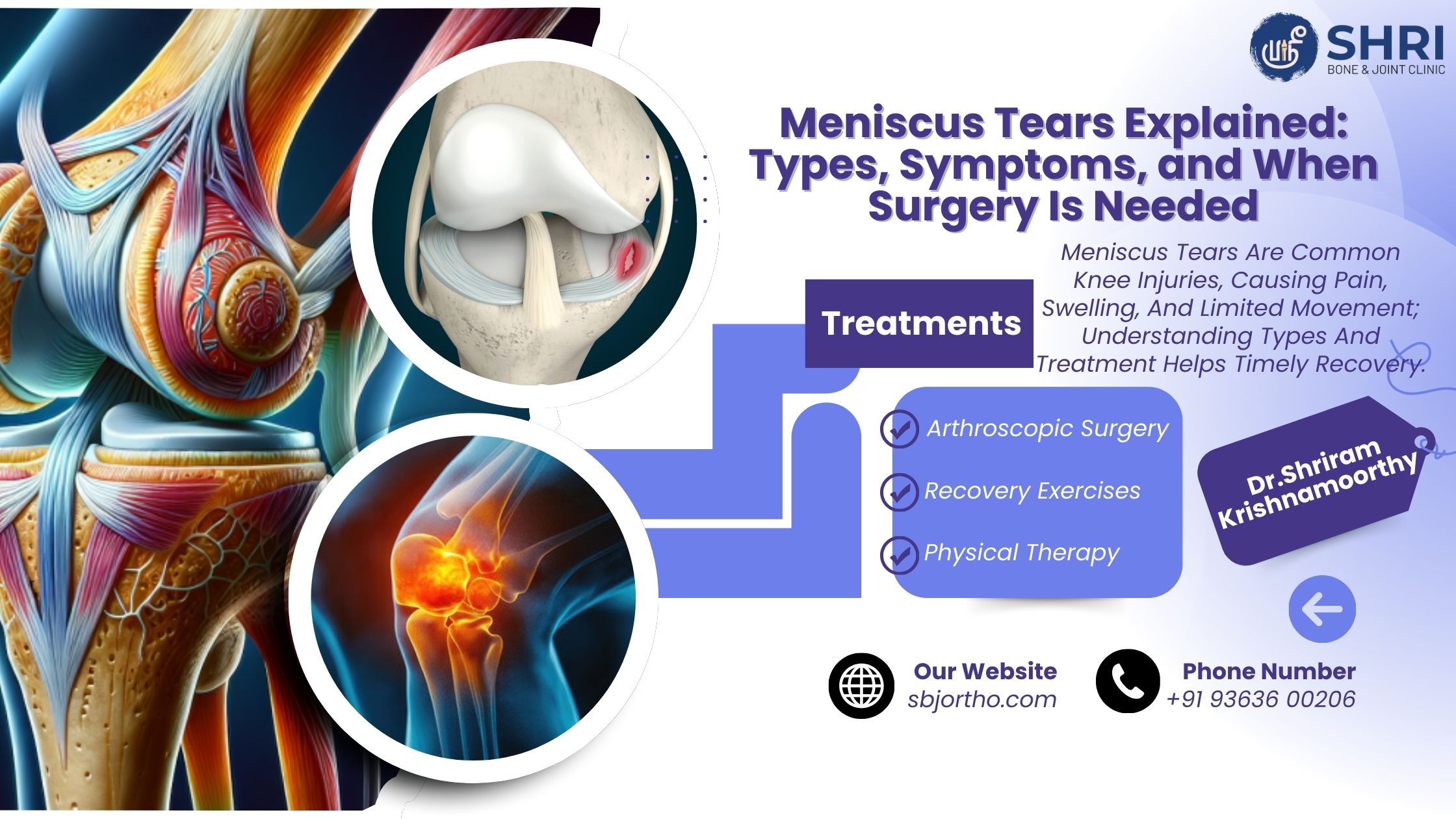
Knee pain caused by a meniscus tear is one of the most common joint problems seen across all age groups. While some tears heal with rest and rehabilitation, others can worsen over time and interfere with daily movement. Understanding how meniscus tears occur, the different types involved, and when surgery becomes necessary helps patients make informed decisions early.
This guide explains meniscus tears in simple terms, outlines common symptoms, and clarifies when surgical treatment is usually recommended.
What Is the Meniscus and Why Is It Important?
The meniscus is a crescent-shaped piece of cartilage located between the thigh bone and shin bone in each knee. Each knee has two menisci that act as shock absorbers, distribute body weight evenly, and provide stability during movement.
A healthy meniscus protects the knee joint from excessive stress. When it is torn, normal knee mechanics are disrupted, leading to pain, swelling, and instability.
What Causes a Meniscus Tear?
Meniscus tears occur due to sudden force or gradual degeneration of the cartilage.
Common causes include:
- Twisting movements while the foot is planted
- Sports that involve jumping, pivoting, or sudden direction changes
- Squatting or lifting heavy weights incorrectly
- Age-related wear and tear of knee cartilage
- Previous knee injuries that weaken joint stability
Young adults often experience traumatic tears, while older individuals are more prone to degenerative tears.
Types of Meniscus Tears
Meniscus tears are classified based on their shape, location, and severity. Identifying the type of tear helps determine the most appropriate treatment.
Radial Tears
These begin at the inner edge of the meniscus and extend outward. They can disrupt load distribution and may worsen if untreated.
Horizontal Tears
These split the meniscus into upper and lower sections. They are commonly associated with degeneration and aging.
Longitudinal Tears
These run along the length of the meniscus and may progress into more severe tear patterns.
Bucket Handle Tears
A large portion of the meniscus becomes displaced, often causing knee locking and sudden loss of motion.
Complex Tears
These involve multiple tear patterns and are usually harder to heal without intervention.
Common Symptoms of a Meniscus Tear
Symptoms may appear suddenly or develop gradually, depending on the tear type.
Typical signs include:
- Pain along the knee joint line
- Swelling that increases after activity
- Difficulty bending or straightening the knee
- A catching or locking sensation
- Feeling of knee instability during movement
Some people continue walking despite the tear, which can worsen joint damage over time.
How Are Meniscus Tears Diagnosed?
Diagnosis usually begins with a clinical examination to assess pain points, swelling, and knee movement. Imaging tests such as MRI scans help confirm the tear type, location, and severity.
Early diagnosis improves the chances of preserving the meniscus and avoiding long-term joint problems.
When Is Surgery Needed for a Meniscus Tear?
Not all meniscus tears require surgery. Many mild or stable tears improve with rest, physiotherapy, and activity modification. Surgery is usually considered when symptoms persist or worsen.
Surgical treatment may be recommended if:
- Pain continues despite non-surgical care
- The knee locks or gives way frequently
- The tear affects daily activities or sports
- There is significant mechanical obstruction
- The tear is unlikely to heal naturally
The goal of surgery is to relieve symptoms while preserving as much meniscus tissue as possible.
Surgical Options for Meniscus Tears
Different surgical approaches are chosen based on tear characteristics and knee health.
Meniscal Repair
Meniscal repair focuses on stitching the torn cartilage so it can heal naturally. Meniscal Repair Surgery is typically recommended for tears located in areas with good blood supply and in patients where cartilage preservation is possible.
Meniscectomy
When a tear cannot be repaired, removing the damaged portion becomes necessary. Arthroscopic Meniscectomy removes the torn tissue using minimally invasive techniques to relieve pain and restore movement.
Partial Meniscectomy
In many cases, only the damaged section is removed while the rest of the meniscus is preserved. Partial Arthroscopic Meniscectomy helps maintain knee function while addressing symptoms.
Treatment selection depends on tear pattern, knee stability, activity level, and long-term joint health goals.
Recovery Expectations After Meniscus Surgery
Recovery timelines vary based on the procedure performed.
- Meniscus repair requires longer protection and rehabilitation
- Partial meniscectomy allows faster return to daily activities
- Physiotherapy plays a key role in restoring strength and mobility
- High-impact activities are resumed gradually
Following rehabilitation guidelines helps prevent repeat injury and joint degeneration.
Frequently Asked Questions
Can a meniscus tear heal on its own?
Small tears in areas with good blood supply may heal with rest and physiotherapy. Larger or unstable tears often require medical intervention.
How long can I delay treatment for a meniscus tear?
Delaying treatment can increase cartilage damage and worsen knee stability, especially if symptoms persist.
Is surgery always required for meniscus tears?
No. Many tears improve without surgery, but persistent pain, locking, or instability may require surgical care.
Who should evaluate a suspected meniscus tear?
A qualified Orthopedic Specialist can assess symptoms, review imaging, and guide appropriate treatment decisions.
Can meniscus surgery prevent arthritis?
Preserving as much meniscus tissue as possible helps reduce stress on the knee joint and lowers the risk of early arthritis.
Conclusion
Meniscus tears are common but manageable when identified early. Understanding tear types, recognizing symptoms, and knowing when surgery is needed empowers patients to protect their knee health. With timely care and proper rehabilitation, most individuals regain stable, pain-free movement and avoid long-term joint complications.