

What is Osteoporosis?
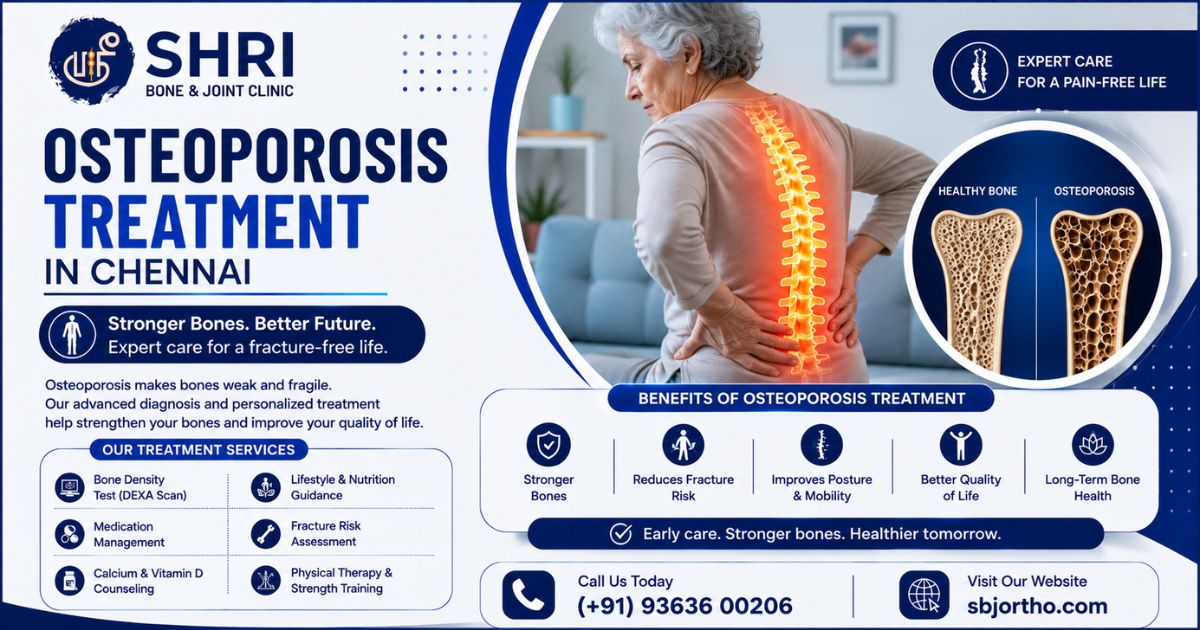
Osteoporosis is a condition in which bones gradually lose strength and become more vulnerable to fractures. It is often called a "silent" bone condition because bone loss can progress for years without causing obvious symptoms.
Many people first discover that they have osteoporosis only after experiencing a fracture following a relatively minor fall or injury.
Bone is living tissue that is continuously renewed. Old bone is broken down and replaced by new bone. As people age, particularly after middle age, the balance between bone breakdown and formation can change. When bone loss occurs faster than new bone formation, bone density and strength can gradually decrease.
Osteoporosis commonly affects areas such as the:
- Spine
- Hip
- Wrist
- Forearm
The condition becomes particularly important because fractures in older adults can have consequences beyond the broken bone itself. A fracture may reduce mobility, lead to prolonged inactivity, cause muscle weakness, and affect independence.
Osteoporosis treatment in Chennai therefore focuses not only on bone density but on the patient's overall fracture risk. Management may involve medication when indicated, nutrition, appropriate exercise, strength and balance training, fall-prevention strategies, and treatment of underlying factors contributing to poor bone health.
The goal is to preserve bone strength and reduce the likelihood of future fractures.
When is Osteoporosis Treatment recommended?
Treatment may be considered when testing, medical history, or fracture risk indicates that the bones have become significantly weakened.
People who may require evaluation include those with:
- Diagnosed osteoporosis
- Low bone mineral density
- Previous fragility fractures
- Loss of height with age
- Vertebral compression fractures
- Long-term use of certain medications that affect bone health
- Early menopause or other hormonal risk factors
- Strong family history of osteoporosis or hip fracture
- Low body weight
- Prolonged physical inactivity
- Nutritional deficiencies
- Medical conditions that affect bone metabolism
Women after menopause are at increased risk because declining estrogen levels can accelerate bone loss. However, osteoporosis is not exclusively a women's condition. Men can also develop significant osteoporosis, particularly with advancing age or other risk factors.
A fracture occurring after a relatively minor fall can also be an important warning sign.
Rather than treating the fracture alone, the underlying bone health should be considered to determine whether osteoporosis contributed to the injury.
What are the benefits of Osteoporosis Treatment?
The primary objective of osteoporosis management is to reduce future fracture risk.
Treatment may provide several important benefits.
Helps Reduce Fracture Risk
Appropriate medical treatment can help reduce the likelihood of certain osteoporosis-related fractures in people who meet treatment criteria.
Supports Bone Strength
Depending on the patient's condition, medication, nutrition, and appropriate physical loading can form part of a broader strategy to maintain or improve skeletal strength.
Improves Muscle Strength
Strong muscles help support movement and everyday physical activity.
Resistance exercise is therefore an important part of many osteoporosis management programs.
Improves Balance
Falls are a major contributor to fractures among older adults.
Balance and functional training can help improve stability and confidence during everyday activities.
Maintains Mobility
Fear of falling sometimes causes people with osteoporosis to stop exercising or reduce normal activity.
Appropriate exercise can help people remain active without unnecessarily exposing them to risky movements.
Supports Long-Term Independence
Preventing fractures and maintaining physical strength can help older adults continue walking, travelling, performing household activities, and living independently.
Osteoporosis management is therefore about much more than improving a number on a bone-density report.






How is Osteoporosis Treatment performed?
Osteoporosis usually requires a combination of medical management and lifestyle-based interventions rather than one single treatment.
Step 1: Assessing Bone Health
Evaluation begins by understanding the patient's risk factors.
The doctor may review:
- Age
- Previous fractures
- Family history
- Menopause history
- Current medications
- Diet
- Physical activity
- Smoking and alcohol history
- Other medical conditions
Step 2: Bone Mineral Density Testing
A DXA or DEXA scan is commonly used to measure bone mineral density.
The scan generally evaluates important areas such as the hip and spine.
Results are interpreted together with the patient's age, medical history, previous fractures, and overall fracture risk rather than in isolation.
Step 3: Additional Investigations
Blood tests or other investigations may sometimes be required to identify factors that contribute to bone loss.
These may include evaluation of:
- Calcium
- Vitamin D
- Kidney function
- Thyroid-related factors
- Other metabolic or hormonal conditions
The exact investigations depend on the individual.
Step 4: Medication When Indicated
Some patients require medication to reduce fracture risk.
Different types of osteoporosis medicines work in different ways. Some primarily reduce bone breakdown, while others can stimulate new bone formation.
The choice depends on factors such as:
- Severity of osteoporosis
- Previous fractures
- Age
- Other medical conditions
- Kidney function
- Individual fracture risk
Medication should be prescribed and monitored by an appropriate medical professional.
Step 5: Nutrition
Adequate calcium and vitamin D are important for bone health.
Whenever possible, nutritional requirements should be considered as part of the overall diet rather than relying automatically on supplements.
Supplementation may be recommended when dietary intake or vitamin levels are inadequate.
Step 6: Exercise and Strength Training
Exercise is an important component of osteoporosis management.
Depending on the patient's condition, the program may include:
- Progressive resistance exercise
- Weight-bearing activity
- Postural strengthening
- Balance exercises
- Functional movement training
People with severe osteoporosis or previous vertebral fractures may require modifications to avoid movements that place inappropriate stress on weakened bones.
Step 7: Fall Prevention
Preventing falls is particularly important for people at increased fracture risk.
This may involve improving:
- Leg strength
- Balance
- Walking confidence
- Vision
- Footwear
- Home safety
Fall prevention should be considered alongside treatment aimed directly at bone health.
What is the recovery and management process like?
Unlike a fracture or acute injury, osteoporosis is generally managed over the long term.
There may not be a point at which a patient simply "finishes" treatment and no longer needs to think about bone health.
Management can progress through several stages.
Understanding Individual Fracture Risk
The first stage is determining how vulnerable the bones are and identifying factors that can be changed.
Beginning Appropriate Treatment
Medication may be started when clinically indicated.
Nutrition, exercise, and lifestyle factors are addressed at the same time.
Building Strength and Balance
Patients who have become physically inactive may begin with relatively simple exercises.
The program can gradually progress as strength and confidence improve.
Monitoring Bone Health
Bone mineral density may be reassessed at intervals determined by the treating doctor.
Medication effectiveness, adherence, side effects, new fractures, and changes in medical history may also be reviewed.
Maintaining an Active Lifestyle
Long-term physical activity is important.
The objective is not to make people with osteoporosis afraid of movement. Instead, they should learn how to remain active while managing their fracture risk appropriately.
How long does Osteoporosis Treatment take?
Osteoporosis management is usually long term.
Unlike pain medication that may produce an immediate noticeable effect, changes in bone health occur gradually.
Treatment duration depends on:
- Severity of osteoporosis
- Fracture history
- Type of medication
- Age
- Bone-density findings
- Other medical conditions
- Response to treatment
Medication may need to be continued for several years in some patients, with periodic review to determine whether it should be continued, changed, or temporarily paused depending on the specific medication and clinical circumstances.
Exercise also requires consistency.
Improvements in strength and balance may become noticeable over weeks or months, but maintaining these benefits requires ongoing physical activity.
The goal is therefore long-term fracture prevention rather than expecting osteoporosis to disappear after a short treatment course.
Which is the best hospital for Osteoporosis Treatment in Chennai?
Patients seeking osteoporosis treatment should look for a centre that considers fracture history, bone density, medications, mobility, muscle strength, and fall risk rather than focusing only on a DEXA scan result.
At Shri Bone & Joint Clinic, patients with osteoporosis and other orthopedic conditions can be evaluated according to their individual bone and joint health.
Osteoporosis is particularly relevant when major joint surgery is being considered because age-related bone health and mobility problems can sometimes occur together. Patients with severe knee arthritis may therefore also require evaluation for procedures such as Total Knee Replacement in Chennai or, when arthritis is limited to a suitable compartment, Partial Knee Replacement in Chennai.
The presence of osteoporosis does not automatically mean that joint replacement is required or cannot be performed. Each condition needs to be assessed independently as part of the patient's overall orthopedic health.
Who is the best doctor for Osteoporosis Treatment in Chennai?
Osteoporosis requires more than simply identifying low bone density. The patient's age, fracture history, medications, lifestyle, medical conditions, and overall fracture risk all influence treatment decisions.
An experienced Orthopedic Specialist in Chennai can evaluate bone and musculoskeletal health, assess fractures when they occur, and determine when additional investigations or osteoporosis-specific management are required.
Dr. Shriram Krishnamoorthy at Shri Bone & Joint Clinic evaluates patients with osteoporosis, fractures, joint problems, and other orthopedic conditions and can guide management according to the patient's individual risk factors.
Fragility fractures can sometimes be the first indication that bone strength has declined. If a fall or minor injury results in an upper-limb fracture, appropriate Hand Bone Fracture Treatment in Chennai should address the immediate injury while also considering whether underlying osteoporosis requires further evaluation.
What is the cost of Osteoporosis Treatment in Chennai?
The cost of osteoporosis management depends on the investigations required, medication prescribed, duration of treatment, rehabilitation needs, and whether the patient has experienced an osteoporosis-related fracture.
| Category | Approx. Range (₹) |
| Non-surgical care / Diagnostics | ₹3,000 – ₹10,000 |
| Standard Therapy | Varies |
| Advanced Programs | Varies |
| Specialised Rehab | Varies |
| Physiotherapy & Rehab | ₹15,000 – ₹40,000 |
Bone-density scans, laboratory investigations, medication, supplements when required, and follow-up consultations can add to the overall treatment cost.
Patients who require rehabilitation for weakness, balance problems, or recovery after a fracture may also have additional physiotherapy expenses.
Insurance coverage varies according to the policy and treatment being provided. Patients should check whether consultations, investigations, medications, fracture treatment, and rehabilitation are included in their individual plan.

Better Health Care is Our Mission
Phone
Shri Bone & Joint clinic
No.14/31, 3rd Avenue Indira Nagar, Adyar, Chennai-600020
Phone: 044 4505 5509