

What is Partial Knee Replacement?
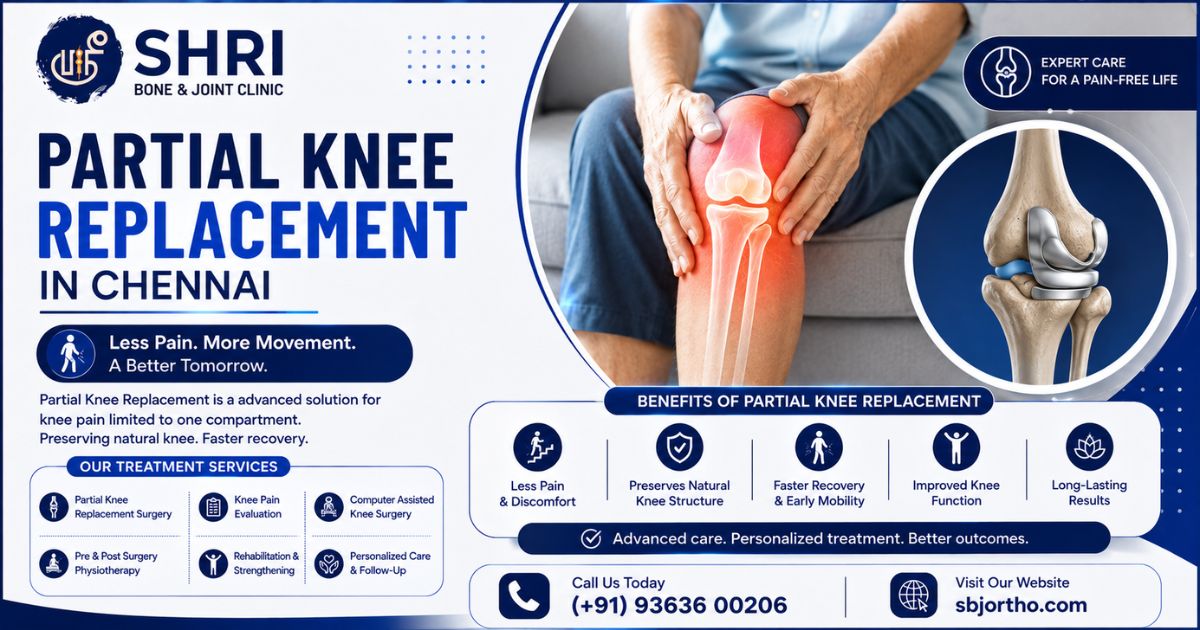
Partial knee replacement is a surgical procedure used when arthritis or cartilage damage is limited to only one part of the knee joint. Instead of replacing the entire knee, the surgeon removes and replaces only the damaged compartment while preserving the healthy areas of the joint.
The knee is commonly divided into three compartments: the inner side, outer side, and the area between the kneecap and thigh bone. In some people, arthritis mainly affects one of these areas while the remaining cartilage, bone, and important supporting structures are still reasonably healthy.
In such cases, replacing the entire knee may not always be necessary.
During partial knee replacement, the damaged joint surfaces are prepared and replaced with artificial components. Healthy bone, cartilage, and appropriate ligaments are preserved as much as possible.
This is why patient selection is particularly important. Partial knee replacement is not simply a smaller version of total knee replacement that can be chosen based on preference. The pattern of arthritis, ligament stability, knee alignment, symptoms, and overall joint condition all need to be suitable for the procedure.
The goal is to address the painful, damaged portion of the knee while retaining as much of the natural joint as possible.
When is Partial Knee Replacement recommended?
Partial knee replacement is generally considered for patients whose arthritis is predominantly limited to one compartment of the knee.
It may be considered when there is:
- Arthritis affecting a specific knee compartment
- Persistent knee pain despite appropriate conservative treatment
- Pain localised mainly to one area of the knee
- Difficulty walking because of knee arthritis
- Pain while climbing stairs
- Reduced ability to perform everyday activities
- Joint stiffness affecting function
- Preserved cartilage in the other knee compartments
- Appropriate ligament stability
- Suitable knee alignment and movement
Before surgery is considered, many patients will have already tried non-surgical treatment.
Depending on the condition, this may include:
- Physiotherapy
- Strengthening exercises
- Activity modification
- Weight management when appropriate
- Medication
- Injections in selected cases
Surgery becomes a consideration when symptoms remain significant and the structural damage is appropriate for partial replacement.
An X-ray alone does not determine eligibility. Clinical examination and the patient's symptoms must correspond with the area of joint damage.
What are the benefits of Partial Knee Replacement?
The main advantage of partial knee replacement is that only the damaged portion of the joint is replaced.
For appropriately selected patients, potential benefits include:
Preservation of Healthy Knee Structures
Healthy bone, cartilage, and appropriate supporting structures can be retained rather than replacing all compartments of the knee.
Smaller Area of Surgical Intervention
Because the procedure addresses a more limited portion of the joint, less bone may need to be removed compared with a complete knee replacement.
More Natural Knee Function
Preserving healthy parts of the joint and appropriate ligaments may allow the knee to retain more of its natural movement characteristics.
Improvement in Arthritis-Related Pain
Replacing the damaged compartment aims to reduce pain arising from the worn joint surfaces.
Improved Walking and Daily Function
As recovery progresses, patients may find it easier to walk, stand, use stairs, and perform routine activities.
Potentially Faster Early Recovery
Some appropriately selected patients may experience a quicker initial recovery than after complete knee replacement because the operation is less extensive.
However, recovery still requires physiotherapy and progressive strengthening.








How is Partial Knee Replacement performed?
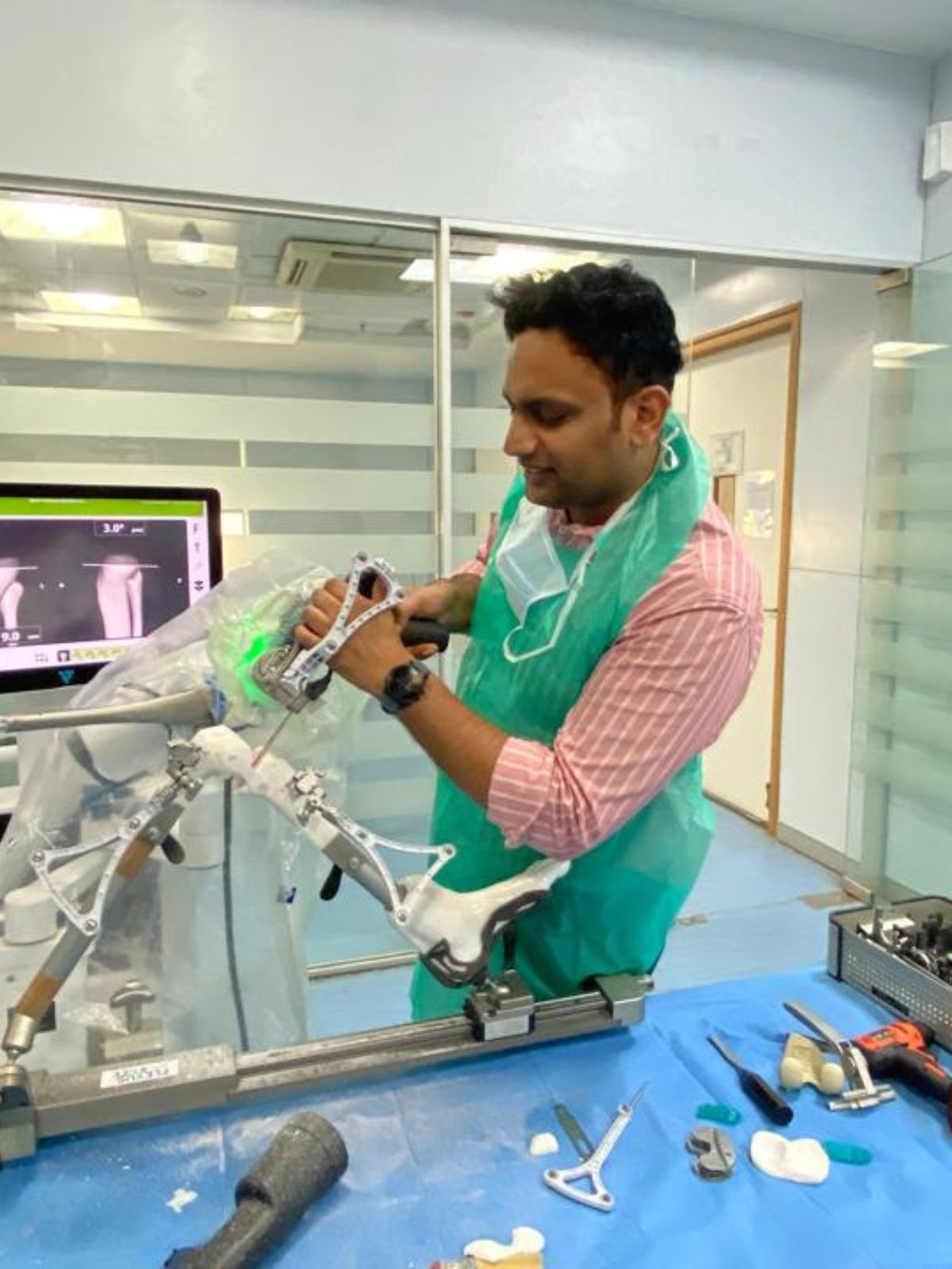
Partial knee replacement is performed under anaesthesia in a hospital setting.
The exact surgical technique depends on which compartment is affected and the patient's anatomy.
Step 1: Preoperative Assessment
Before surgery, the knee is evaluated clinically and through appropriate imaging.
The surgeon assesses:
- Location of arthritis
- Knee alignment
- Ligament stability
- Range of movement
- Condition of the remaining compartments
- Overall health
This stage is particularly important because the success of partial replacement depends heavily on correct patient selection.
Step 2: Accessing the Joint
An incision is made to reach the affected part of the knee.
The surgeon examines the joint and confirms the pattern of damage.
Step 3: Preparing the Damaged Compartment
The worn cartilage and a small amount of underlying bone are carefully removed from the affected surfaces.
Healthy areas are preserved where possible.
Step 4: Positioning the Components
Artificial components are fitted to the prepared surfaces.
A specialised insert between the components allows smoother movement of the replaced compartment.
Step 5: Checking the Knee
Before completing the procedure, the surgeon checks:
- Movement
- Alignment
- Stability
- Implant position
The incision is then closed and postoperative recovery begins.
What is the recovery process like?
Although partial knee replacement may involve less extensive surgery than total replacement, rehabilitation remains an essential part of recovery.
The surrounding muscles need to regain strength, knee movement needs to improve, and the patient must gradually return to normal walking.
Immediately After Surgery
Pain and swelling are expected during the early postoperative period.
The medical and rehabilitation teams guide the patient through initial movement and appropriate pain management.
Beginning to Walk
Patients generally begin standing and walking with assistance according to their medical condition and surgical protocol.
A walking aid may initially be used for safety.
Restoring Knee Movement
Early rehabilitation works on gradually improving bending and straightening of the knee.
The aim is to prevent unnecessary stiffness while respecting the healing process.
Rebuilding Muscle Strength
The quadriceps commonly require particular attention following knee surgery.
Rehabilitation may also strengthen the:
- Hamstrings
- Gluteal muscles
- Hip muscles
- Calf muscles
These muscles contribute to walking, balance, stair climbing, and overall lower-limb control.
Improving Balance and Walking
As strength develops, patients work towards a more confident and efficient walking pattern.
Returning to Everyday Activities
Exercises eventually become more functional and may include controlled:
- Sit-to-stand movements
- Stair climbing
- Walking for longer distances
- Balance exercises
- Daily household movements
The program is progressed according to the patient's recovery rather than following the same schedule for everyone.
How long does it take to recover from Partial Knee Replacement?
Recovery varies according to age, general health, muscle strength, the condition of the knee before surgery, and consistency with rehabilitation.
A broad recovery pattern may include:
First 2–4 Weeks
The focus is usually on wound healing, swelling management, walking, knee mobility, and basic muscle activation.
Around 4–6 Weeks
Many patients become increasingly comfortable with routine daily activities, although some swelling and stiffness may remain.
Around 6–12 Weeks
Strength, walking endurance, balance, and overall knee function generally continue to improve.
Around 3–6 Months
Further improvements in strength and confidence may occur as the patient becomes more active.
Some aspects of recovery can continue beyond this period.
A faster early recovery does not mean rehabilitation should be stopped as soon as pain decreases. Restoring strength and functional capacity remains important for long-term knee function.
Which is the best hospital for Partial Knee Replacement in Chennai?
The appropriate centre for partial knee replacement should be able to determine whether arthritis is genuinely limited enough for a partial procedure or whether another treatment would provide a more suitable outcome.
At Shri Bone & Joint Clinic, patients with knee arthritis can be assessed to determine whether preserving the unaffected compartments is appropriate or whether Total Knee Replacement in Chennai should be considered when arthritis is more widespread throughout the joint.
Patients experiencing significant arthritis in other major joints can also be evaluated for conditions requiring procedures such as Total Hip Replacement in Chennai, with treatment decisions based on symptoms, imaging, mobility, and overall functional needs.
Who is the best doctor for Partial Knee Replacement in Chennai?
Patient selection is particularly important for partial knee replacement. The procedure is most useful when the pattern of arthritis, ligament stability, alignment, and remaining joint surfaces are suitable.
An experienced Orthopedic Specialist in Chennai can evaluate these factors through clinical examination and appropriate imaging before determining whether partial replacement is a reasonable option.
Dr. Shriram Krishnamoorthy at Shri Bone & Joint Clinic evaluates patients with knee arthritis and other orthopedic conditions and recommends treatment according to the extent of joint damage and the patient's functional limitations.
Bone quality is another consideration in orthopedic care, particularly among older adults. When reduced bone density is identified or suspected, Osteoporosis Treatment in Chennai may also form part of the broader management of the patient's bone and joint health.
What is the cost of Partial Knee Replacement in Chennai?
The total cost of partial knee replacement depends on the hospital, implant used, surgical requirements, investigations, length of hospital stay, medical condition of the patient, and postoperative rehabilitation.
| Category | Approx. Range (₹) |
| Non-surgical care / Diagnostics | ₹3,000 – ₹10,000 |
| Standard Therapy | Varies |
| Advanced Programs | Varies |
| Specialised Rehab | Varies |
| Physiotherapy & Rehab | ₹15,000 – ₹40,000 |
Note: This standard table reflects rehabilitation-related cost categories and does not represent the complete cost of partial knee replacement surgery. Surgical, implant, anaesthesia, and hospital charges need to be estimated separately after evaluation.
Health insurance may cover partial knee replacement when it is medically indicated and included within the patient's policy. Coverage for the implant, hospital stay, investigations, and rehabilitation can vary, so patients should confirm the applicable terms with their insurance provider.

Better Health Care is Our Mission
Phone
Shri Bone & Joint clinic
No.14/31, 3rd Avenue Indira Nagar, Adyar, Chennai-600020
Phone: 044 4505 5509