
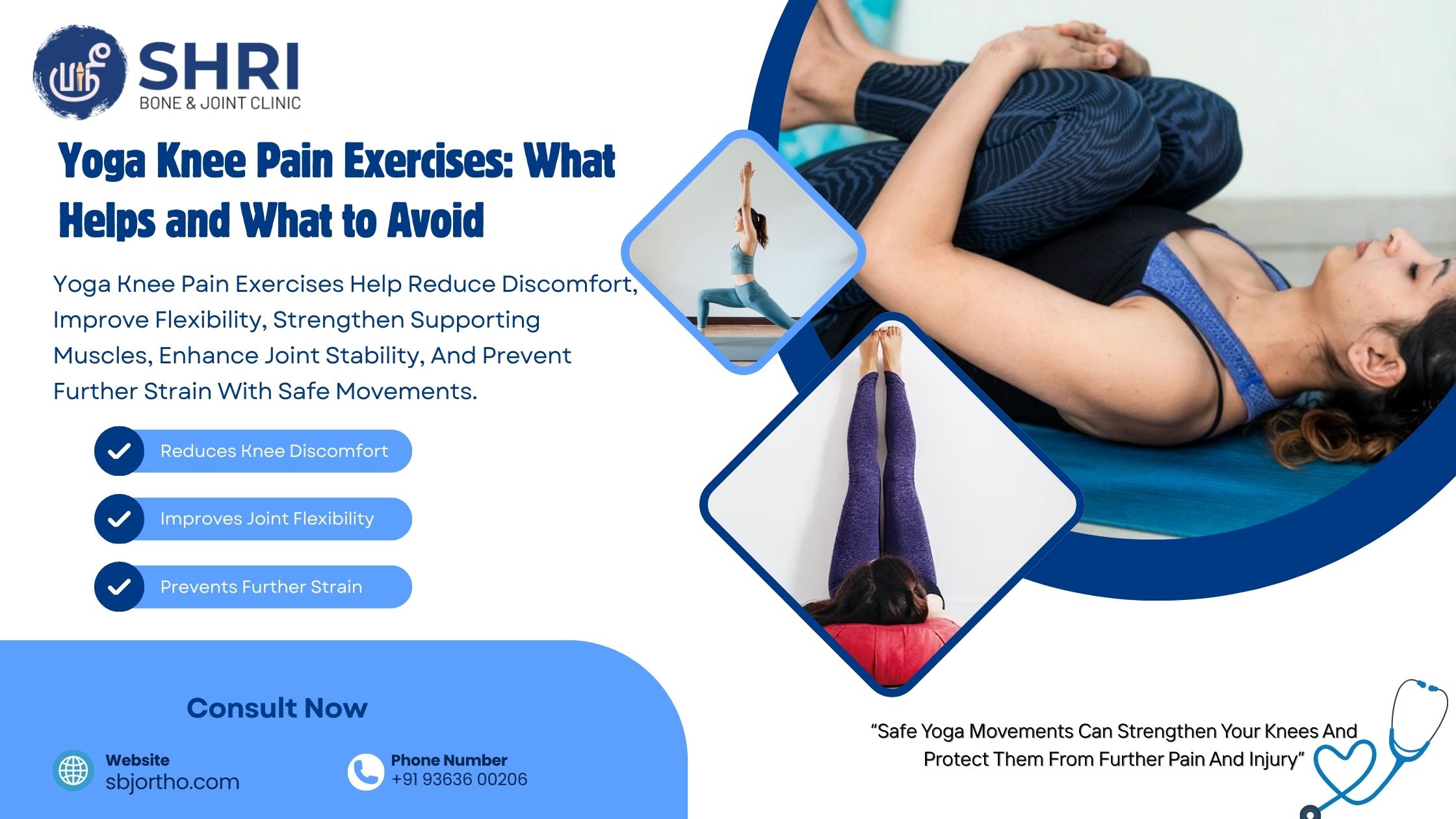
Knee pain is one of the most common musculoskeletal complaints across all age groups. It may be caused by arthritis, ligament strain, muscle weakness, or long-term wear and tear. While rest may provide temporary relief, long-term joint health depends on safe and structured movement.
Yoga is often recommended as a gentle form of exercise for flexibility and strength. However, not all yoga poses are suitable for individuals with knee pain. Some movements may support recovery, while others can worsen symptoms if performed incorrectly.
This guide explains which yoga knee pain exercises may help, which poses to avoid, and how to practice safely.
Why Yoga Can Help Knee Pain
Yoga combines controlled movement, stretching, strengthening, and breath awareness. When modified properly, it can support knee health in several ways.
Improved Flexibility
Tight muscles around the hips, thighs, and calves can increase stress on the knee joint. Gentle stretching improves flexibility and reduces mechanical strain.
Strengthening Supporting Muscles
The quadriceps, hamstrings, and hip muscles stabilize the knee. Targeted strengthening improves joint alignment and reduces excess pressure.
Better Balance and Body Awareness
Yoga enhances posture and movement control. Improved balance reduces the risk of sudden strain or injury.
Reduced Muscle Tension
Slow, controlled breathing and stretching help relax surrounding muscles, which may decrease discomfort.
Best Yoga Knee Pain Exercises That May Help
These exercises are generally considered safer when performed carefully and with proper alignment.
1. Supported Mountain Pose (Tadasana)
Stand upright with feet hip-width apart. Focus on distributing weight evenly between both feet.
This pose improves posture and alignment, which reduces uneven load on the knees.
2. Straight Leg Raises
Lie on your back and slowly lift one leg while keeping it straight. Lower it gently.
This strengthens the quadriceps without bending the knee, making it suitable for mild knee discomfort.
3. Bridge Pose (Setu Bandha Sarvangasana)
Lie on your back with knees bent and feet flat. Lift your hips slowly and hold briefly.
Bridge pose strengthens the gluteal muscles, which help stabilize the knee joint.
4. Chair Pose (Modified)
With feet slightly apart, bend your knees slightly while keeping your back straight.
A shallow version of chair pose can strengthen thigh muscles. Avoid deep bending if painful.
5. Warrior II (Short Stance)
Keep the front knee aligned with the ankle and avoid excessive bending.
This pose strengthens leg muscles while promoting balance, provided the depth is controlled.
6. Gentle Hamstring Stretch
Sit with one leg extended and lean forward slightly.
Flexible hamstrings reduce tension that may otherwise pull on the knee joint.
Yoga Poses to Avoid with Knee Pain
Certain poses may increase joint stress, especially in individuals with arthritis or ligament issues.
Deep Squats
Excessive knee bending can compress joint surfaces and aggravate symptoms.
Full Lotus Pose
This position places rotational stress on the knee and may not be suitable for unstable joints.
Kneeling Positions Without Support
Extended kneeling may cause discomfort in individuals with anterior knee pain.
Jump Transitions
Sudden impact movements increase joint loading and should be avoided.
How to Practice Yoga Safely with Knee Pain
To reduce risk and improve benefit:
- Begin with gentle, low-intensity sessions
- Use props such as blocks or cushions for support
- Avoid forcing the knee into deep bends
- Stop if sharp or persistent pain occurs
- Maintain proper alignment during poses
- Seek professional guidance when needed
Gradual progression is essential. The goal is joint support, not flexibility at the expense of safety.
When to Seek Medical Guidance
Yoga may not be suitable for everyone without evaluation. Seek professional assessment if:
- Knee swelling is persistent
- Pain worsens during exercise
- There is joint instability
- You have recently sustained an injury
- You have advanced arthritis
Medical evaluation ensures that exercises are appropriate for your specific knee condition.
At Shri Physio & Rehab, structured therapeutic yoga programs are designed to support joint recovery safely. Supervision under Dr. Shriram Krishnamoorthy at Shri Bone & Joint Clinic ensures that rehabilitation aligns with orthopedic needs.
Conclusion
Yoga can be beneficial for knee pain when performed correctly and modified to individual tolerance. Gentle strengthening, improved flexibility, and better posture can reduce stress on the knee joint over time. However, deep bending, twisting, or high-impact movements should be avoided.
For individuals seeking structured and supervised programs, services such as Yoga Therapy for Knee Pain in Chennai at Shri Physio & Rehab provide guided rehabilitation. A proper evaluation by an experienced Orthopedic Specialist at Shri Bone & Joint Clinic helps ensure that yoga-based exercise plans are safe and suitable for your condition.
Safe movement, not aggressive stretching, is the key to long-term knee health.
FAQs
1. Can yoga cure knee pain completely?
Yoga does not cure underlying joint conditions, but it can help reduce stiffness and strengthen supporting muscles. Regular practice may improve function and comfort over time when done correctly.
2. Is yoga safe for knee arthritis?
Gentle and modified yoga can be safe for knee arthritis. However, deep squats and twisting poses should be avoided. Professional supervision is recommended in moderate to severe cases.
3. How often should I practice yoga for knee pain?
Most individuals benefit from practicing two to four times per week. Sessions should begin with low intensity and gradually progress based on comfort and response.
4. What should I do if yoga increases my knee pain?
Stop the activity and allow the joint to rest. Persistent or worsening pain should be evaluated by a medical professional to rule out underlying injury.
5. Can beginners with knee pain start yoga at home?
Beginners may start with simple, low-impact poses. However, individuals with chronic pain or instability should consider professional assessment before beginning independent practice.