

Knee pain, stiffness, and difficulty walking are common problems that can develop as the knee joint gradually wears down. For some people, the discomfort begins with mild stiffness in the morning or pain after climbing stairs. Over time, the symptoms may become more persistent, affecting mobility, sleep, and everyday activities.
Knee osteoarthritis treatment in Chennai focuses on reducing pain, improving joint movement, maintaining muscle strength, and helping patients continue their daily activities comfortably. Treatment may include medication, physiotherapy, lifestyle modifications, injections, or knee replacement surgery, depending on the severity of joint damage.
At Shri Bone & Joint Clinic, Dr. Shriram Krishnamoorthy provides personalised orthopedic evaluation and treatment planning for patients experiencing knee osteoarthritis. From early-stage arthritis management to advanced joint replacement options, the treatment approach is based on the patient's symptoms, mobility, X-ray findings, and overall health.
What Is Knee Osteoarthritis?
Knee osteoarthritis is a degenerative joint condition that develops when the protective cartilage covering the ends of the bones in the knee gradually deteriorates.
Cartilage normally allows the joint surfaces to move smoothly while absorbing some of the forces generated during walking, standing, and other activities.
As osteoarthritis progresses, the cartilage becomes thinner and the underlying bone may undergo changes. The joint can develop inflammation, bony growths called osteophytes, and reduced movement.
The knee contains three main compartments:
- Medial compartment: The inner side of the knee.
- Lateral compartment: The outer side of the knee.
- Patellofemoral compartment: The area between the kneecap and thigh bone.
Osteoarthritis may affect one compartment or involve multiple areas of the knee.
What Are the Symptoms of Knee Osteoarthritis?
Symptoms often develop gradually and may become more noticeable over time.
Common symptoms include:
- Knee pain while walking or climbing stairs
- Stiffness after sitting or resting
- Difficulty bending or straightening the knee
- Swelling around the joint
- Grinding or clicking sensations during movement
- Reduced walking distance
- Difficulty getting up from a chair
- Pain after prolonged standing
- Bow-legged or knock-kneed deformity in advanced cases
Symptoms do not always correspond directly to the severity of changes seen on X-rays. Some patients experience significant pain with moderate joint changes, while others have advanced radiographic arthritis with fewer symptoms.
What Causes Knee Osteoarthritis?
Knee osteoarthritis develops through a combination of age-related joint changes, mechanical stress, previous injuries, and individual risk factors.
Common contributing factors include:
- Increasing age
- Excess body weight
- Previous knee injuries
- Meniscus or ligament damage
- Repetitive occupational knee loading
- Family history of osteoarthritis
- Muscle weakness around the knee
- Previous knee surgery
- Joint alignment abnormalities
Although osteoarthritis becomes more common with age, younger adults can also develop the condition, particularly after significant knee injuries.
When Should You Seek Knee Osteoarthritis Treatment?
Patients should consider orthopedic evaluation when knee pain becomes persistent, interferes with daily activities, or gradually limits movement.
Early assessment can help identify the cause of symptoms and determine whether conservative treatment is appropriate.
Persistent Knee Pain During Daily Activities
Pain while walking, standing, climbing stairs, or performing household activities may indicate osteoarthritis or another knee condition.
When symptoms continue despite rest and basic self-care, further evaluation is recommended.
Morning Stiffness and Difficulty Moving
Patients with knee osteoarthritis may experience stiffness after waking up or sitting for extended periods.
The stiffness often improves after gentle movement, although advanced arthritis may cause more persistent restrictions.
Recurrent Knee Swelling
Osteoarthritis can cause episodes of swelling and discomfort, particularly after increased activity.
However, sudden severe swelling, a hot red joint, fever, or an inability to bear weight requires urgent medical assessment because other conditions, including infection, may be responsible.
Reduced Walking Distance
Patients may gradually notice that they cannot walk as far as before without discomfort.
This can affect shopping, travelling, exercise, and other everyday activities.
Increasing Knee Deformity
Advanced osteoarthritis can alter the normal alignment of the knee.
Patients may develop bow-legged or knock-kneed positioning, which can further affect movement and joint loading.
Knee Pain That Affects Sleep
Pain that regularly interrupts sleep or persists even during rest may indicate significant symptoms requiring medical assessment.
The orthopedic surgeon evaluates whether the pain is related to osteoarthritis or another underlying condition.
What Are the Benefits of Knee Osteoarthritis Treatment?
Appropriate treatment can help patients manage symptoms, improve mobility, and maintain independence.
The expected benefits depend on the stage of arthritis, treatment selected, and individual response.
Reduction in Knee Pain
Medication, physiotherapy, exercise, weight management, and selected interventions may help reduce osteoarthritis-related discomfort.
Pain relief can make daily activities easier and improve participation in rehabilitation.
Improved Joint Movement
Gentle movement exercises and structured physiotherapy can help maintain or improve knee flexibility.
Patients may experience less difficulty bending and straightening the knee during routine activities.
Better Muscle Strength
Strengthening the quadriceps, hamstrings, and hip muscles can improve support around the knee.
Better muscle function may help patients walk, climb stairs, and perform everyday movements more comfortably.
Improved Walking and Balance
Exercise programmes that include strengthening, balance training, and functional movement can help improve mobility and confidence.
Maintaining Independence
Managing knee osteoarthritis may help patients continue activities such as walking, travelling, shopping, and performing household responsibilities.
Delaying or Avoiding Surgery When Appropriate
Many patients with mild or moderate osteoarthritis can manage their symptoms without knee replacement.
However, conservative treatment does not reliably reverse cartilage loss or guarantee that surgery will never be required.










How Is Knee Osteoarthritis Treated?
Knee osteoarthritis treatment is selected according to symptom severity, physical examination findings, functional limitations, imaging results, and patient preferences.
Treatment usually begins with non-surgical management. Surgery may be considered when advanced arthritis causes substantial pain and disability despite appropriate conservative care.
1. Medication for Knee Osteoarthritis
Medication may help reduce pain and improve comfort during daily activities.
Depending on the patient's condition, the orthopedic doctor may recommend topical anti-inflammatory medication, appropriate oral pain relief, or other short-term treatments.
Oral anti-inflammatory medicines require particular caution in patients with kidney disease, stomach ulcers, cardiovascular conditions, or certain medication interactions.
Medication should be used according to medical advice rather than relied upon as the only long-term treatment.
2. Physiotherapy for Knee Osteoarthritis
Physiotherapy is an important component of non-surgical knee osteoarthritis management.
A structured rehabilitation programme may include:
- Quadriceps strengthening
- Hamstring exercises
- Hip muscle strengthening
- Knee range-of-motion exercises
- Balance training
- Walking practice
- Functional movement exercises
- Home exercise guidance
The exercises are adjusted according to pain, swelling, muscle strength, and physical ability.
At Shri Physio & Rehab, rehabilitation can be planned to support knee movement, muscle function, and everyday mobility.
3. Weight Management and Lifestyle Modifications
Excess body weight increases the load placed on the knee during walking and other weight-bearing activities.
For patients who are overweight, gradual weight reduction may help reduce pain and improve function.
Other useful modifications may include:
- Avoiding sudden increases in strenuous activity
- Taking regular movement breaks
- Choosing supportive footwear
- Using appropriate walking aids when necessary
- Maintaining regular low-impact exercise
- Adjusting activities that repeatedly aggravate symptoms
Complete inactivity is generally not recommended because prolonged inactivity can contribute to muscle weakness and reduced joint function.
4. Low-Impact Exercise
Regular physical activity is an important part of osteoarthritis management.
Suitable activities may include walking within comfortable limits, stationary cycling, swimming, and water-based exercise.
Exercise programmes should begin at an appropriate intensity and progress gradually.
Patients with severe pain, instability, or substantial movement restrictions may require supervised exercise.
5. Knee Braces and Walking Aids
Selected patients may benefit from knee braces or walking aids.
An unloading brace may be considered for certain patients with arthritis predominantly affecting one compartment of the knee.
A walking stick can also reduce stress on the painful knee when used correctly.
The suitability of these aids depends on joint alignment, symptoms, and individual requirements.
6. Injections for Knee Osteoarthritis
Intra-articular injections may be considered for selected patients whose symptoms remain troublesome despite initial treatment.
Corticosteroid injections may provide short-term relief for some patients, particularly during painful inflammatory flare-ups.
Other injections, including hyaluronic acid or platelet-rich plasma, are sometimes discussed, but their benefits are inconsistent and they are not routinely recommended for every patient.
Injection treatment should be selected after discussing the available evidence, potential risks, and expected duration of benefit.
7. Partial Knee Replacement
Partial knee replacement may be considered when arthritis is limited to a specific compartment of the knee and the remaining joint structures meet the necessary clinical criteria.
During the procedure, only the damaged compartment is replaced with artificial components.
Not every patient with knee osteoarthritis is suitable for partial replacement.
8. Total Knee Replacement
Total knee replacement may be recommended when arthritis affects multiple compartments and causes substantial pain, stiffness, or functional limitations despite appropriate non-surgical treatment.
The damaged joint surfaces are replaced with artificial components designed to restore joint movement and stability.
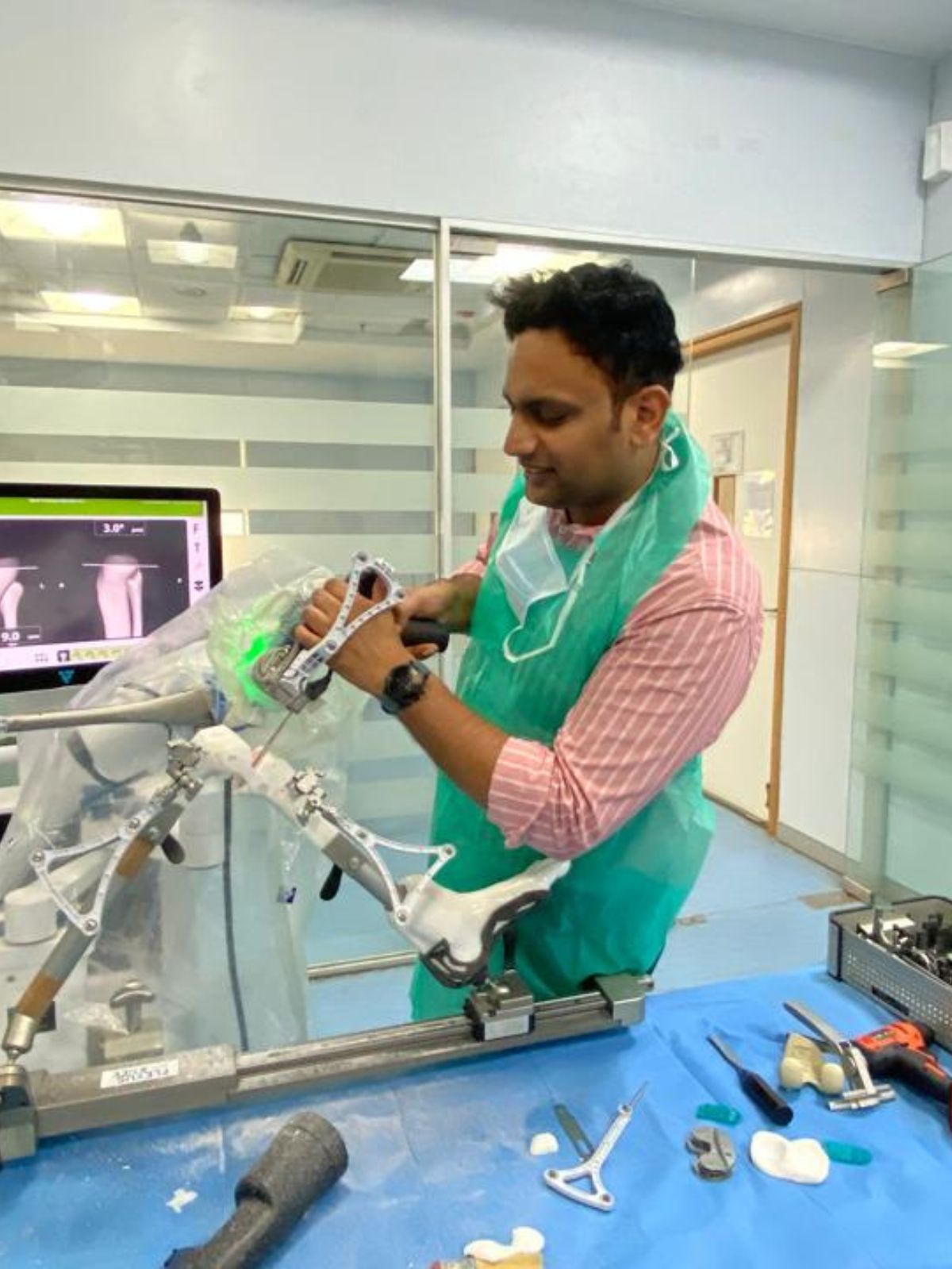
The procedure may be performed using conventional surgical instruments or appropriate robotic-assisted technology.
The decision depends on the patient's condition, surgical requirements, and surgeon's assessment.
What Is Recovery Like After Knee Osteoarthritis Treatment?
Recovery depends on the treatment selected and the severity of the condition.
Patients receiving non-surgical care generally focus on symptom control, muscle strengthening, improved joint movement, and long-term activity management.
Recovery With Medication and Lifestyle Changes
Some patients experience symptom improvement over days or weeks with appropriate medication and activity modification.
However, osteoarthritis is a chronic condition, and ongoing exercise and lifestyle management are usually necessary.
Recovery With Physiotherapy
Physiotherapy improvements are typically gradual.
Patients may begin noticing better movement, strength, or functional confidence after several weeks of consistent exercises.
Progress depends on baseline fitness, arthritis severity, exercise adherence, and other medical conditions.
Recovery After Knee Injections
Some injections may provide temporary pain relief, but the response and duration vary.
Patients should follow their doctor's instructions regarding activity after an injection.
Injections do not restore lost cartilage or permanently cure osteoarthritis.
Recovery After Knee Replacement
Patients undergoing knee replacement require a structured postoperative rehabilitation programme.
Early recovery focuses on wound healing, pain control, walking, and gentle knee movement.
Longer-term rehabilitation focuses on strengthening, balance, endurance, and returning to everyday activities.
How Long Does Knee Osteoarthritis Treatment Take?
There is no single treatment duration for knee osteoarthritis because it is a long-term condition.
The timeline depends on the treatment approach and individual response.
| Treatment Approach | General Timeline |
| Medication and symptom management | Relief may begin within days, depending on treatment |
| Physiotherapy and exercise | Initial improvements may develop over 4–8 weeks |
| Weight management | Benefits develop gradually with sustained lifestyle changes |
| Knee injections | Relief, if achieved, varies by injection and patient |
| Partial or total knee replacement | Initial recovery takes weeks; functional improvement continues for months |
| Long-term osteoarthritis management | Ongoing exercise, monitoring, and symptom management |
These are general expectations rather than guaranteed outcomes.
Patients with mild osteoarthritis may manage symptoms effectively for years through exercise and lifestyle modifications.
Others may require changes in treatment as symptoms progress.
Which Is the Best Hospital for Knee Osteoarthritis Treatment in Chennai?
Patients seeking knee osteoarthritis treatment should choose an orthopedic centre that provides accurate diagnosis, personalised treatment planning, appropriate non-surgical care, and surgical options when necessary.
Shri Bone & Joint Clinic in Chennai provides orthopedic evaluation and treatment planning for patients with knee pain, stiffness, joint degeneration, and mobility limitations.
Treatment decisions are based on clinical examination, imaging findings, symptom severity, and the patient's individual requirements.
For patients with advanced arthritis involving multiple knee compartments, Robotic Total Knee Replacement in Chennai may be considered when total joint replacement is clinically indicated.
Patients experiencing severe arthritis in both knees can also explore Robotic Bilateral Knee Replacement in Chennai to understand the differences between simultaneous and staged replacement procedures.
The aim is to recommend the most appropriate treatment for the patient's condition rather than proceeding directly to surgery.
Who Is the Best Doctor for Knee Osteoarthritis Treatment in Chennai?
Choosing the right orthopedic doctor is important because knee osteoarthritis treatment varies considerably between patients.
Some patients benefit from exercise, medication, and weight management, while others may require injections or joint replacement.
Dr. Shriram Krishnamoorthy at Shri Bone & Joint Clinic provides orthopedic consultation and treatment planning for patients with knee osteoarthritis and other joint-related conditions.
Patients searching for an Orthopedic Specialist in Chennai can consult Dr. Shriram for a detailed assessment of knee pain, joint movement, arthritis severity, and available treatment options.
For patients with advanced arthritis who are considering surgical treatment, information about the Best Robotic Knee Replacement Surgeon in Chennai can help explain the importance of surgeon expertise, patient selection, surgical planning, and postoperative rehabilitation.
The decision to undergo knee replacement should be based on the patient's symptoms, joint damage, medical fitness, and treatment goals.
What Is the Cost of Knee Osteoarthritis Treatment in Chennai?
The cost of knee osteoarthritis treatment depends on the severity of arthritis, investigations required, medications, physiotherapy sessions, injections, and whether surgical intervention is necessary.
Early-stage osteoarthritis can often be managed with conservative treatment, while advanced cases may require more extensive care.
| Category | Approx. Range (₹) |
| Non-surgical care / Diagnostics | ₹3,000 – ₹10,000 |
| Standard Therapy | Varies |
| Advanced Programs | Varies |
| Specialised Rehab | Varies |
| Physiotherapy & Rehab | ₹15,000 – ₹40,000 |
These are illustrative planning estimates rather than verified clinic prices or a treatment quotation.
The actual expense depends on the services prescribed, number of visits, investigations, and individual treatment requirements.
If knee replacement surgery is recommended, additional expenses may include hospital admission, implants, surgeon fees, anaesthesia, operating-room charges, medications, and postoperative rehabilitation.
Does Health Insurance Cover Knee Osteoarthritis Treatment?
Insurance coverage depends on the patient's policy and the treatment required.
Some policies may cover medically necessary hospitalisation and knee replacement surgery, subject to applicable terms and conditions.
Outpatient consultations, routine physiotherapy, medications, and certain injections may not be covered under all policies.
Patients should verify waiting periods, exclusions, pre-authorisation requirements, and coverage limits with their insurer.
FAQs
1. Can knee osteoarthritis be treated without surgery?
Yes. Many patients with mild or moderate knee osteoarthritis can manage their symptoms through physiotherapy, strengthening exercises, weight management, medication, and activity modifications.
Non-surgical treatment can improve comfort and mobility, although it does not reliably regenerate damaged cartilage. Surgery is generally considered when symptoms remain severe despite appropriate conservative care.
2. What is the best treatment for early-stage knee osteoarthritis?
Exercise therapy, muscle strengthening, weight management when appropriate, and education about activity modification are important first-line treatments for early-stage knee osteoarthritis.
Medication may be recommended for additional symptom relief. The most suitable treatment plan depends on the patient's pain, mobility, medical history, and individual requirements.
3. Can physiotherapy help patients with severe knee osteoarthritis?
Physiotherapy can help improve muscle strength, movement, balance, and functional ability even in patients with advanced osteoarthritis.
However, patients with severe structural damage and persistent disability may not obtain sufficient relief from physiotherapy alone. An orthopedic evaluation can help determine whether surgical treatment should be considered.
4. When is knee replacement necessary for osteoarthritis?
Knee replacement may be recommended when advanced arthritis causes significant pain, stiffness, deformity, or mobility limitations that persist despite appropriate non-surgical treatment.
The decision is based on symptoms, physical examination, imaging, medical fitness, and the patient's treatment goals. X-ray findings alone do not determine the need for surgery.
5. Is walking good for knee osteoarthritis?
Walking is generally beneficial for many patients with knee osteoarthritis because it supports mobility, muscle function, and overall health.
However, walking distance and intensity should be adjusted according to symptoms. Patients experiencing severe pain, instability, or significant swelling may benefit from a supervised exercise programme or temporary activity modification.

Better Health Care is Our Mission
Get an immediate relief to your knee-related problems from Shri Bone & Joint Clinic.
Phone
Shri Bone & Joint clinic
No.14/31, 3rd Avenue Indira Nagar, Adyar, Chennai-600020
Phone: 044 4505 5509