

Living with severe arthritis in both knees can make everyday activities increasingly challenging. Walking, climbing stairs, standing for long periods, and getting up from a chair may become painful when both knee joints are affected. When non-surgical treatments no longer provide adequate relief, bilateral knee replacement may be considered to improve mobility and quality of life.
Robotic bilateral knee replacement in Chennai is an advanced surgical approach in which both damaged knee joints are replaced using robotic-assisted technology. Depending on the patient's health and surgical requirements, the replacements may be performed during a single operation or as two separate procedures.
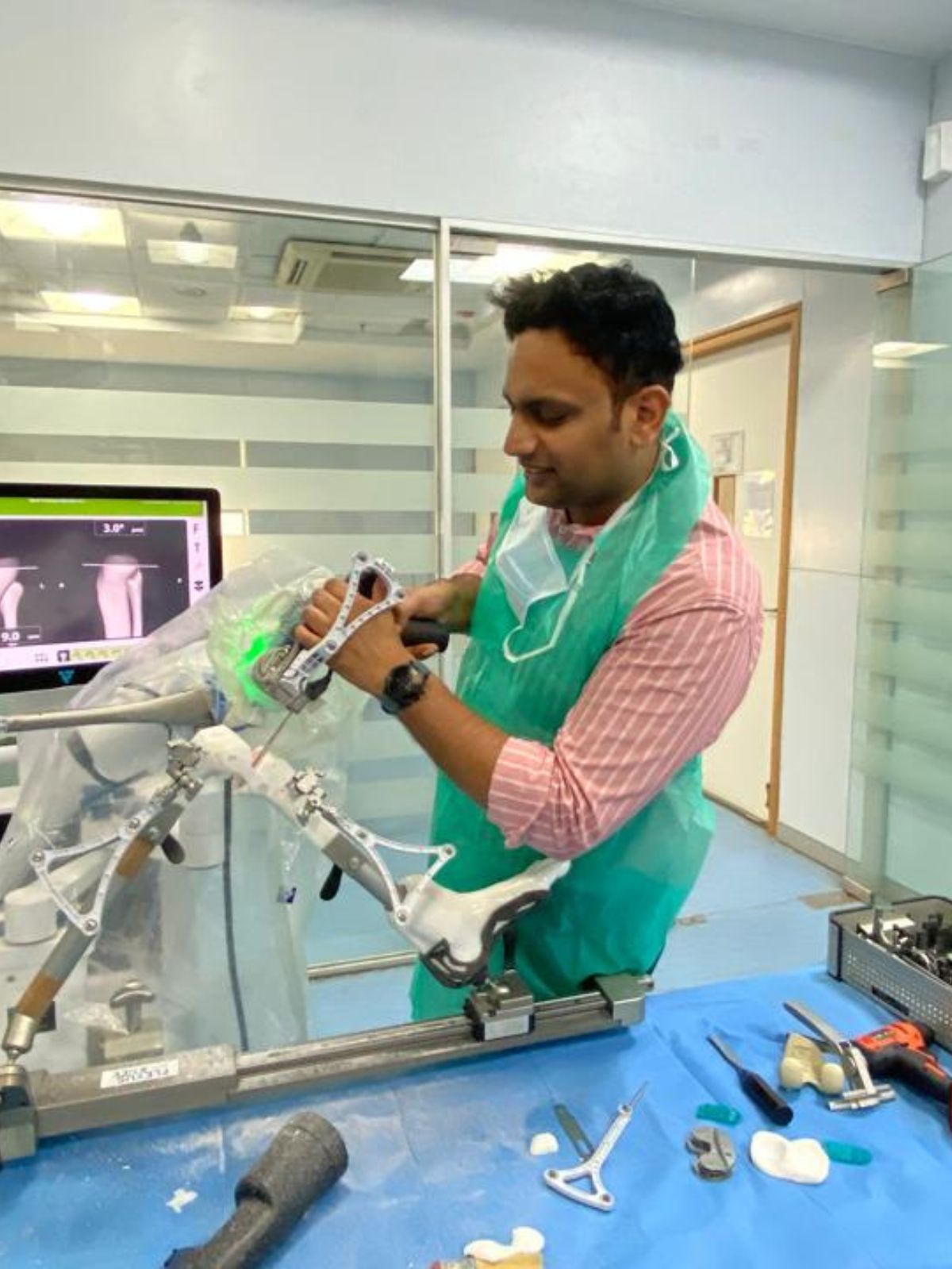
At Shri Bone & Joint Clinic, Dr. Shriram Krishnamoorthy provides orthopedic evaluation and treatment planning for patients with advanced arthritis affecting both knees. The clinic's robotic-assisted knee replacement approach uses the VELYS Robotic-Assisted Solution, which supports patient-specific surgical planning, precise bone preparation, and intraoperative assessment.
For patients experiencing severe pain in both knees, the decision between simultaneous and staged bilateral knee replacement requires careful medical evaluation. The objective is to select a treatment approach that balances pain relief, joint function, surgical safety, and rehabilitation requirements.
What Is Robotic Bilateral Knee Replacement?
Robotic bilateral knee replacement is a surgical approach in which both knee joints are replaced with artificial components using robotic assistance during selected stages of the procedures.
The term bilateral refers to both sides of the body. In this case, it means replacing the damaged joint surfaces of the right and left knees.
Each knee replacement involves removing damaged joint surfaces and positioning artificial components designed to restore joint movement and stability.
Robotic-assisted technology helps the surgeon assess the anatomy and alignment of each knee individually.
During surgery, the system may support:
- Patient-specific surgical planning
- Assessment of knee alignment
- Precise bone preparation
- Implant positioning
- Evaluation of joint stability
- Soft-tissue balance assessment
- Intraoperative surgical adjustments
Although both knees may have arthritis, their anatomy, deformity, and degree of damage can differ. Robotic assistance allows the surgeon to evaluate each knee according to its individual characteristics.
The VELYS Robotic-Assisted Solution supports knee replacement using intraoperative measurements without requiring a preoperative CT scan specifically for robotic planning.
The robotic system does not independently perform surgery. The orthopedic surgeon remains responsible for planning, controlling, and completing both procedures.
Simultaneous Bilateral Knee Replacement
Simultaneous bilateral knee replacement involves replacing both knees during the same anaesthetic session.
This approach may be considered for carefully selected patients who have advanced arthritis in both knees and are medically suitable for a longer operation.
Potential advantages include a single hospital admission and one combined rehabilitation period.
However, simultaneous surgery may place greater physiological demands on the patient and can involve increased risks compared with replacing one knee at a time.
Staged Bilateral Knee Replacement
Staged bilateral knee replacement involves replacing one knee first and performing the second replacement during a separate operation.
The interval between surgeries depends on the patient's recovery, medical fitness, symptoms, and surgeon's assessment.
This approach allows the patient to recover from the first procedure before undergoing the second.
Staged replacement may be preferred when simultaneous surgery presents additional medical risks.
When Is Robotic Bilateral Knee Replacement Recommended?
Robotic bilateral knee replacement may be considered when both knees have advanced joint damage and replacement surgery is clinically indicated.
The decision depends on the severity of arthritis, functional limitations, overall health, and suitability for simultaneous or staged surgery.
Severe Osteoarthritis in Both Knees
Bilateral knee osteoarthritis occurs when the protective cartilage in both knee joints gradually deteriorates.
Patients may experience persistent pain, stiffness, swelling, and difficulty walking.
When arthritis becomes advanced in both knees and conservative treatment no longer provides adequate relief, bilateral replacement may be considered.
Persistent Pain Despite Non-Surgical Treatment
Patients with arthritis in both knees may initially receive medication, physiotherapy, activity modification, weight management advice, or appropriate injections.
When these treatments fail to provide sufficient relief and symptoms significantly affect daily life, surgical evaluation may be recommended.
Difficulty Walking and Climbing Stairs
When both knees are painful, patients may find it difficult to compensate by relying on the opposite leg.
This can make walking, climbing stairs, standing, and performing household activities particularly challenging.
Bilateral knee replacement may be considered when both joints contribute substantially to functional limitations.
Severe Stiffness in Both Knee Joints
Advanced arthritis can reduce the ability to bend and straighten the knees.
Patients may struggle with sitting, getting up from chairs, entering vehicles, or maintaining balance during movement.
The surgeon evaluates whether joint replacement is likely to improve these limitations.
Bilateral Knee Deformity
Advanced arthritis may cause bow-legged or knock-kneed alignment in one or both knees.
Robotic-assisted technology can provide additional measurements to support implant positioning and alignment assessment.
However, severe deformity may require additional surgical planning, and robotic assistance is not appropriate for every case.
Patients Medically Suitable for Knee Replacement
Medical fitness is particularly important when considering replacement of both knees.
The surgeon assesses factors such as:
- Age and overall physical condition
- Heart and lung health
- Diabetes and other medical conditions
- Body weight and nutritional status
- Anaemia and blood-related concerns
- Previous surgical history
- Mobility and muscle strength
- Ability to participate in rehabilitation
Patients with significant medical risks may be advised to undergo staged procedures rather than simultaneous bilateral replacement.
What Are the Benefits of Robotic Bilateral Knee Replacement?
Robotic-assisted bilateral knee replacement combines the potential functional benefits of replacing severely damaged knee joints with additional surgical planning and guidance technology.
The benefits depend on patient selection, surgical technique, implant positioning, and rehabilitation.
Individualised Planning for Each Knee
The right and left knees may have different degrees of arthritis, alignment, and soft-tissue balance.
Robotic assistance allows the surgeon to evaluate each knee separately and plan the replacement according to its anatomy.
Precise Bone Preparation
Robotic-assisted guidance can help the surgeon perform selected bone preparation steps with greater precision.
This supports execution of the planned implant positioning for each knee.
Assessment of Knee Alignment
Proper implant positioning and alignment are important considerations in knee replacement.
Robotic technology provides intraoperative information that can assist the surgeon in evaluating alignment independently for both knees.
Improved Assessment of Joint Balance
Each knee requires appropriate stability and soft-tissue balance.
Robotic-assisted measurements may help the surgeon assess movement and make adjustments during the procedure.
Potential Improvement in Mobility
For patients with severe arthritis in both knees, replacing the damaged joint surfaces may reduce pain and improve walking ability.
Functional improvement depends on recovery, muscle strength, rehabilitation, and individual health factors.
One Combined Recovery Period in Selected Patients
When simultaneous bilateral replacement is medically appropriate, patients undergo one hospital admission and a combined rehabilitation process.
However, rehabilitation can initially be more demanding because both knees are recovering together.
This potential convenience must be weighed against the additional medical risks of simultaneous surgery.
Robotic assistance does not eliminate those risks or guarantee faster recovery.













How Is Robotic Bilateral Knee Replacement Performed?
Robotic bilateral knee replacement involves replacing the damaged joint surfaces in both knees using robotic assistance during selected surgical steps.
The exact approach depends on whether the procedures are performed simultaneously or in stages.
Step 1: Comprehensive Knee Assessment
The orthopedic surgeon examines both knees to evaluate pain, stiffness, deformity, stability, and range of movement.
Weight-bearing X-rays are commonly used to assess the severity of arthritis.
Each knee is evaluated individually because the extent of damage may differ.
Step 2: Medical Fitness Evaluation
Patients undergo an appropriate preoperative medical assessment.
This may include blood investigations, cardiac evaluation, anaesthesia assessment, and other tests based on medical history.
For simultaneous bilateral replacement, careful assessment is particularly important because the procedure may involve greater physiological stress.
Step 3: Choosing Simultaneous or Staged Surgery
The surgeon discusses the benefits and risks of both approaches.
Simultaneous surgery may be considered for selected medically fit patients, while staged surgery may be more appropriate for patients with additional health concerns.
The decision is individualised rather than based on age or arthritis severity alone.
Step 4: Anaesthesia and Surgical Preparation
The patient receives suitable anaesthesia.
The surgical team prepares the knee or knees according to the planned procedure.
In simultaneous bilateral replacement, both knees are operated on during the same anaesthetic session, generally one after the other.
Step 5: Robotic-Assisted Assessment of the First Knee
The surgeon uses the VELYS Robotic-Assisted Solution to assess knee anatomy and alignment.
Intraoperative measurements help guide the surgical plan.
The system supports a CT-free robotic workflow, although other investigations may still be necessary.
Step 6: Bone Preparation and Implant Placement
The damaged joint surfaces are prepared using robotic-assisted guidance during selected steps.
Artificial knee components are positioned, and the surgeon evaluates alignment, movement, and stability.
Adjustments may be made according to the patient's anatomy and surgical findings.
Step 7: Replacement of the Second Knee
For simultaneous bilateral surgery, the surgeon proceeds with the second knee during the same operation.
The second knee is independently assessed, prepared, and replaced.
For staged bilateral replacement, the second procedure is performed during a later hospital admission after appropriate recovery and medical reassessment.
Step 8: Surgical Closure and Postoperative Monitoring
After implantation, the surgical sites are closed.
The medical team monitors pain, circulation, wound healing, blood loss, and general recovery.
Patients undergoing simultaneous bilateral replacement may require closer postoperative monitoring because both knees have been operated on.
Step 9: Rehabilitation and Assisted Mobilisation
Physiotherapy begins when medically appropriate.
Rehabilitation focuses on restoring knee movement, improving muscle strength, and helping the patient regain safe walking ability.
What Is Recovery Like After Robotic Bilateral Knee Replacement?
Recovery after bilateral knee replacement can be more demanding than recovery after a single knee replacement, particularly when both knees are replaced simultaneously.
Both legs require healing, strengthening, and rehabilitation.
The recovery process depends on the patient's health, preoperative mobility, surgical approach, and postoperative progress.
Immediate Postoperative Recovery
During the early postoperative period, the medical team monitors pain, swelling, wound healing, circulation, and general medical stability.
Patients may require additional assistance with movement because both knees are recovering.
Pain management and appropriate postoperative monitoring are important during this stage.
Walking After Bilateral Knee Replacement
Patients are encouraged to begin assisted mobilisation when medically appropriate.
A walker or other walking aid is commonly required during the early recovery period.
Patients undergoing simultaneous bilateral replacement may need more support initially because neither knee is unaffected by surgery.
Physiotherapy for Both Knees
Rehabilitation involves exercises for both operated knees.
A structured programme may include:
- Ankle pump exercises
- Quadriceps activation
- Knee bending and straightening
- Gentle muscle strengthening
- Assisted walking
- Balance exercises
- Sit-to-stand training
- Stair-climbing practice
- Progressive functional exercises
At Shri Physio & Rehab, postoperative rehabilitation support can be planned according to the patient's condition and the treating surgeon's recommendations.
Managing Swelling and Stiffness
Swelling and stiffness are common during the early recovery period.
Patients receive guidance regarding prescribed medications, safe movement, appropriate positioning, and exercises.
Persistent or worsening swelling, severe pain, fever, wound discharge, chest pain, or breathing difficulty requires prompt medical attention.
Returning to Everyday Activities
Patients gradually regain independence in walking, sitting, standing, and performing household activities.
The pace of recovery varies, particularly between simultaneous and staged bilateral replacement.
How Long Does Recovery Take After Robotic Bilateral Knee Replacement?
Recovery timelines vary according to whether both knees are replaced simultaneously or in separate procedures.
The following table provides a general overview of recovery after simultaneous bilateral knee replacement.
| Recovery Period | General Recovery Expectations |
| First 1–3 days | Close postoperative monitoring, pain management, assisted mobilisation |
| Weeks 1–2 | Wound healing, swelling management, physiotherapy for both knees |
| Weeks 3–6 | Progressive walking, knee movement, strengthening, and balance training |
| Weeks 6–12 | Greater independence, improved endurance, and functional mobility |
| 3–6 months | Continued improvements in strength, walking ability, and daily activities |
| 6–12 months | Further improvements in comfort, movement, and function may continue |
These are general recovery stages rather than guaranteed milestones.
Patients undergoing staged replacement have separate recovery periods for each operation. The overall treatment timeline depends on the interval between surgeries.
Recovery after simultaneous bilateral replacement may require additional rehabilitation support, particularly during the early postoperative period.
Robotic assistance does not guarantee a shorter recovery time.
Which Is the Best Hospital for Robotic Bilateral Knee Replacement in Chennai?
Patients considering bilateral knee replacement should choose an orthopedic centre that provides comprehensive evaluation of both knees, careful medical risk assessment, appropriate surgical technology, and structured postoperative rehabilitation.
Shri Bone & Joint Clinic in Chennai provides orthopedic consultation and treatment planning for patients with advanced arthritis affecting one or both knees.
The clinic's robotic-assisted knee replacement approach uses the VELYS system to support patient-specific surgical planning, implant positioning, and intraoperative assessment.
Patients seeking information about replacing a severely damaged knee can explore Robotic Total Knee Replacement in Chennai, which explains the procedure, surgical planning, and recovery involved in total knee arthroplasty.
Patients interested in the wider applications of robotic technology can also learn about Robotic Orthopedic Surgery in Chennai, including how robotic assistance supports selected surgical procedures.
For bilateral knee replacement, the most important consideration is determining whether simultaneous or staged surgery offers the appropriate balance of clinical benefit and medical safety.
Who Is the Best Doctor for Robotic Bilateral Knee Replacement in Chennai?
Choosing an orthopedic surgeon is particularly important when planning replacement of both knee joints.
The surgeon should evaluate the severity of arthritis in each knee, assess the patient's medical fitness, explain simultaneous and staged surgical options, and plan appropriate postoperative rehabilitation.
Dr. Shriram Krishnamoorthy at Shri Bone & Joint Clinic provides orthopedic evaluation and treatment planning for patients with advanced knee arthritis and joint replacement requirements.
Patients searching for an Orthopedic Specialist in Chennai can consult Dr. Shriram to understand whether bilateral knee replacement is appropriate and which surgical approach may be suitable.
Patients comparing different joint replacement technologies can also explore Robotic Hip Replacement in Chennai to understand how robotic-assisted procedures differ between the knee and hip joints.
Robotic bilateral knee replacement requires careful surgical planning, appropriate patient selection, and coordinated rehabilitation. The use of robotic technology should support clinical decision-making rather than replace it.
What Is the Cost of Robotic Bilateral Knee Replacement in Chennai?
The cost of robotic bilateral knee replacement depends on whether both knees are replaced during one operation or in separate procedures.
Other factors include implant selection, hospital facilities, surgical complexity, medical investigations, anaesthesia, hospital stay, and rehabilitation requirements.
| Category | Approx. Range (₹) |
| Non-surgical care / Diagnostics | ₹3,000 – ₹10,000 |
| Standard Therapy | Varies |
| Advanced Programs | Varies |
| Specialised Rehab | Varies |
| Physiotherapy & Rehab | ₹15,000 – ₹40,000 |
The figures above are illustrative estimates for selected diagnostic, non-surgical, and rehabilitation services. They do not represent the total cost of robotic bilateral knee replacement surgery.
The overall surgical expense may include:
- Implant costs for both knees
- Hospital admission and room charges
- Operating-room expenses
- Robotic technology-related charges
- Surgeon and anaesthesia fees
- Medical investigations
- Medications and postoperative care
- Physiotherapy and rehabilitation
Simultaneous bilateral replacement may involve one hospital admission, while staged replacement involves separate surgical admissions.
However, one approach is not necessarily less expensive for every patient. Costs depend on the hospital, medical requirements, and treatment plan.
Does Health Insurance Cover Robotic Bilateral Knee Replacement?
Medically necessary knee replacement surgery may qualify for coverage under certain health insurance policies.
However, coverage for bilateral procedures, robotic technology, implants, and hospital expenses depends on policy terms and insurer requirements.
Patients should verify whether both knees can be covered during the same admission, whether separate approvals are required for staged procedures, and whether any waiting periods, exclusions, or financial limits apply.
FAQs
1. Can both knees be replaced at the same time using robotic surgery?
Yes. Both knees may be replaced during the same anaesthetic session using robotic assistance when the patient is medically suitable and the necessary surgical facilities are available.
However, simultaneous bilateral replacement is not appropriate for everyone. The surgeon must carefully assess overall health, cardiac and respiratory fitness, blood-related risks, and rehabilitation requirements before recommending this approach.
2. Is simultaneous robotic bilateral knee replacement safer than staged knee replacement?
Neither approach is automatically safer for every patient.
Simultaneous bilateral replacement may offer the convenience of one hospital admission and a combined recovery period, but it can involve greater physiological stress and increased risk of certain complications. Staged replacement allows recovery between procedures and may be preferable for patients with additional medical concerns.
3. Is robotic bilateral knee replacement more painful than replacing one knee?
Patients undergoing simultaneous bilateral replacement may experience more overall postoperative discomfort because both knees have been operated on.
Pain levels vary, and appropriate medication, early mobilisation, and physiotherapy help support recovery. Robotic assistance does not eliminate postoperative pain or guarantee a less painful recovery.
4. How long should patients wait between staged bilateral knee replacements?
The interval between staged knee replacements depends on the patient's recovery, medical condition, functional progress, and surgeon's assessment.
Some patients may undergo the second procedure after several weeks or months, while others may require a longer interval. There is no single waiting period suitable for everyone.
5. Can elderly patients undergo robotic bilateral knee replacement?
Some older adults may be suitable candidates for bilateral knee replacement, but age alone does not determine eligibility.
The surgeon evaluates heart and lung health, medical conditions, mobility, nutritional status, and overall surgical risk. For patients with increased medical risks, staged replacement may be recommended instead of replacing both knees simultaneously.

Better Health Care is Our Mission
Get an immediate relief to your knee-related problems from Shri Bone & Joint Clinic.
Phone
Shri Bone & Joint clinic
No.14/31, 3rd Avenue Indira Nagar, Adyar, Chennai-600020
Phone: 044 4505 5509