

Scapula (Shoulder Blade) Treatment in Chennai focuses on diagnosing and managing pain, stiffness, abnormal movement, injuries, and other conditions affecting the shoulder blade and surrounding muscles. The scapula is an important bone that connects the upper arm to the trunk through the shoulder complex, helping maintain stability and coordinate movements such as lifting, reaching, pushing, and pulling.
Shoulder blade pain can develop because of muscle strain, poor movement coordination, repetitive activities, sports injuries, fractures, nerve-related problems, or underlying shoulder conditions. Some patients experience discomfort between the shoulder blades, while others notice pain around the upper back, difficulty raising the arm, or a visibly protruding shoulder blade.
Treatment depends on identifying the underlying cause. Many scapular conditions can be managed through physiotherapy, targeted strengthening, activity modification, and appropriate medication. However, fractures, significant nerve injuries, and certain structural problems may require more specialised orthopedic care.
At Shri Bone & Joint Clinic and Shri Physio & Rehab in Chennai, patients experiencing shoulder blade pain and movement difficulties can undergo an orthopedic assessment to understand their condition and explore appropriate treatment and rehabilitation options.
What Is Scapula (Shoulder Blade) Treatment?
Scapula treatment refers to medical and rehabilitative approaches used to manage conditions affecting the shoulder blade, surrounding muscles, joints, and associated nerves.
The scapula is a triangular-shaped bone located on the upper back. It connects with the clavicle at the acromioclavicular joint and forms the socket of the shoulder joint through the glenoid.
Several muscles attach to the scapula, including the trapezius, serratus anterior, rhomboids, levator scapulae, and portions of the rotator cuff.
These muscles help control shoulder blade position and movement during arm activities.
Common Scapula Conditions
Scapular Dyskinesis: Altered shoulder blade movement or positioning during arm motion. It may occur alongside shoulder pain, muscle weakness, fatigue, or other shoulder disorders.
Scapular Muscle Strain: Overstretching or irritation of muscles surrounding the shoulder blade, commonly associated with lifting, repetitive activity, or sudden movements.
Winging of the Scapula: A condition in which the shoulder blade protrudes abnormally from the back. It may result from weakness or nerve dysfunction affecting muscles such as the serratus anterior or trapezius.
Scapula Fracture: A break in the shoulder blade, usually caused by significant trauma such as a road accident or a fall from height.
Scapulothoracic Bursitis: Irritation of soft tissues between the shoulder blade and chest wall, sometimes associated with painful snapping or grinding sensations.
Referred Shoulder Blade Pain: Pain around the scapula may originate from the cervical spine, shoulder joint, or other structures rather than the scapula itself.
Common Symptoms of Shoulder Blade Problems
Patients may experience:
- Pain around or between the shoulder blades.
- Tenderness over the upper back.
- Difficulty raising the arm.
- Shoulder weakness or fatigue.
- Clicking, grinding, or snapping sensations.
- Visible shoulder blade protrusion.
- Restricted shoulder movement.
- Discomfort during lifting or overhead activities.
- Pain associated with neck movement.
The symptom pattern helps determine whether the problem originates from muscles, bones, nerves, or another condition.
When Is Scapula (Shoulder Blade) Treatment Recommended?
Scapula treatment may be recommended when pain, weakness, movement abnormalities, or injuries interfere with daily activities.
A clinical assessment is particularly important when symptoms persist, recur, or develop after trauma.
1. Persistent Shoulder Blade Pain
Patients experiencing ongoing discomfort around the scapula may benefit from evaluation to identify muscle strain, joint problems, or referred pain.
Treatment should address the underlying cause rather than simply suppressing symptoms.
2. Scapular Dyskinesis
Altered shoulder blade movement may contribute to discomfort during overhead activities, sports, or repetitive arm movements.
Physiotherapy may focus on improving muscle coordination, shoulder strength, and movement control.
3. Scapular Winging
Scapular winging can occur when muscles responsible for stabilising the shoulder blade become weak or dysfunctional.
Certain cases are associated with long thoracic nerve or spinal accessory nerve injury.
Treatment depends on the cause, severity, and duration of symptoms.
4. Sports-Related Shoulder Injuries
Athletes participating in cricket, badminton, swimming, tennis, and throwing sports may develop shoulder blade pain because of repetitive loading or associated shoulder disorders.
A rehabilitation programme may help improve movement efficiency and strength.
5. Scapula Fractures
A scapula fracture requires prompt orthopedic evaluation.
Many fractures can be managed without surgery, but displaced fractures involving the shoulder joint or significant structural instability may require operative treatment.
6. Painful Snapping Scapula
Some patients experience grinding, snapping, or clicking around the shoulder blade during movement.
When these symptoms are painful or functionally limiting, treatment may involve physiotherapy, medication, or further investigation.
When Should Shoulder Blade Pain Be Evaluated Urgently?
Urgent medical assessment is necessary when shoulder blade pain occurs with:
- Chest pain or pressure.
- Sudden shortness of breath.
- Sweating, dizziness, or fainting.
- Severe pain following an accident.
- Visible deformity after trauma.
- New significant arm weakness.
- Fever with severe shoulder pain.
Not all pain around the shoulder blade is caused by an orthopedic condition. Heart, lung, and other medical problems can sometimes produce referred pain in this region.
Benefits of Scapula (Shoulder Blade) Treatment
Appropriate treatment can help improve shoulder blade function, reduce symptoms, and restore comfortable upper-limb movement.
The benefits depend on the underlying diagnosis and treatment response.
(H4) 1. Relief From Shoulder Blade Pain
Targeted treatment may help reduce discomfort caused by muscle strain, movement-related problems, or selected inflammatory conditions.
Pain relief is not guaranteed and depends on identifying the correct cause.
2. Improved Shoulder Mobility
Scapular movement is essential for normal arm elevation.
Rehabilitation may help patients improve shoulder movement and perform overhead activities more comfortably.
3. Better Muscle Strength and Control
Strengthening exercises can improve the capacity of muscles responsible for stabilising and moving the scapula.
These include the serratus anterior, trapezius, and surrounding shoulder muscles.
4. Improved Functional Movement
Treatment may help patients perform activities such as lifting, reaching, carrying, and pushing with greater comfort and control.
5. Support for Sports Rehabilitation
Athletes may benefit from progressive strengthening and movement retraining tailored to their sport.
Return-to-sport decisions should be based on strength, mobility, symptoms, and functional performance.
6. Reduced Recurrence of Movement-Related Symptoms
Appropriate rehabilitation may help address contributing factors such as muscle weakness, repetitive loading, and reduced movement tolerance.
However, no treatment programme can guarantee that symptoms will never recur.


How Is Scapula (Shoulder Blade) Treatment Performed?
Scapula treatment begins with a detailed examination to identify whether symptoms arise from muscles, joints, nerves, bones, or referred pain.
The treatment plan may include non-surgical rehabilitation, medication, or surgery for selected structural injuries.
Step 1: Orthopedic Assessment
The doctor reviews the patient's symptoms, medical history, and activity patterns.
The examination may include:
- Shoulder blade positioning.
- Scapular movement during arm elevation.
- Shoulder range of motion.
- Muscle strength.
- Neck movement assessment.
- Neurological examination.
- Evaluation of tenderness and swelling.
The doctor may also examine the shoulder joint and cervical spine.
Step 2: Diagnostic Investigations
Investigations depend on the suspected condition.
They may include:
X-rays: Used to evaluate fractures and certain bony abnormalities.
CT Scan: May be recommended for complex scapula fractures or detailed bone assessment.
MRI: May help identify soft-tissue injuries or associated shoulder conditions.
Nerve Conduction Studies and EMG: May be considered when nerve injury or significant scapular winging is suspected.
Not every patient requires imaging.
Step 3: Pain Management
Initial treatment may involve suitable pain medication, temporary activity modification, and other conservative measures.
Medication should be selected according to the patient's medical history and individual risks.
Step 4: Physiotherapy and Scapular Stabilisation
Physiotherapy is commonly used for muscle-related scapular pain and movement dysfunction.
The programme may include:
Scapular Retraction Exercises: Controlled shoulder blade movements that may help improve muscle awareness and strength.
Serratus Anterior Strengthening: Exercises such as wall slides or modified push-up-plus movements may improve serratus anterior function.
Trapezius Strengthening: Targeted exercises may help improve upper, middle, and lower trapezius coordination.
Rotator Cuff Strengthening: Exercises targeting the shoulder's stabilising muscles may improve overall shoulder function.
Thoracic Mobility Exercises: Gentle upper-back mobility exercises may help patients move more comfortably.
Progressive Functional Training: Rehabilitation gradually introduces reaching, lifting, and other activities according to tolerance.
Exercises should be selected according to the diagnosis rather than using the same programme for every patient.
Step 5: Activity Modification
Patients may be advised to temporarily modify activities that repeatedly aggravate symptoms.
This may include reducing heavy overhead lifting, adjusting repetitive work tasks, or modifying sports training.
Complete avoidance of shoulder movement is generally unnecessary unless required by the injury.
Step 6: Treatment for Scapular Winging
Treatment depends on the underlying cause.
Some patients improve with rehabilitation and time, particularly when nerve function gradually recovers.
Persistent severe winging associated with significant nerve dysfunction may require specialist surgical evaluation.
Step 7: Surgical Treatment When Necessary
Surgery is not routinely required for most muscle-related scapular problems.
It may be considered for:
- Selected displaced scapula fractures.
- Certain structural abnormalities.
- Persistent severe snapping scapula syndrome.
- Significant nerve-related dysfunction in selected patients.
The exact procedure depends on the diagnosis and specialist assessment.
Recovery Process After Scapula (Shoulder Blade) Treatment
Recovery depends on whether the condition involves muscle strain, altered movement, nerve dysfunction, or a fracture.
Many non-surgical conditions improve through progressive rehabilitation, while significant injuries may require a longer recovery period.
Early Pain and Symptom Management
The initial stage focuses on reducing aggravating activities while maintaining suitable movement.
Patients may receive advice about pain management, comfortable sleeping positions, and temporary activity modifications.
Restoring Shoulder Mobility
Gentle mobility exercises may help maintain shoulder movement.
Patients recovering from fractures or surgery must follow specific movement restrictions.
Strengthening the Scapular Muscles
Progressive exercises target the muscles controlling shoulder blade movement.
The intensity should increase gradually according to symptoms and functional improvement.
Improving Movement Coordination
Patients with scapular dyskinesis may benefit from exercises that improve shoulder blade control during reaching, lifting, and overhead movements.
Returning to Work and Sports
Return to normal activities depends on the physical demands involved.
Office workers may resume suitable activities earlier than individuals performing heavy manual labour or overhead sports.
Monitoring Recovery
Persistent pain, worsening weakness, increasing winging, or new neurological symptoms require reassessment.
Patients recovering from fractures need follow-up to monitor bone healing and alignment.
How Long Does Recovery Take?
Recovery duration varies considerably according to the underlying scapular condition.
Minor muscle-related problems may improve within weeks, while fractures and nerve injuries can require several months or longer.
| Condition or Recovery Stage | Approximate Timeline | Main Focus |
| Mild scapular muscle strain | Days to several weeks | Pain management and gradual movement |
| Scapular dyskinesis rehabilitation | Several weeks to months | Strength and movement coordination |
| Scapulothoracic bursitis | Variable | Symptom control and rehabilitation |
| Scapula fracture recovery | Often 6–12 weeks for initial bone healing | Protection and progressive mobility |
| Nerve-related scapular winging | Several months or longer | Nerve recovery and functional rehabilitation |
| Return to demanding activities | Individualised | Strength, mobility and functional readiness |
These timelines are approximate and do not guarantee complete recovery.
Patients with complex fractures, severe nerve injuries, or associated shoulder conditions may require more extensive treatment.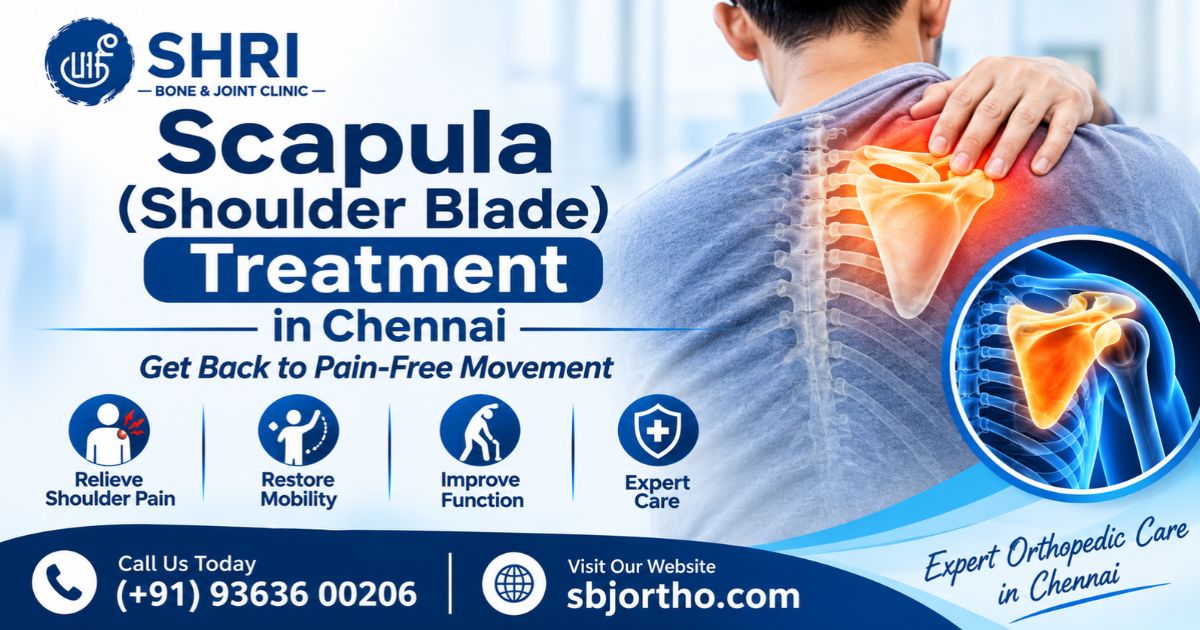
Which is the Best Hospital for Scapula (Shoulder Blade) Treatment in Chennai?
Choosing the best hospital for scapula treatment in Chennai requires considering the facility's orthopedic expertise, diagnostic capabilities, and access to physiotherapy and rehabilitation.
Because shoulder blade pain can arise from several different conditions, accurate diagnosis is essential.
Patients should consider facilities offering:
- Comprehensive orthopedic examination.
- Shoulder and upper-back assessment.
- Appropriate imaging investigations.
- Evaluation of nerve-related symptoms.
- Physiotherapy and rehabilitation.
- Scapular stabilisation programmes.
- Management of fractures and traumatic injuries.
- Specialist referral when necessary.
- Long-term follow-up care.
Shri Bone & Joint Clinic and Shri Physio & Rehab in Chennai provide orthopedic consultation and rehabilitation support for patients experiencing shoulder pain, muscle-related discomfort, and movement limitations.
Patients with shoulder blade symptoms can undergo an evaluation to understand whether the problem involves muscular dysfunction, a shoulder joint condition, nerve irritation, or a structural injury.
Treatment may involve guided physiotherapy, strengthening exercises, medication, and appropriate specialist management.
Patients requiring complex fracture surgery or specialised nerve procedures should confirm the availability of the necessary surgical expertise and facilities.
Who is the Best Doctor for Scapula (Shoulder Blade) Treatment in Chennai?
The appropriate doctor for scapula treatment should have experience evaluating shoulder disorders, upper-limb injuries, and musculoskeletal movement problems.
Patients should look for a specialist who can distinguish scapular pain from cervical spine conditions, shoulder joint disorders, and other causes of referred pain.
Important areas of assessment include:
- Scapular dyskinesis.
- Shoulder blade muscle strain.
- Scapular winging.
- Rotator cuff-related pain.
- Scapulothoracic bursitis.
- Scapula fractures.
- Nerve-related shoulder weakness.
- Functional shoulder movement limitations.
Dr. Shriram Krishnamoorthy, associated with Shri Bone & Joint Clinic, provides orthopedic consultation and treatment guidance for musculoskeletal conditions.
Patients searching for an Orthopedic Specialist in Chennai can seek an evaluation to identify the cause of shoulder blade pain and discuss appropriate treatment options.
Orthopedic symptoms can affect different joints and require different treatment approaches.
For example, patients with advanced knee osteoarthritis may require Total Knee Replacement in Chennai or Partial Knee Replacement in Chennai, depending on the severity and distribution of joint damage.
Patients with knee arthritis may also enquire about Euflexxa Injection in Chennai, a hyaluronic acid injection considered for symptom relief in selected cases.
These treatments address knee-related conditions and are not substitutes for evaluating or treating scapular disorders.
A comprehensive orthopedic assessment helps determine whether symptoms originate from the shoulder blade, shoulder joint, cervical spine, or another structure.
What is the Cost of Scapula (Shoulder Blade) Treatment in Chennai?
The cost of scapula treatment in Chennai depends on the underlying diagnosis, investigations, treatment approach, and rehabilitation requirements.
Patients with mild muscle-related conditions may require only consultation and physiotherapy, while fractures or significant structural injuries may involve hospital-based treatment.
There is no single fixed price applicable to every scapular condition.
Factors Affecting Scapula Treatment Cost
| Cost Factor | Description |
| Initial orthopedic consultation | Clinical examination and diagnosis |
| Diagnostic imaging | X-rays, MRI or CT scan when indicated |
| Neurological investigations | EMG or nerve conduction studies when required |
| Medication | Appropriate pain and inflammation management |
| Physiotherapy | Supervised scapular strengthening and mobility exercises |
| Rehabilitation duration | Number of sessions based on the condition |
| Fracture management | Immobilisation, follow-up or surgery when necessary |
| Surgical procedure | Hospital, surgeon, anaesthesia and implant expenses |
| Follow-up appointments | Monitoring recovery and functional improvement |
| Additional treatment | Management of complications or associated conditions |
Is Scapula Treatment Covered by Health Insurance?
Insurance coverage depends on the diagnosis and the patient's policy.
Treatment for traumatic fractures and medically necessary surgery may be covered under eligible health insurance plans.
Outpatient consultations, diagnostic tests, and physiotherapy may have separate coverage limits or exclusions.
Patients should confirm eligibility, waiting periods, preauthorisation requirements, and reimbursement conditions with their insurer.
How to Get an Accurate Scapula Treatment Cost Estimate
An accurate estimate requires an orthopedic examination and an individualised treatment plan.
Patients should request details regarding:
- Consultation charges.
- Required diagnostic investigations.
- Medication expenses.
- Physiotherapy session costs.
- Expected rehabilitation duration.
- Surgical expenses, if applicable.
- Follow-up consultation fees.
- Additional treatment requirements.
The overall cost depends on the severity of the condition and the treatment necessary to restore comfortable shoulder function.
FAQs
1. What is the most common cause of shoulder blade pain?
Shoulder blade pain commonly develops from muscle strain, repetitive activity, or problems involving the shoulder and upper back. However, cervical spine conditions, nerve irritation, fractures, and other medical problems can also cause pain in this region. A clinical examination helps identify the underlying cause and determine suitable treatment.
2. Can scapular dyskinesis be treated without surgery?
Yes. Many patients with scapular dyskinesis can improve through physiotherapy, strengthening exercises, movement retraining, and activity modification. Treatment focuses on addressing contributing factors such as muscle weakness, pain, and altered movement coordination. Surgery is generally reserved for selected structural or nerve-related conditions rather than routine scapular dyskinesis.
3. What exercises help relieve shoulder blade pain?
Exercises may include scapular retraction, wall slides, serratus anterior strengthening, trapezius exercises, and gentle thoracic mobility movements. The appropriate exercises depend on the cause of pain. Patients with fractures, significant nerve injuries, or severe symptoms should avoid unsupervised strengthening until they have received an appropriate medical assessment.
4. How long does it take to recover from a scapula injury?
Recovery depends on the type and severity of injury. Mild muscle strains may improve within days or weeks, while scapula fractures commonly require several weeks for initial bone healing. Nerve-related scapular winging may take months or longer to improve. Rehabilitation duration should be based on clinical progress and functional recovery.
5. When does shoulder blade pain require surgery?
Most muscle-related shoulder blade problems do not require surgery. Surgical treatment may be considered for certain displaced scapula fractures, persistent structural abnormalities, or severe nerve-related dysfunction. The decision depends on imaging findings, symptoms, functional limitations, and response to non-surgical treatment.

Better Health Care is Our Mission
Get an immediate relief to your knee-related problems from Shri Bone & Joint Clinic.
Phone
Shri Bone & Joint clinic
No.14/31, 3rd Avenue Indira Nagar, Adyar, Chennai-600020
Phone: 044 4505 5509