

BMAC Injection in Chennai is an orthobiologic treatment option that may be considered for selected patients experiencing joint pain, cartilage-related conditions, and certain orthopedic injuries. BMAC stands for Bone Marrow Aspirate Concentrate, a preparation obtained from a patient's own bone marrow and processed to concentrate selected cells and biological components.
BMAC injections are being investigated for their potential role in managing symptoms associated with knee osteoarthritis, cartilage injuries, and other musculoskeletal conditions. The treatment aims to support the body's biological response to injury, although strong clinical evidence demonstrating reliable cartilage regeneration or long-term superiority over established treatments is currently lacking.
At Shri Bone & Joint Clinic in Chennai, patients seeking information about BMAC treatment can undergo an orthopedic assessment to understand their condition, explore available treatment options, and determine whether an orthobiologic intervention warrants consideration.
The suitability of BMAC treatment depends on the diagnosis, severity of joint damage, overall health, and individual treatment goals. Its use should be discussed with a qualified orthopedic specialist, including the limitations of current evidence and applicable regulatory requirements.
What Is BMAC Injection?
BMAC Injection, or Bone Marrow Aspirate Concentrate Injection, is a procedure in which bone marrow is collected from the patient's body, processed, and prepared for potential therapeutic use.
Bone marrow contains several biological components, including blood-forming cells, platelets, growth factors, and a small population of mesenchymal stromal cells. These components are being studied for their possible roles in tissue repair and the regulation of inflammation.
During the procedure, bone marrow is usually collected from the pelvic bone and processed using a centrifugation system. The resulting concentrate may then be injected into a selected joint or treatment area.
BMAC is sometimes described as a stem cell treatment. However, it is important to understand that BMAC is not equivalent to a purified or expanded stem cell therapy, and the concentration of mesenchymal stromal cells within the preparation is relatively low.
How Does BMAC Injection Work?
Researchers are investigating whether the biological components within BMAC may influence local inflammation and tissue-repair processes.
Proposed mechanisms include:
- Modulation of certain inflammatory responses.
- Delivery of naturally occurring biological signalling molecules.
- Potential support for tissue-healing processes.
- Interaction with cells in the surrounding joint environment.
- Possible improvement in pain and functional symptoms.
These mechanisms remain under investigation. BMAC injections have not been conclusively demonstrated to regrow damaged joint cartilage, reverse advanced osteoarthritis, or reliably prevent the need for joint replacement.
When Is BMAC Injection Recommended?
BMAC injection may be discussed as an investigational or emerging treatment option for selected musculoskeletal conditions. It is not a routine first-line treatment for osteoarthritis or most orthopedic injuries.
The decision to consider BMAC should follow a detailed clinical evaluation and a discussion of established alternatives.
1. Knee Osteoarthritis
Knee osteoarthritis develops when the joint undergoes progressive changes involving cartilage, bone, and surrounding tissues.
Patients may experience:
- Knee pain during walking.
- Joint stiffness.
- Swelling.
- Reduced flexibility.
- Difficulty climbing stairs.
- Limitations in daily activities.
Some studies have investigated BMAC injections for knee osteoarthritis, particularly in patients with mild to moderate symptoms.
However, results are inconsistent, and current evidence does not establish BMAC as a standard treatment or demonstrate dependable cartilage restoration.
2. Focal Cartilage Injuries
Cartilage injuries may occur after trauma, sports-related activities, or repetitive joint loading.
BMAC has been studied as an adjunct to certain cartilage repair procedures.
Its role depends on the location, size, and depth of the cartilage defect, and it should not be assumed that an injection alone will repair the damaged surface.
3. Selected Sports Injuries
BMAC is being investigated for certain tendon, ligament, and other musculoskeletal injuries.
However, evidence supporting routine injection use for these conditions remains limited.
Established rehabilitation and surgical treatments, when indicated, should not be delayed in favour of an unproven intervention.
4. Certain Bone-Healing Conditions
Bone marrow-derived preparations have also been investigated in selected bone-healing and reconstruction procedures.
These applications differ from injecting BMAC into a joint and may involve additional surgical techniques.
Who May Not Be Suitable for BMAC Treatment?
BMAC may be inappropriate for patients with active infection, certain blood disorders, significant medical contraindications, or conditions requiring urgent established treatment.
Patients with severe joint deformity or advanced bone-on-bone arthritis may be less likely to obtain meaningful benefit from an injection-based approach.
The regulatory status and permitted clinical use of the proposed BMAC procedure must also be verified before treatment.
Benefits of BMAC Injection
BMAC injections are being investigated for several potential benefits. These should be understood as possible outcomes rather than guaranteed results.
1. Uses the Patient's Own Bone Marrow
BMAC is prepared from autologous bone marrow, meaning the biological material comes from the patient's own body.
This avoids the need for donor-derived cellular material, although it does not eliminate procedural risks.
2. Minimally Invasive Administration
Compared with major orthopedic surgery, collecting bone marrow and administering an injection generally involves smaller access points.
However, bone marrow aspiration is an invasive procedure and may cause pain, bleeding, or other complications.
3. Potential Improvement in Joint Symptoms
Some clinical studies have reported improvements in pain and function following BMAC treatment.
However, study quality, treatment protocols, and results vary considerably, and improvements are not consistently greater than those seen with comparison treatments.
4. Possible Support for Biological Healing
BMAC contains naturally occurring cells and signalling molecules that are being studied for their involvement in tissue-healing processes.
The presence of these components does not establish that an injection will regenerate cartilage or heal an injured tendon.
5. May Be Considered in Selected Joint-Preservation Discussions
Some patients with early joint disease are interested in treatments intended to preserve their natural joints.
BMAC may arise during these discussions, but evidence-based options such as exercise therapy, weight management when appropriate, medication, and established surgical procedures remain important.
6. Individualised Orthopedic Evaluation
Considering BMAC requires careful assessment of joint damage, symptoms, and functional limitations.
This evaluation can also help identify whether the patient would benefit more from conventional treatment.
How Is BMAC Injection Performed?
BMAC injection is generally performed through a series of steps involving assessment, bone marrow collection, processing, and administration.
The exact protocol varies between facilities and must comply with applicable clinical and regulatory requirements.
Step 1: Orthopedic Consultation
The doctor reviews the patient's symptoms, medical history, previous treatments, and functional difficulties.
The assessment may include:
- Physical examination.
- Joint mobility testing.
- Evaluation of swelling and tenderness.
- Review of X-rays.
- MRI when clinically necessary.
- Assessment of relevant medical conditions.
The doctor discusses whether BMAC has a reasonable evidence base for the patient's diagnosis.
Step 2: Pre-Procedure Assessment
Before the procedure, the medical team evaluates possible contraindications.
Medication use, bleeding risk, infection, and relevant medical conditions must be reviewed.
Patients should also receive clear information about the investigational nature of some BMAC applications.
Step 3: Bone Marrow Aspiration
Bone marrow is commonly collected from the iliac crest, a region of the pelvic bone.
The area is cleaned, and suitable anaesthesia is administered.
A specialised needle is used to withdraw bone marrow into a sterile collection system.
Step 4: Processing the Bone Marrow
The collected marrow is processed using an appropriate concentration system.
Centrifugation separates components according to their physical characteristics, producing a concentrate containing selected marrow-derived cells and biological factors.
The composition of the final preparation varies depending on the processing method.
Step 5: Injection Into the Treatment Area
If the procedure is clinically appropriate and permitted, the concentrate is administered into the intended treatment area.
Ultrasound or other imaging guidance may be used when necessary to improve placement accuracy.
Step 6: Post-Procedure Observation
The patient is monitored for immediate complications.
The treating clinician provides instructions regarding wound care, activity restrictions, and follow-up.
Step 7: Rehabilitation and Follow-Up
A rehabilitation programme may be recommended depending on the underlying condition.
The doctor monitors symptoms, joint function, and any adverse effects over time.


Recovery Process After BMAC Injection
Recovery after BMAC treatment varies depending on the aspiration site, injection location, underlying orthopedic condition, and whether the procedure was combined with surgery.
Although the procedure may be less invasive than major surgery, patients still require appropriate postoperative care.
Managing Pain and Discomfort
Temporary soreness may occur at the bone marrow collection site and injection area.
Mild swelling or bruising can also occur.
Pain management should follow the treating doctor's instructions.
Activity Modification
Patients may be advised to temporarily reduce strenuous activities or high-impact exercise.
The level of restriction depends on the joint treated and whether other procedures were performed.
Physiotherapy and Rehabilitation
Physiotherapy may help improve joint mobility, muscle strength, and movement confidence.
A rehabilitation programme may include:
- Gentle range-of-motion exercises.
- Progressive strengthening.
- Balance training.
- Low-impact cardiovascular activity.
- Functional movement exercises.
- Gradual return to daily activities.
Rehabilitation should be guided by the underlying diagnosis rather than assuming that BMAC itself has repaired damaged tissue.
Monitoring for Complications
Patients should seek medical assessment if they develop:
- Increasing redness or swelling.
- Fever.
- Severe or worsening pain.
- Persistent bleeding.
- Unusual discharge.
- New neurological symptoms.
Although uncommon, infection and other complications are possible.
Follow-Up Assessment
The treating doctor may evaluate changes in pain, mobility, and daily function.
A lack of improvement should prompt reassessment of the diagnosis and treatment plan.
How Long Does Recovery Take?
The immediate recovery period following bone marrow aspiration and injection may be relatively short, but improvement in the underlying orthopedic condition is less predictable.
There is no universally established recovery timeline or guaranteed period of symptom relief following BMAC treatment.
| Recovery Stage | Approximate Timeline | Main Focus |
| Immediate observation | Same day | Monitor for complications |
| Early recovery | First few days | Manage soreness and protect treatment areas |
| Gradual activity resumption | Following days to weeks | Restore comfortable movement |
| Rehabilitation | Several weeks or longer | Strength, mobility and function |
| Clinical reassessment | As scheduled by the doctor | Evaluate symptoms and treatment response |
These are general recovery considerations, not proven timelines for BMAC effectiveness.
Some studies evaluate outcomes over several months, but the durability of benefits remains uncertain.
Patients should not interpret a reduction in pain as proof that cartilage or other tissues have regenerated.
Which is the Best Hospital for BMAC Injection in Chennai?
Choosing a hospital or orthopedic facility for BMAC injection requires careful consideration of clinical expertise, patient safety, treatment transparency, and regulatory compliance.
Because BMAC is an emerging intervention with varying levels of evidence, patients should be cautious about centres promising permanent cartilage regeneration or guaranteed avoidance of surgery.
Important factors to consider include:
- Qualified orthopedic specialists.
- Accurate diagnosis of the underlying condition.
- Appropriate imaging and investigations.
- Sterile procedural facilities.
- Transparent information about treatment evidence.
- Compliance with applicable Indian regulations.
- Clear explanation of possible complications.
- Access to physiotherapy and rehabilitation.
- Structured follow-up and outcome monitoring.
Shri Bone & Joint Clinic in Chennai provides orthopedic evaluation and treatment guidance for patients experiencing joint pain, cartilage-related conditions, and musculoskeletal problems.
Patients interested in BMAC injection can seek a consultation to discuss their diagnosis and understand the available treatment approaches.
The availability of BMAC injection at the clinic should be confirmed directly before planning treatment.
An orthopedic assessment can help determine whether established non-surgical care, a recognised joint-preservation procedure, or joint replacement would be more appropriate.
Who is the Best Doctor for BMAC Injection in Chennai?
The appropriate doctor for BMAC injection should have relevant orthopedic expertise and a clear understanding of the available clinical evidence.
Patients should look for a specialist who can explain both the potential benefits and the important limitations of orthobiologic treatments.
The doctor should be able to assess:
- The severity of joint degeneration.
- Cartilage damage.
- Joint alignment and stability.
- Previous treatment response.
- Functional limitations.
- Medical contraindications.
- Evidence-based alternatives.
- Applicable treatment regulations.
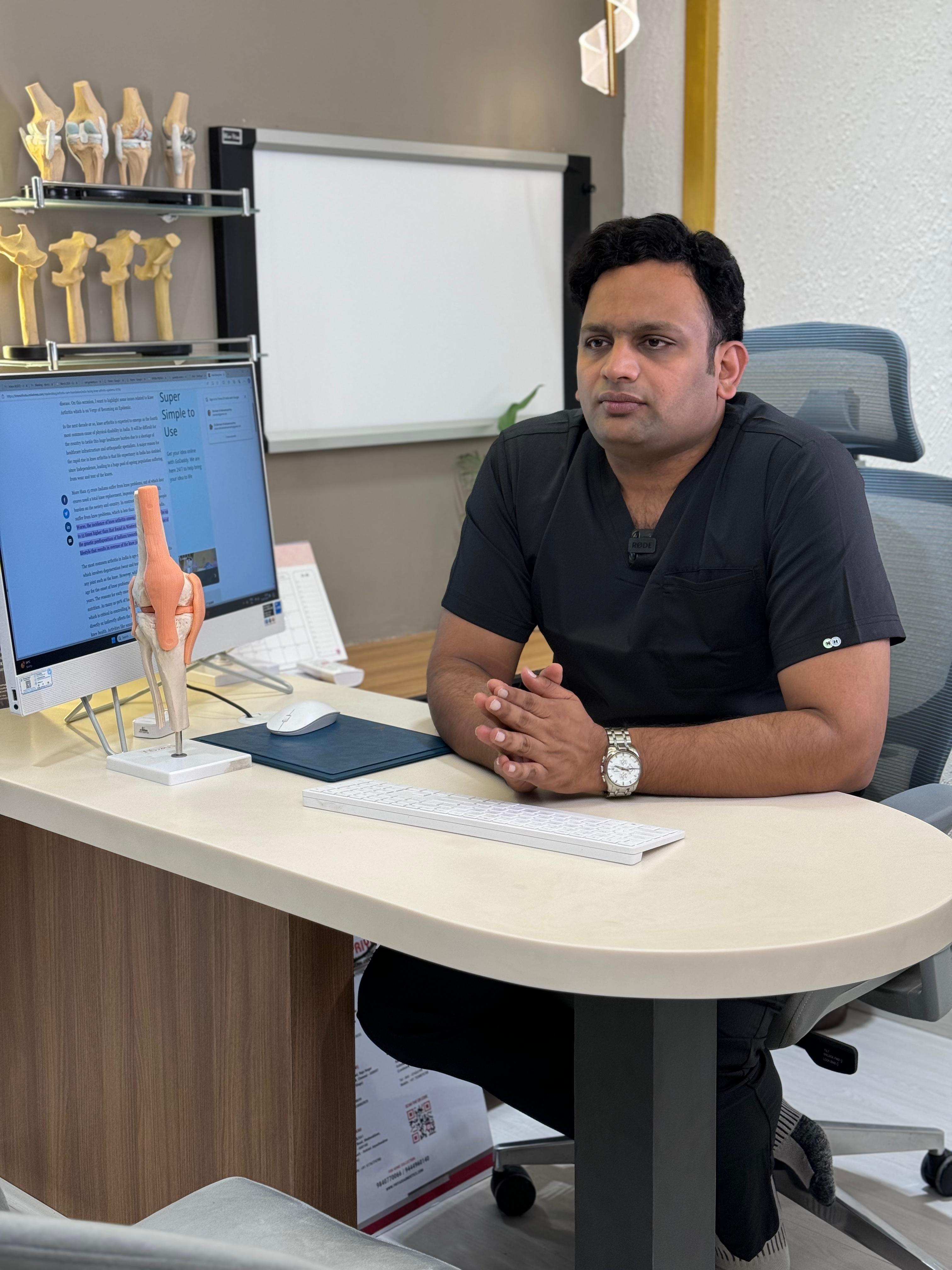
Dr. Shriram Krishnamoorthy, associated with Shri Bone & Joint Clinic, provides orthopedic consultation and treatment guidance for musculoskeletal conditions.
Patients searching for an Orthopedic Specialist in Chennai can undergo an evaluation to identify the cause of their joint symptoms and discuss appropriate treatment options.
For patients with advanced knee osteoarthritis, established surgical options may include Total Knee Replacement in Chennai or Partial Knee Replacement in Chennai, depending on the pattern and severity of joint damage.
These procedures have different indications from BMAC injections and should be considered according to the patient's clinical findings.
Similarly, Spinal Decompression Therapy in Chennai is a separate non-surgical treatment approach sometimes considered for selected spinal symptoms. It does not serve the same purpose as a bone marrow-derived injection for joint conditions.
The most appropriate treatment is the one supported by the patient's diagnosis, clinical evidence, and individual health requirements.
What is the Cost of BMAC Injection in Chennai?
The cost of BMAC injection in Chennai depends on the treatment facility, processing system, clinical assessment, procedural requirements, and follow-up care.
Because BMAC treatment protocols are not standardised across all facilities, costs may vary considerably.
A personalised quotation is necessary before proceeding.
Factors Affecting BMAC Injection Cost
| Cost Factor | Description |
| Initial consultation | Orthopedic examination and treatment planning |
| Diagnostic investigations | X-rays, MRI or blood tests when indicated |
| Bone marrow aspiration | Collection procedure and associated clinical resources |
| Processing system | Equipment and materials used to prepare the concentrate |
| Injection procedure | Administration and procedural facility charges |
| Imaging guidance | Ultrasound or other guidance when required |
| Anaesthesia | Local anaesthesia or additional support where necessary |
| Rehabilitation | Physiotherapy and functional recovery |
| Follow-up consultations | Monitoring symptoms and possible complications |
| Additional treatment | Other medically indicated interventions |
Does Insurance Cover BMAC Injection?
Insurance coverage for BMAC injections is often limited or excluded because many orthobiologic applications remain investigational.
Coverage depends on the insurance provider, policy terms, medical indication, and treatment classification.
Patients should obtain written confirmation from their insurer before scheduling the procedure.
What Should Be Included in the Treatment Estimate?
Before agreeing to treatment, patients should request an itemised quotation covering:
- Consultation fees.
- Bone marrow aspiration charges.
- Processing and consumable costs.
- Injection procedure charges.
- Imaging and investigations.
- Follow-up visits.
- Physiotherapy expenses.
- Potential additional costs.
Patients should also ask whether the proposed application is supported by reliable evidence and permitted under applicable Indian regulations.
Cost alone should not determine the choice of an emerging orthopedic treatment.
FAQs
1. Is BMAC injection effective for knee osteoarthritis?
Some studies have reported improvements in knee pain and function after BMAC injections, but the overall evidence remains limited and inconsistent. Current research does not establish that BMAC reliably regenerates cartilage or provides superior long-term outcomes compared with established treatments. Patients should discuss the uncertainty and available alternatives with an orthopedic specialist.
2. Is BMAC injection the same as stem cell therapy?
No. BMAC is a concentrate prepared from bone marrow and contains a mixture of cells and biological components. Although it includes a small population of mesenchymal stromal cells, it is not equivalent to a purified or laboratory-expanded stem cell product. Marketing BMAC as a guaranteed stem cell regeneration treatment can be misleading.
3. Can BMAC injection prevent knee replacement surgery?
There is insufficient evidence to conclude that BMAC injections reliably prevent or delay knee replacement surgery. Some patients may experience symptom improvement, but this does not necessarily indicate structural cartilage repair. Patients with advanced joint degeneration should receive an assessment of established treatment options.
4. What are the risks of BMAC injection?
Potential risks include pain, bruising, bleeding, infection, and discomfort at the bone marrow collection or injection site. Additional risks may arise from the procedure, the patient's medical condition, or the use of inadequately validated treatment protocols. A qualified clinician should explain these risks before treatment.
5. How long do the benefits of BMAC injection last?
The duration of any symptom improvement varies between patients, and reliable long-term benefit has not been established for many applications. Some studies report outcomes over months or longer, but these findings cannot guarantee similar results for every individual. Continued monitoring and appropriate rehabilitation remain important.

Better Health Care is Our Mission
Get an immediate relief to your knee-related problems from Shri Bone & Joint Clinic.
Phone
Shri Bone & Joint clinic
No.14/31, 3rd Avenue Indira Nagar, Adyar, Chennai-600020
Phone: 044 4505 5509