

Knee replacement surgery is an important step towards reducing severe knee pain and improving mobility, but the recovery process does not end when the operation is completed. Regaining the ability to walk comfortably, bend the knee, climb stairs, and perform everyday activities requires a structured rehabilitation programme.
Physiotherapy after knee replacement in Chennai focuses on restoring knee movement, rebuilding muscle strength, improving balance, and helping patients gradually return to their normal routines. Whether a patient undergoes total knee replacement, partial knee replacement, or bilateral knee replacement, appropriate postoperative physiotherapy plays an essential role in functional recovery.
At Shri Bone & Joint Clinic, Dr. Shriram Krishnamoorthy provides orthopedic evaluation, surgical care planning, and postoperative follow-up for patients undergoing knee replacement. Rehabilitation support through Shri Physio & Rehab can help patients work towards improved knee flexibility, walking ability, strength, and independence according to their surgeon's recommendations.
What Is Physiotherapy After Knee Replacement?
Physiotherapy after knee replacement is a structured rehabilitation programme designed to restore movement, strength, balance, and functional ability following knee replacement surgery.
During knee replacement, damaged joint surfaces are removed and replaced with artificial components. Although the new joint surfaces are designed to improve knee function, the surrounding muscles, soft tissues, and surgical wound require time to recover.
Patients commonly experience temporary swelling, pain, muscle weakness, stiffness, and difficulty walking after surgery.
Postoperative physiotherapy addresses these limitations through progressive exercises, walking practice, movement training, and functional rehabilitation.
The programme is adjusted according to the patient's surgical procedure, medical condition, pain levels, and recovery progress.
Why Is Physiotherapy Important After Knee Replacement?
Physiotherapy helps patients regain the movement and strength needed for daily activities.
Without appropriate rehabilitation, patients may experience persistent weakness, reduced knee movement, difficulty walking, and limitations in functional recovery.
A structured programme can help patients:
- Improve knee bending and straightening
- Strengthen the quadriceps and surrounding muscles
- Reduce movement-related stiffness
- Improve walking patterns
- Restore balance and coordination
- Practise climbing stairs safely
- Regain confidence during daily activities
- Progress towards greater independence
Physiotherapy is important after both conventional and robotic-assisted knee replacement. Robotic technology does not eliminate the need for postoperative rehabilitation.
What Are the Common Problems After Knee Replacement?
During the early recovery period, patients may experience:
- Pain around the operated knee
- Swelling and temporary warmth
- Difficulty bending the knee
- Reduced ability to straighten the knee fully
- Quadriceps weakness
- Difficulty walking without support
- Reduced balance
- Fatigue during physical activity
- Difficulty getting up from chairs
- Discomfort while climbing stairs
Many of these symptoms gradually improve during recovery.
However, worsening pain, excessive swelling, fever, wound discharge, calf pain, chest pain, or breathing difficulty requires prompt medical attention.
When Is Physiotherapy After Knee Replacement Recommended?
Physiotherapy is generally recommended as part of the recovery plan following knee replacement surgery.
The timing, intensity, and progression depend on the surgical procedure, patient's health, and treating surgeon's instructions.
Immediately After Total Knee Replacement
Many patients begin gentle movement exercises and assisted mobilisation during the early postoperative period, often on the day of surgery or the following day when medically appropriate.
Initial exercises focus on circulation, muscle activation, and safe movement.
The physiotherapist helps the patient begin standing and walking according to the surgical team's instructions.
After Partial Knee Replacement
Patients undergoing partial knee replacement also require rehabilitation to restore knee movement and strength.
The programme may progress differently from total knee replacement rehabilitation because the surgical procedure and recovery requirements differ.
Exercise progression depends on the patient's symptoms, stability, and surgeon's recommendations.
After Bilateral Knee Replacement
Patients who undergo replacement of both knees require rehabilitation for both operated joints.
When both knees are replaced simultaneously, patients may initially need additional assistance with walking, standing, and everyday activities.
The physiotherapy programme addresses strength, movement, balance, and functional independence in both legs.
When Knee Stiffness Persists After Surgery
Some patients experience difficulty bending or fully straightening the knee during recovery.
Physiotherapy helps improve movement through appropriate exercises, positioning, and progressive rehabilitation.
Persistent or worsening stiffness requires assessment because some patients may need additional medical evaluation or treatment.
When Walking Remains Difficult
Patients may continue to use a walker or walking stick while recovering.
Physiotherapy helps improve weight transfer, walking patterns, muscle control, and confidence.
The progression towards independent walking depends on balance, strength, safety, and medical guidance.
When Muscle Weakness Affects Recovery
Quadriceps weakness is common after knee replacement.
Patients may struggle with standing from a chair, climbing stairs, or controlling the knee during walking.
Progressive strengthening is an important part of restoring functional ability.
What Are the Benefits of Physiotherapy After Knee Replacement?
Postoperative physiotherapy helps patients regain mobility and functional independence through a structured recovery programme.
The benefits depend on the patient's condition, consistency with exercises, and rehabilitation progress.
Improved Knee Range of Motion
Knee replacement recovery involves gradually restoring the ability to bend and straighten the knee.
Physiotherapy includes appropriate mobility exercises to improve movement and reduce functional stiffness.
Better Quadriceps Strength
The quadriceps muscles are essential for standing, walking, climbing stairs, and controlling knee movement.
Strengthening exercises help restore muscle function after surgery.
Improved Walking Ability
Walking practice helps patients gradually regain a more comfortable and efficient walking pattern.
Physiotherapy also supports the safe progression from walking aids towards greater independence.
Better Balance and Stability
Patients may experience reduced balance after surgery because of pain, weakness, and altered movement patterns.
Balance exercises help improve stability and confidence during daily activities.
Reduced Functional Stiffness
Gentle movement and progressive exercises can help reduce the stiffness associated with postoperative inactivity and swelling.
However, rehabilitation should not involve forceful movements that cause excessive pain or place unnecessary stress on healing tissues.
Greater Independence in Daily Activities
Physiotherapy helps patients practise essential activities such as:
- Getting in and out of bed
- Standing from a chair
- Walking indoors and outdoors
- Climbing stairs
- Using the bathroom safely
- Entering and exiting vehicles
- Performing routine household tasks
Support for Long-Term Knee Function
Continued strengthening and appropriate physical activity can help patients maintain muscle function, mobility, and overall physical fitness after knee replacement.





How Is Physiotherapy After Knee Replacement Performed?
Physiotherapy after knee replacement follows a progressive rehabilitation approach.
The programme begins with gentle exercises and assisted movement before advancing towards strengthening, balance training, and functional activities.
1. Initial Physiotherapy Assessment
The physiotherapist evaluates the patient's postoperative condition and reviews the treating surgeon's instructions.
The assessment may include:
- Pain and swelling
- Knee bending and straightening
- Muscle activation
- Walking ability
- Balance and stability
- Ability to perform daily activities
- Use of walking aids
- Relevant medical conditions
The findings help determine an appropriate rehabilitation programme.
2. Ankle Pump Exercises
Ankle pump exercises involve gently moving the feet up and down.
These exercises help activate the lower-leg muscles and support circulation during the early recovery period.
They are commonly included alongside prescribed blood clot prevention measures.
Ankle pumps alone do not prevent all blood clots and should not replace medication or other precautions recommended by the medical team.
3. Quadriceps Setting Exercises
Quadriceps setting exercises help activate the muscles at the front of the thigh.
The patient gently tightens the thigh muscles while attempting to straighten the knee.
These exercises are often introduced early because quadriceps activation can be difficult after surgery.
4. Heel Slide Exercises
Heel slides help improve knee bending.
The patient gradually slides the heel towards the body while bending the knee within a comfortable and medically appropriate range.
The movement is progressed according to pain, swelling, and rehabilitation goals.
5. Knee Extension Exercises
Regaining knee straightening is important for comfortable walking and standing.
The physiotherapist may recommend gentle positioning and exercises that encourage knee extension.
Patients should avoid placing unnecessary pressure on the joint or performing forceful stretching without guidance.
6. Straight Leg Raises
Straight leg raises may be introduced when the patient can adequately activate and control the quadriceps.
The exercise involves lifting the operated leg while maintaining appropriate knee control.
The physiotherapist determines when the patient is ready to perform the movement safely.
7. Assisted Walking and Gait Training
Walking practice is an important part of postoperative rehabilitation.
Patients may initially use a walker or other prescribed walking aid.
The physiotherapist provides guidance on:
- Safe weight transfer
- Step length
- Walking posture
- Knee control
- Turning safely
- Progression of walking distance
- Appropriate use of walking aids
Walking aids are reduced when the patient demonstrates sufficient strength, balance, and safety.
8. Progressive Strengthening Exercises
As recovery progresses, strengthening exercises become more demanding.
The programme may include:
- Seated knee extension exercises
- Supported mini-squats
- Sit-to-stand exercises
- Step-up exercises
- Hip strengthening
- Calf strengthening
- Resistance-band exercises
- Controlled functional movements
The intensity is adjusted according to symptoms, healing, and functional ability.
9. Balance and Coordination Training
Balance exercises help patients regain stability during standing and walking.
Training may include supported weight shifting, controlled stepping, and progressive balance activities.
Patients with reduced balance or a history of falls may require additional supervision.
10. Stair-Climbing and Functional Training
Stair training is introduced when the patient has sufficient strength and control.
The physiotherapist teaches safe techniques for climbing and descending stairs.
Functional rehabilitation also includes getting up from chairs, entering vehicles, and performing other activities relevant to the patient's lifestyle.
11. Stationary Cycling and Endurance Training
Stationary cycling may be introduced when knee movement, wound healing, and medical clearance allow.
Cycling can help improve movement and endurance with controlled joint loading.
Walking duration and other low-impact activities may also be increased gradually.
12. Home Exercise Programme
A home exercise programme supports continued progress between supervised physiotherapy sessions.
Patients receive instructions regarding exercise frequency, movement technique, activity progression, and precautions.
Consistency is important, but exercises should be modified when they cause excessive pain, prolonged swelling, or other concerning symptoms.
What Is Recovery Like During Physiotherapy After Knee Replacement?
Rehabilitation progresses through different stages as the surgical tissues heal and the patient regains movement and strength.
Early Rehabilitation Phase
The initial phase focuses on pain management, swelling control, safe mobilisation, and gentle knee exercises.
Patients may require assistance with standing, walking, and everyday activities.
Mobility Improvement Phase
As healing progresses, the emphasis shifts towards improving knee bending, straightening, and walking ability.
Patients gradually increase movement and begin performing more functional exercises.
Strengthening Phase
Progressive strengthening becomes increasingly important as pain and swelling improve.
The rehabilitation programme focuses on quadriceps strength, hip stability, balance, and walking endurance.
Functional Recovery Phase
Patients gradually work towards independent walking, stair climbing, household activities, and other personal goals.
The physiotherapist may introduce more demanding exercises according to the patient's progress.
Long-Term Rehabilitation Phase
Even after patients return to routine activities, continued exercise can help improve strength, endurance, and confidence.
Some patients experience ongoing improvements in knee function for several months after surgery.
How Long Does Physiotherapy Take After Knee Replacement?
The duration of physiotherapy varies depending on the type of knee replacement, preoperative strength, age, medical conditions, and individual recovery.
| Rehabilitation Stage | General Timeline | Primary Focus |
| Immediate postoperative phase | Days 1–3 | Assisted walking, circulation exercises, gentle knee movement |
| Early rehabilitation | Weeks 1–2 | Swelling management, mobility, quadriceps activation |
| Progressive mobility | Weeks 3–6 | Knee movement, walking, strengthening |
| Functional strengthening | Weeks 6–12 | Balance, stair climbing, endurance, daily activities |
| Advanced recovery | Months 3–6 | Continued strengthening and functional independence |
| Long-term improvement | Months 6–12 | Additional improvements in strength, comfort, and mobility |
These timelines are general expectations rather than fixed recovery milestones.
Some patients require only a limited period of supervised physiotherapy followed by a structured home programme.
Others may need longer rehabilitation because of severe preoperative stiffness, bilateral knee replacement, muscle weakness, or postoperative complications.
The number of sessions should be based on clinical progress rather than a fixed schedule for every patient.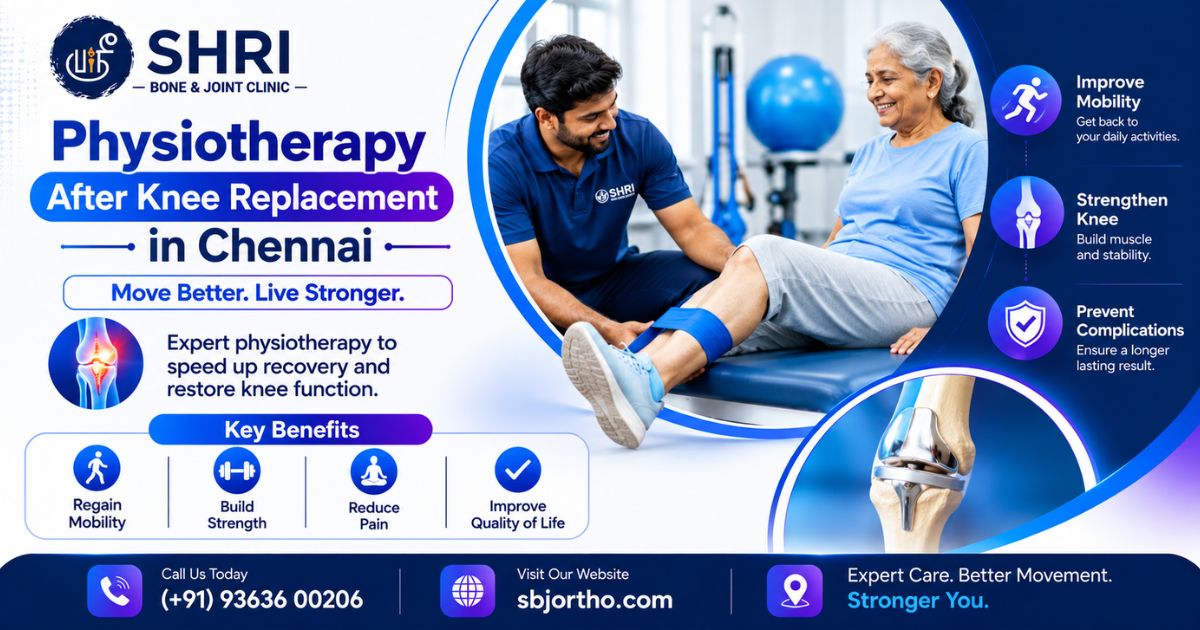
Which Is the Best Hospital for Physiotherapy After Knee Replacement in Chennai?
Patients seeking postoperative physiotherapy should choose a rehabilitation provider that follows the treating surgeon's instructions, monitors recovery, and offers progressive exercise-based treatment.
Shri Bone & Joint Clinic in Chennai provides orthopedic evaluation and postoperative follow-up for patients undergoing knee replacement surgery.
Shri Physio & Rehab can support rehabilitation through structured exercises, walking practice, strengthening, and functional recovery programmes tailored to individual needs.
Patients whose knee replacement was performed because of advanced arthritis can also explore Knee Osteoarthritis Treatment in Chennai to understand the conservative and surgical treatment approaches used for degenerative knee conditions.
Patients experiencing other musculoskeletal problems can learn about Shoulder Impingement Syndrome Treatment in Chennai, where physiotherapy also plays an important role in restoring movement and muscle function.
Although rehabilitation requirements differ between knee and shoulder conditions, individualised exercise progression is important for safe and effective recovery.
Who Is the Best Doctor for Physiotherapy After Knee Replacement in Chennai?
Successful rehabilitation after knee replacement requires appropriate coordination between the orthopedic surgeon, physiotherapist, and patient.
The surgeon monitors surgical healing, implant-related concerns, and postoperative complications, while the physiotherapist guides progressive movement and strengthening.
Dr. Shriram Krishnamoorthy at Shri Bone & Joint Clinic provides orthopedic evaluation, treatment planning, and postoperative follow-up for patients with knee replacement requirements.
Patients searching for an Orthopedic Specialist in Chennai can consult Dr. Shriram for assessment of postoperative knee pain, stiffness, mobility limitations, and recovery concerns.
Patients interested in understanding rehabilitation after other orthopedic procedures can also explore Rotator Cuff Repair Surgery in Chennai, which involves a different postoperative rehabilitation programme designed to protect healing shoulder tendons.
For knee replacement patients, rehabilitation should be guided by the type of surgery performed, wound healing, muscle strength, joint movement, and individual medical requirements.
What Is the Cost of Physiotherapy After Knee Replacement in Chennai?
The cost of physiotherapy after knee replacement depends on the patient's rehabilitation needs, number of sessions, treatment duration, and whether supervised clinic-based or home-based care is required.
Patients with uncomplicated recovery may require fewer supervised sessions, while those with significant stiffness, weakness, or bilateral knee replacement may need more extensive rehabilitation.
| Category | Approx. Range (₹) |
| Non-surgical care / Diagnostics | ₹3,000 – ₹10,000 |
| Standard Therapy | Varies |
| Advanced Programs | Varies |
| Specialised Rehab | Varies |
| Physiotherapy & Rehab | ₹15,000 – ₹40,000 |
These figures are illustrative planning estimates rather than verified clinic prices or a personalised rehabilitation quotation.
The actual cost depends on:
- Initial physiotherapy assessment
- Number and frequency of sessions
- Duration of rehabilitation
- Individual mobility limitations
- Supervised strengthening requirements
- Home physiotherapy availability
- Additional medical assessments when necessary
Patients should obtain a personalised rehabilitation plan and cost estimate based on their postoperative condition.
Does Health Insurance Cover Physiotherapy After Knee Replacement?
Insurance coverage for postoperative physiotherapy varies according to the policy.
Some plans may cover eligible rehabilitation expenses during hospitalisation or within a defined postoperative period.
Outpatient physiotherapy and home-based rehabilitation may have separate limits or may not be included.
Patients should confirm the applicable coverage, reimbursement requirements, exclusions, and session limits with their insurer.
FAQs
1. When should physiotherapy start after knee replacement surgery?
Physiotherapy often begins on the day of surgery or the following day when the patient is medically stable and the treating surgeon permits mobilisation.
Early rehabilitation usually includes ankle movements, gentle knee exercises, muscle activation, and assisted walking. The timing and intensity depend on the surgical procedure and individual medical condition.
2. How many physiotherapy sessions are needed after knee replacement?
The number of sessions varies according to knee movement, muscle strength, walking ability, pain, swelling, and recovery progress.
Some patients improve with a shorter supervised programme and regular home exercises, while others require several weeks or months of structured physiotherapy. The rehabilitation plan should be reviewed and adjusted as the patient progresses.
3. What is the best exercise after knee replacement?
There is no single exercise that addresses every aspect of knee replacement recovery.
Heel slides help improve knee bending, quadriceps exercises support muscle activation, knee extension exercises improve straightening, and walking helps restore mobility. A balanced programme selected by the physiotherapist is generally more beneficial than relying on one exercise.
4. Is it normal to experience pain during physiotherapy after knee replacement?
Mild discomfort or temporary soreness may occur during rehabilitation, particularly when improving knee movement and muscle strength.
However, severe pain, sudden worsening of swelling, or persistent symptoms after exercise should not be ignored. The physiotherapist may need to modify the programme, and concerning symptoms should be assessed by the treating surgeon.
5. Can I stop physiotherapy once I can walk without a walker?
Walking independently is an important recovery milestone, but it does not necessarily mean rehabilitation is complete.
Patients may still need exercises to improve knee bending, straightening, quadriceps strength, balance, endurance, and stair-climbing ability. Supervised sessions can be reduced when appropriate, but a continued home exercise programme is often recommended.

Better Health Care is Our Mission
Get an immediate relief to your knee-related problems from Shri Bone & Joint Clinic.
Phone
Shri Bone & Joint clinic
No.14/31, 3rd Avenue Indira Nagar, Adyar, Chennai-600020
Phone: 044 4505 5509