

Shoulder pain can make simple activities such as reaching overhead, getting dressed, lifting objects, or sleeping comfortably increasingly difficult. When pain develops during arm movement, particularly while raising the arm above shoulder level, it may be associated with shoulder impingement syndrome.
Shoulder impingement syndrome treatment in Chennai focuses on reducing shoulder pain, improving joint movement, restoring muscle strength, and helping patients return to their normal activities. Depending on the severity of symptoms and the underlying cause, treatment may involve physiotherapy, medication, activity modification, injections, or surgery in selected cases.
At Shri Bone & Joint Clinic, Dr. Shriram Krishnamoorthy provides orthopedic evaluation and personalised treatment planning for patients experiencing shoulder pain, restricted movement, and rotator cuff-related conditions. The treatment approach focuses on identifying the structures responsible for pain and selecting appropriate non-surgical or surgical management.
What Is Shoulder Impingement Syndrome?
Shoulder impingement syndrome is a term commonly used to describe pain associated with irritation of the rotator cuff tendons and surrounding tissues in the subacromial region of the shoulder.
The shoulder is a highly mobile joint supported by muscles, tendons, ligaments, and other soft tissues. The rotator cuff consists of four muscles and their tendons, which help stabilise the shoulder and control arm movement.
Above the rotator cuff lies a bony structure called the acromion, which forms part of the shoulder blade.
The space beneath the acromion contains structures such as the rotator cuff tendons and the subacromial bursa, a fluid-filled sac that helps reduce friction during movement.
When these tissues become irritated or overloaded, patients may experience pain while lifting or rotating the arm.
Shoulder impingement is often discussed within the broader category of subacromial pain syndrome, because shoulder pain can involve several contributing factors rather than simple mechanical compression alone.
What Are the Symptoms of Shoulder Impingement Syndrome?
Symptoms may develop gradually or appear after repetitive shoulder activity.
Common symptoms include:
- Pain while lifting the arm overhead
- Discomfort when reaching behind the back
- Pain while dressing or combing hair
- Shoulder pain during lifting activities
- Discomfort when lying on the affected shoulder
- Pain during certain arm movements
- Reduced shoulder strength
- Difficulty performing repetitive overhead tasks
- Restricted movement because of pain
Some patients experience a painful arc while raising the arm, particularly through the middle range of elevation.
However, these symptoms can also occur with rotator cuff tears, frozen shoulder, arthritis, and other shoulder conditions. A clinical examination is necessary to identify the likely cause.
What Causes Shoulder Impingement Syndrome?
Shoulder impingement symptoms may develop through a combination of tendon overload, inflammation, muscle weakness, and altered shoulder movement.
Common contributing factors include:
- Repetitive overhead activities
- Rotator cuff tendinopathy
- Weakness of the shoulder stabilising muscles
- Poor coordination of shoulder blade movement
- Sudden increases in exercise or workload
- Age-related tendon changes
- Previous shoulder injuries
- Repetitive lifting or throwing activities
- Reduced shoulder flexibility
Certain occupations and sports that involve frequent overhead movement may increase the likelihood of developing shoulder-related symptoms.
When Should You Seek Shoulder Impingement Syndrome Treatment?
Patients should seek orthopedic evaluation when shoulder pain persists, affects everyday activities, or does not improve with appropriate rest and activity modification.
Early assessment can help distinguish shoulder impingement-related pain from other conditions requiring different treatment.
Persistent Pain While Raising the Arm
Pain during overhead movement is a common symptom of subacromial shoulder pain.
Patients may experience discomfort while reaching shelves, lifting objects, washing their hair, or performing routine household tasks.
When symptoms persist or worsen, medical evaluation is recommended.
Shoulder Pain During Sleep
Patients may experience discomfort when lying on the affected shoulder.
Night pain can interfere with sleep and make it difficult to find a comfortable position.
Persistent night pain should be evaluated, particularly when accompanied by weakness or significant movement restrictions.
Difficulty Performing Daily Activities
Shoulder pain may interfere with dressing, bathing, cooking, driving, or carrying objects.
When pain begins to limit independence or work-related activities, treatment may be necessary.
Reduced Shoulder Strength
Some patients experience weakness while lifting or rotating the arm.
Weakness may result from pain-related muscle inhibition, but it can also indicate a rotator cuff tear or another structural problem.
Sudden or marked weakness, especially after an injury, requires prompt assessment.
Shoulder Pain After Repetitive Activity
Activities such as painting, swimming, throwing, weight training, and overhead lifting can place repeated demands on the shoulder.
Persistent pain following these activities may indicate tendon irritation or overload.
Symptoms That Do Not Improve With Initial Care
Patients who continue to experience pain despite reasonable activity modification and basic symptom management may require a structured treatment programme.
An orthopedic assessment can help determine whether physiotherapy, imaging, medication, or another intervention is appropriate.
Sudden severe pain after trauma, visible deformity, fever with a hot swollen joint, or inability to move the arm after an injury requires urgent medical attention.
What Are the Benefits of Shoulder Impingement Syndrome Treatment?
Appropriate treatment aims to reduce symptoms, improve shoulder function, and help patients return to their usual activities.
The expected benefits depend on the underlying diagnosis, duration of symptoms, treatment approach, and individual response.
Reduction in Shoulder Pain
Physiotherapy, appropriate medication, and activity modification may help reduce pain associated with irritated shoulder tissues.
Improved comfort can make daily movements easier.
Improved Shoulder Movement
Gentle mobility exercises can help patients regain comfortable arm movement.
Treatment focuses on improving the ability to reach overhead, behind the back, and across the body.
Better Rotator Cuff Strength
Strengthening the rotator cuff helps support shoulder movement and joint stability.
Progressive exercises can improve the shoulder's ability to tolerate everyday physical demands.
Improved Shoulder Blade Control
The shoulder blade plays an important role in normal arm movement.
Rehabilitation may include exercises that improve the strength and coordination of the muscles controlling shoulder blade movement.
Improved Sleep and Daily Comfort
Reducing shoulder pain may help patients sleep more comfortably and perform routine activities with fewer limitations.
Reduced Risk of Recurring Symptoms
A rehabilitation programme that addresses muscle weakness, movement patterns, and activity demands may help reduce recurring symptoms.
However, treatment cannot guarantee that shoulder pain will never return.










How Is Shoulder Impingement Syndrome Treated?
Treatment usually begins with non-surgical management.
The orthopedic surgeon evaluates the patient's symptoms, shoulder movement, strength, and functional limitations before recommending an appropriate treatment plan.
1. Clinical Examination and Diagnosis
The doctor begins by reviewing the patient's medical history, symptoms, occupation, physical activities, and previous injuries.
The examination may include:
- Assessment of shoulder movement
- Rotator cuff strength testing
- Evaluation of painful movements
- Shoulder blade movement assessment
- Examination of the neck when appropriate
- Tests for other shoulder conditions
X-rays may be recommended when arthritis, bony abnormalities, or other structural conditions are suspected.
Ultrasound or MRI may be considered when a significant rotator cuff tear or another soft-tissue problem is suspected, or when symptoms do not respond to appropriate treatment.
Imaging is not necessary for every patient with uncomplicated shoulder impingement symptoms.
2. Physiotherapy for Shoulder Impingement Syndrome
Physiotherapy is one of the main treatments for shoulder impingement-related pain.
A structured rehabilitation programme focuses on improving shoulder movement, muscle strength, and tolerance to everyday activities.
Exercises may include:
- Gentle shoulder mobility exercises
- Rotator cuff strengthening
- Shoulder blade stabilisation
- Resistance-band exercises
- Postural and movement control exercises
- Progressive overhead strengthening
- Functional activity training
The physiotherapist adjusts the exercises according to pain levels, strength, movement restrictions, and recovery progress.
At Shri Physio & Rehab, rehabilitation support can be planned according to the patient's shoulder condition and functional requirements.
3. Activity Modification
Activities that repeatedly aggravate shoulder symptoms may need temporary modification.
Patients may be advised to reduce:
- Repetitive overhead lifting
- Heavy shoulder exercises during painful flare-ups
- Prolonged work with the arm elevated
- Sudden increases in training intensity
- Movements that consistently provoke severe pain
Complete shoulder immobilisation is generally not recommended for uncomplicated subacromial pain because prolonged inactivity can contribute to stiffness and weakness.
The aim is to maintain comfortable movement while gradually restoring the shoulder's ability to tolerate activity.
4. Medication for Shoulder Pain
Appropriate pain-relieving medication may be recommended to help manage symptoms.
Depending on the patient's health, the doctor may consider topical anti-inflammatory medication or short-term oral medication.
Oral anti-inflammatory medicines require caution in patients with kidney disease, stomach ulcers, cardiovascular conditions, or certain medication interactions.
Medication can provide symptom relief but does not replace the need to address muscle weakness and activity-related factors.
5. Ice and Symptom Management
Cold packs may help reduce discomfort after activities that aggravate shoulder pain.
Patients should use a protective layer between the skin and the cold pack and avoid prolonged direct exposure.
Heat may also provide comfort for some patients experiencing muscular stiffness.
These methods are supportive treatments rather than substitutes for rehabilitation.
6. Corticosteroid Injections
A subacromial corticosteroid injection may be considered for selected patients with persistent pain that limits sleep or participation in rehabilitation.
Injections may provide short-term symptom relief, but their effects vary.
Repeated injections are not routinely appropriate because of potential adverse effects, including concerns about tendon health.
The orthopedic surgeon evaluates whether an injection is suitable based on the patient's diagnosis, medical history, and previous treatment.
7. Shoulder Arthroscopy in Selected Cases
Surgery is not routinely required for shoulder impingement syndrome.
For uncomplicated subacromial pain without a rotator cuff tear, evidence has not demonstrated a meaningful additional benefit from routine subacromial decompression compared with placebo surgery or appropriate non-surgical care.
However, arthroscopic surgery may be considered when a separate structural problem, such as a clinically significant rotator cuff tear, requires surgical treatment.
The procedure selected depends on the underlying diagnosis rather than the presence of shoulder pain alone.
8. Long-Term Shoulder Strengthening
After symptoms improve, patients may benefit from continuing a maintenance exercise programme.
Progressive strengthening can help the shoulder tolerate work, exercise, sports, and other everyday activities.
The programme should be adapted to the patient's physical demands and recovery progress.
What Is Recovery Like After Shoulder Impingement Syndrome Treatment?
Recovery depends on the underlying cause of shoulder pain, duration of symptoms, and treatment selected.
Many patients improve with structured physiotherapy and activity modification without requiring surgery.
Early Recovery
During the initial stage, treatment focuses on reducing painful overload while maintaining comfortable shoulder movement.
Patients may begin gentle exercises and temporarily modify activities that aggravate symptoms.
Restoring Shoulder Mobility
As pain becomes more manageable, rehabilitation focuses on improving movement.
Patients gradually work toward comfortable reaching, lifting, and rotational movements.
Strengthening the Rotator Cuff
Progressive resistance exercises help improve shoulder strength and endurance.
The intensity is increased according to symptoms and functional ability.
Returning to Work and Exercise
Patients gradually resume activities such as lifting, swimming, gym training, and overhead work.
The progression depends on shoulder strength, movement, pain response, and the demands of the activity.
Recovery After Surgery
If surgery is required for a separate structural condition, recovery depends on the procedure performed.
For example, rehabilitation following rotator cuff repair is substantially different from rehabilitation for uncomplicated shoulder impingement.
Patients should follow the surgeon's specific postoperative instructions.
How Long Does Shoulder Impingement Syndrome Treatment Take?
The duration of treatment varies according to symptom severity, underlying tissue involvement, activity demands, and rehabilitation adherence.
| Treatment Stage | General Timeline |
| Initial assessment and symptom management | First 1–2 weeks |
| Early mobility and controlled exercises | Weeks 1–3 |
| Progressive rotator cuff strengthening | Weeks 3–6 |
| Functional strengthening and activity progression | Weeks 6–12 |
| Return to demanding overhead activities | Often 2–4 months or longer |
| Persistent or complex shoulder conditions | May require several months of rehabilitation |
These timelines are general estimates rather than guaranteed recovery milestones.
Some patients experience meaningful improvement within a few weeks, while others require several months of consistent rehabilitation.
Patients with significant tendon damage, longstanding symptoms, or additional shoulder conditions may require a different treatment plan.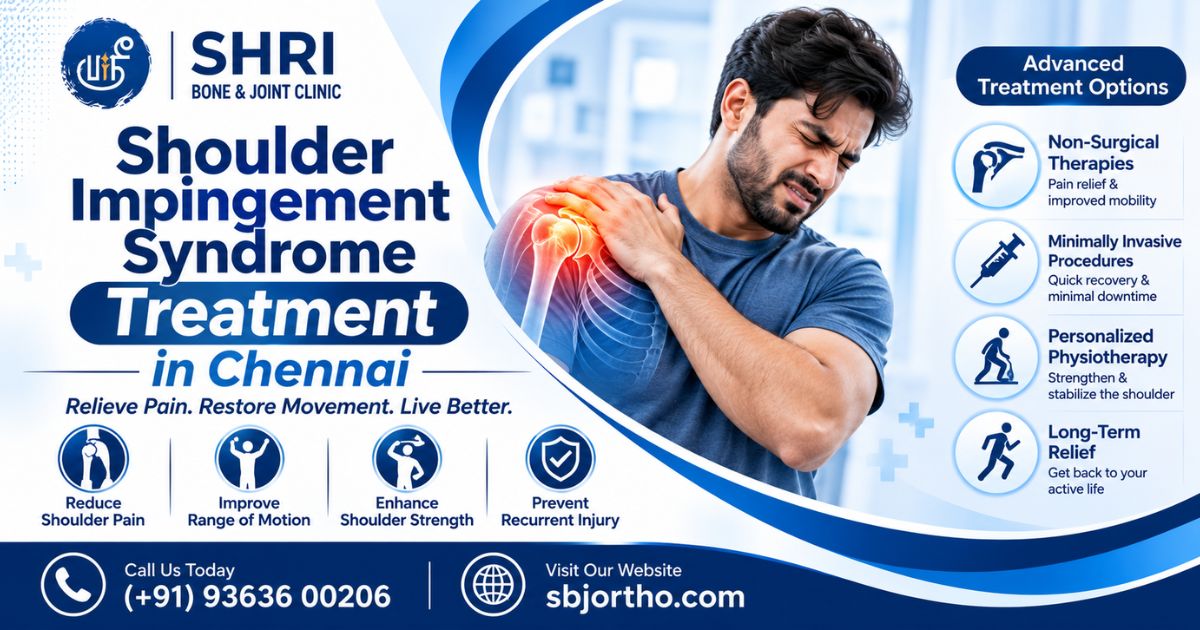
Which Is the Best Hospital for Shoulder Impingement Syndrome Treatment in Chennai?
Patients seeking shoulder impingement treatment should choose an orthopedic centre that provides accurate diagnosis, appropriate imaging when necessary, structured physiotherapy, and access to specialist surgical evaluation when clinically indicated.
Shri Bone & Joint Clinic in Chennai provides orthopedic consultation and treatment planning for patients experiencing shoulder pain, movement restrictions, and other musculoskeletal conditions.
The treatment approach focuses on identifying the cause of pain and selecting appropriate conservative or surgical management.
Patients with additional joint conditions can also explore Knee Osteoarthritis Treatment in Chennai to understand how degenerative joint problems are evaluated and managed through non-surgical and surgical approaches.
For patients experiencing advanced arthritis affecting both knees, Robotic Bilateral Knee Replacement in Chennai provides information about simultaneous and staged knee replacement procedures.
Although shoulder impingement and knee arthritis affect different joints, both require individualised assessment rather than a standard treatment approach for every patient.
Who Is the Best Doctor for Shoulder Impingement Syndrome Treatment in Chennai?
Choosing the right orthopedic doctor is important because shoulder pain can result from several conditions, including rotator cuff tendinopathy, frozen shoulder, arthritis, bursitis, and tendon tears.
An accurate diagnosis helps avoid unnecessary treatment and ensures that rehabilitation addresses the actual cause of symptoms.
Dr. Shriram Krishnamoorthy at Shri Bone & Joint Clinic provides orthopedic evaluation and treatment planning for patients experiencing shoulder pain, restricted movement, and musculoskeletal problems.
Patients looking for an Orthopedic Specialist in Chennai can consult Dr. Shriram for a detailed assessment of shoulder symptoms and guidance on appropriate treatment options.
Patients interested in understanding other advanced orthopedic procedures can also explore Robotic Hip Replacement in Chennai, which explains the role of robotic-assisted technology in selected hip replacement procedures.
For shoulder impingement syndrome, the primary treatment objective is usually to improve pain, movement, and muscle function through appropriate non-surgical management before considering invasive procedures.
What Is the Cost of Shoulder Impingement Syndrome Treatment in Chennai?
The cost of shoulder impingement treatment depends on the severity of symptoms, investigations required, physiotherapy sessions, medication, injections, and whether an underlying structural condition requires surgery.
Many patients can be managed through non-surgical treatment.
| Category | Approx. Range (₹) |
| Non-surgical care / Diagnostics | ₹3,000 – ₹10,000 |
| Standard Therapy | Varies |
| Advanced Programs | Varies |
| Specialised Rehab | Varies |
| Physiotherapy & Rehab | ₹15,000 – ₹40,000 |
These figures are illustrative estimates for selected diagnostic, non-surgical, and rehabilitation services. They are not verified clinic prices or a personalised treatment quotation.
The actual cost depends on the patient's diagnosis, treatment duration, investigations, and rehabilitation requirements.
If surgery is recommended for a separate structural condition, hospital charges, surgeon fees, anaesthesia, operating-room expenses, and postoperative rehabilitation may involve additional costs.
Does Health Insurance Cover Shoulder Impingement Syndrome Treatment?
Insurance coverage depends on the patient's policy and the treatment required.
Routine outpatient consultations, medications, physiotherapy, and injections may not be covered under every policy.
Medically necessary surgery for an eligible structural shoulder condition may qualify for coverage, subject to the insurer's terms.
Patients should verify waiting periods, exclusions, pre-authorisation requirements, and coverage limits before treatment.
FAQs
1. Can shoulder impingement syndrome be treated without surgery?
Yes. Most patients with shoulder impingement-related pain can begin treatment without surgery.
Physiotherapy, progressive strengthening, activity modification, and appropriate pain management are commonly recommended. Surgery is generally reserved for selected patients with a separate structural condition that requires operative treatment.
2. What is the best physiotherapy treatment for shoulder impingement?
A structured exercise programme that includes rotator cuff strengthening, shoulder blade stabilisation, mobility exercises, and progressive functional training is commonly recommended.
The exercises should be selected according to the patient's symptoms, movement limitations, strength, and daily activity requirements. There is no single exercise programme suitable for every patient.
3. Can shoulder impingement syndrome cause pain at night?
Yes. Patients with shoulder impingement-related pain may experience discomfort while lying on the affected shoulder or moving the arm during sleep.
However, night pain can also occur with rotator cuff tears, frozen shoulder, and other shoulder conditions. Persistent or severe symptoms should be evaluated by an orthopedic doctor.
4. How long does shoulder impingement take to heal?
Some patients improve within several weeks of appropriate treatment, while others require two to three months or longer.
Recovery depends on the duration of symptoms, underlying tendon condition, physical demands, and consistency with rehabilitation. Longstanding shoulder pain may require a more gradual strengthening programme.
5. What exercises should be avoided with shoulder impingement syndrome?
Patients may need to temporarily reduce heavy overhead presses, repetitive painful lifting, and exercises that consistently aggravate shoulder symptoms.
However, complete avoidance of shoulder movement is usually unnecessary. A physiotherapist can help modify exercises and gradually reintroduce overhead activities as strength and movement improve.

Better Health Care is Our Mission
Get an immediate relief to your knee-related problems from Shri Bone & Joint Clinic.
Phone
Shri Bone & Joint clinic
No.14/31, 3rd Avenue Indira Nagar, Adyar, Chennai-600020
Phone: 044 4505 5509