

PRP Injection for Knee Pain in Chennai is a minimally invasive orthopedic treatment that uses a concentrated preparation of the patient's own platelets to help manage knee pain and improve joint function in selected cases. PRP stands for Platelet-Rich Plasma, a blood-derived preparation containing platelets and naturally occurring growth factors involved in tissue-healing processes.
PRP injections are commonly considered for patients experiencing symptoms associated with mild to moderate knee osteoarthritis and certain soft-tissue injuries. The treatment is intended to support symptom management without major surgery, although results vary and it cannot reliably regenerate damaged cartilage or reverse advanced arthritis.
At Shri Bone & Joint Clinic in Chennai, patients experiencing persistent knee pain can undergo an orthopedic evaluation to identify the underlying cause and explore appropriate treatment options. PRP therapy may be discussed alongside physiotherapy, medication, lifestyle modifications, and other established orthopedic treatments.
Understanding the benefits, limitations, procedure, recovery process, and expected outcomes of PRP injections helps patients make informed decisions about their knee health.
What Is PRP Injection for Knee Pain?
Platelet-Rich Plasma (PRP) injection is an orthobiologic procedure in which a small amount of blood is collected from the patient and processed to create a preparation containing a higher concentration of platelets than ordinary blood.
Platelets are blood components involved in clotting and tissue repair. They contain biological signalling molecules, including growth factors, that participate in the body's response to injury.
During PRP treatment, the concentrated platelet preparation is injected into the affected knee joint or another clinically indicated structure.
How Does PRP Injection Work?
PRP is being studied for its potential ability to influence inflammation and biological signalling within the joint.
Its proposed actions include:
- Modulating certain inflammatory processes.
- Delivering platelet-derived growth factors.
- Influencing local tissue-repair responses.
- Potentially improving pain and joint function.
- Supporting symptom management in selected patients.
Clinical studies have reported improvements in knee osteoarthritis symptoms following PRP injections. However, findings vary because PRP preparation methods, injection protocols, and patient characteristics are not standardised.
Some professional guidelines recognise possible benefits, while others recommend against routine use because of inconsistent evidence.
PRP is not a proven method for rebuilding worn-out knee cartilage or curing osteoarthritis.
Types of PRP Preparations
PRP preparations may differ according to the concentration of platelets and the presence of white blood cells.
Common categories include:
Leukocyte-Poor PRP: Contains relatively fewer white blood cells and is frequently investigated for intra-articular knee injections.
Leukocyte-Rich PRP: Contains a higher proportion of white blood cells and may produce a different inflammatory response.
The most appropriate preparation remains an area of ongoing research.
When Is PRP Injection for Knee Pain Recommended?
PRP injections may be considered for selected patients after a detailed orthopedic examination.
The decision depends on the cause of knee pain, severity of joint degeneration, previous treatment response, and individual medical circumstances.
1. Mild to Moderate Knee Osteoarthritis
Knee osteoarthritis is a degenerative joint condition involving changes in cartilage, bone, and surrounding tissues.
Common symptoms include:
- Knee pain during walking.
- Morning or activity-related stiffness.
- Swelling around the joint.
- Difficulty climbing stairs.
- Reduced knee flexibility.
- Discomfort after prolonged standing.
PRP may be discussed as an option for some patients with persistent symptoms, particularly when first-line conservative treatments have provided insufficient relief.
2. Persistent Knee Pain Despite Conservative Treatment
Patients who continue experiencing knee discomfort after physiotherapy, exercise modification, or appropriate medication may ask about injection-based treatment.
PRP should not replace strengthening exercises, weight management when appropriate, or other evidence-based approaches.
3. Selected Sports-Related Knee Injuries
Certain sports injuries affect tendons, ligaments, or other structures around the knee.
PRP has been investigated for some of these conditions, but its effectiveness depends on the specific injury.
It is not a universal treatment for meniscus tears, ligament ruptures, or tendon injuries.
4. Patients Seeking Non-Surgical Symptom Management
Some patients prefer to explore non-surgical treatment before considering an operation.
PRP may be discussed when the condition does not require urgent surgical intervention and the patient understands the uncertainty surrounding treatment outcomes.
5. Selected Patients With Early Joint Degeneration
Patients with early degenerative changes may be interested in joint-preservation approaches.
However, PRP should be considered a possible symptom-management intervention rather than a treatment that prevents arthritis progression.
Who May Not Be Suitable for PRP Injections?
PRP may be inappropriate for patients with:
- Active infection.
- Certain platelet or blood disorders.
- Significant bleeding disorders.
- Certain serious medical conditions.
- Uncontrolled systemic illness.
- Advanced joint damage where an injection is unlikely to provide meaningful relief.
Patients taking anticoagulant or antiplatelet medication require individualised assessment. Prescribed medication should never be stopped without approval from the treating doctor.
Benefits of PRP Injection for Knee Pain
PRP injections may offer several potential benefits for appropriately selected patients.
However, improvement is not guaranteed, and the strength of supporting evidence differs between clinical applications.
1. Minimally Invasive Treatment
PRP treatment is generally performed using a blood collection procedure followed by an injection.
It does not require the surgical incisions associated with major knee operations.
2. Uses the Patient's Own Blood
The platelet concentrate is prepared from the patient's own blood.
This avoids the use of donor-derived blood components, although injection-related complications remain possible.
3. Potential Knee Pain Relief
Some clinical studies have found that PRP can improve knee osteoarthritis pain.
The magnitude and duration of improvement vary between patients and studies.
4. Possible Improvement in Joint Function
Patients who respond positively may experience improved comfort during walking, stair climbing, and other daily activities.
Functional improvement should be assessed using symptoms and activity levels rather than assuming structural cartilage repair.
5. Short Initial Recovery Period
Most patients can return to suitable light activities relatively soon after an uncomplicated injection.
Temporary soreness and activity restrictions may still occur.
6. May Complement Rehabilitation
PRP treatment may be considered alongside an appropriate physiotherapy programme.
Strengthening and movement rehabilitation remain important for improving long-term knee function.
How Is PRP Injection for Knee Pain Performed?
PRP injection is generally an outpatient procedure involving blood collection, processing, and injection into the treatment area.
The exact protocol varies depending on the clinical indication and equipment used.
Step 1: Orthopedic Knee Assessment
The doctor evaluates the patient's symptoms and medical history.
The examination may include:
- Knee movement assessment.
- Joint tenderness examination.
- Ligament stability testing.
- Evaluation of swelling.
- Muscle strength assessment.
- Review of previous treatments.
Weight-bearing X-rays or MRI may be recommended when clinically appropriate.
Step 2: Treatment Suitability Assessment
The doctor determines whether PRP is a reasonable option.
The patient should receive information about expected benefits, uncertainty of results, alternative treatments, and possible risks.
Step 3: Blood Collection
A small amount of blood is collected from a vein in the patient's arm using sterile equipment.
The amount required depends on the PRP preparation system.
Step 4: Platelet Concentration
The collected blood is placed in a centrifuge.
Centrifugation separates blood components according to their physical characteristics.
The platelet-rich portion is then prepared for injection.
Step 5: Knee Joint Injection
The knee is cleaned using an antiseptic solution.
The doctor injects the PRP preparation into the selected treatment area.
Ultrasound guidance may be used when necessary to support accurate needle placement.
Step 6: Observation After Injection
The patient is monitored briefly for immediate reactions.
The doctor provides instructions regarding activity, pain management, and warning signs.
Step 7: Follow-Up and Rehabilitation
Follow-up appointments may be recommended to assess pain, swelling, knee mobility, and daily function.
Physiotherapy and strengthening exercises may form part of the ongoing treatment plan.


Recovery Process After PRP Injection for Knee Pain
Recovery following PRP injection is generally shorter than recovery after knee surgery.
However, patients may experience temporary soreness, stiffness, or swelling.
The rehabilitation plan should be individualised.
First 24–48 Hours
Patients may experience mild to moderate discomfort around the injection site.
The doctor may recommend temporarily limiting strenuous activities.
Pain relief medication should be taken only as advised by the treating clinician.
Some clinicians recommend avoiding non-steroidal anti-inflammatory drugs around PRP treatment because of their effects on platelet function. However, protocols vary, and patients should not discontinue prescribed medication independently.
Gradual Return to Daily Activities
Light activities may be resumed according to comfort and medical advice.
High-impact exercise and strenuous knee loading may need to be restricted temporarily.
Physiotherapy and Strengthening
Rehabilitation may include:
- Quadriceps strengthening.
- Hamstring exercises.
- Hip muscle strengthening.
- Gentle knee mobility exercises.
- Balance training.
- Low-impact walking.
- Stationary cycling when appropriate.
The aim is to improve knee stability, muscular support, and functional movement.
Monitoring Treatment Response
Patients should monitor changes in pain, swelling, and mobility.
Temporary discomfort does not necessarily indicate treatment failure.
However, severe or progressively worsening symptoms require medical assessment.
Possible Complications
Potential risks include:
- Injection-site pain.
- Temporary swelling.
- Bruising.
- Bleeding.
- Infection.
- Vasovagal reactions.
- Failure to achieve meaningful symptom relief.
Severe pain accompanied by fever, marked redness, or increasing joint swelling should be assessed urgently because joint infection, although uncommon, can be serious.
How Long Does Recovery Take?
The immediate recovery period following PRP injection is usually measured in days, but any improvement in knee symptoms may take longer.
There is no universally established timeline for PRP effectiveness.
| Recovery Stage | Approximate Timeline | Main Focus |
| Immediate recovery | Same day | Observation and injection-site care |
| Early recovery | First 2–3 days | Managing temporary soreness |
| Gradual activity resumption | First 1–2 weeks | Comfortable movement and rehabilitation |
| Symptom reassessment | Following weeks | Monitoring pain and function |
| Longer-term follow-up | Several months | Evaluating durability of any benefit |
These timelines are general and may vary.
Some clinical studies have reported symptom improvements over several months, but results are inconsistent, and not every patient responds.
The number of PRP injections also varies between treatment protocols. There is no universally accepted schedule that guarantees better outcomes.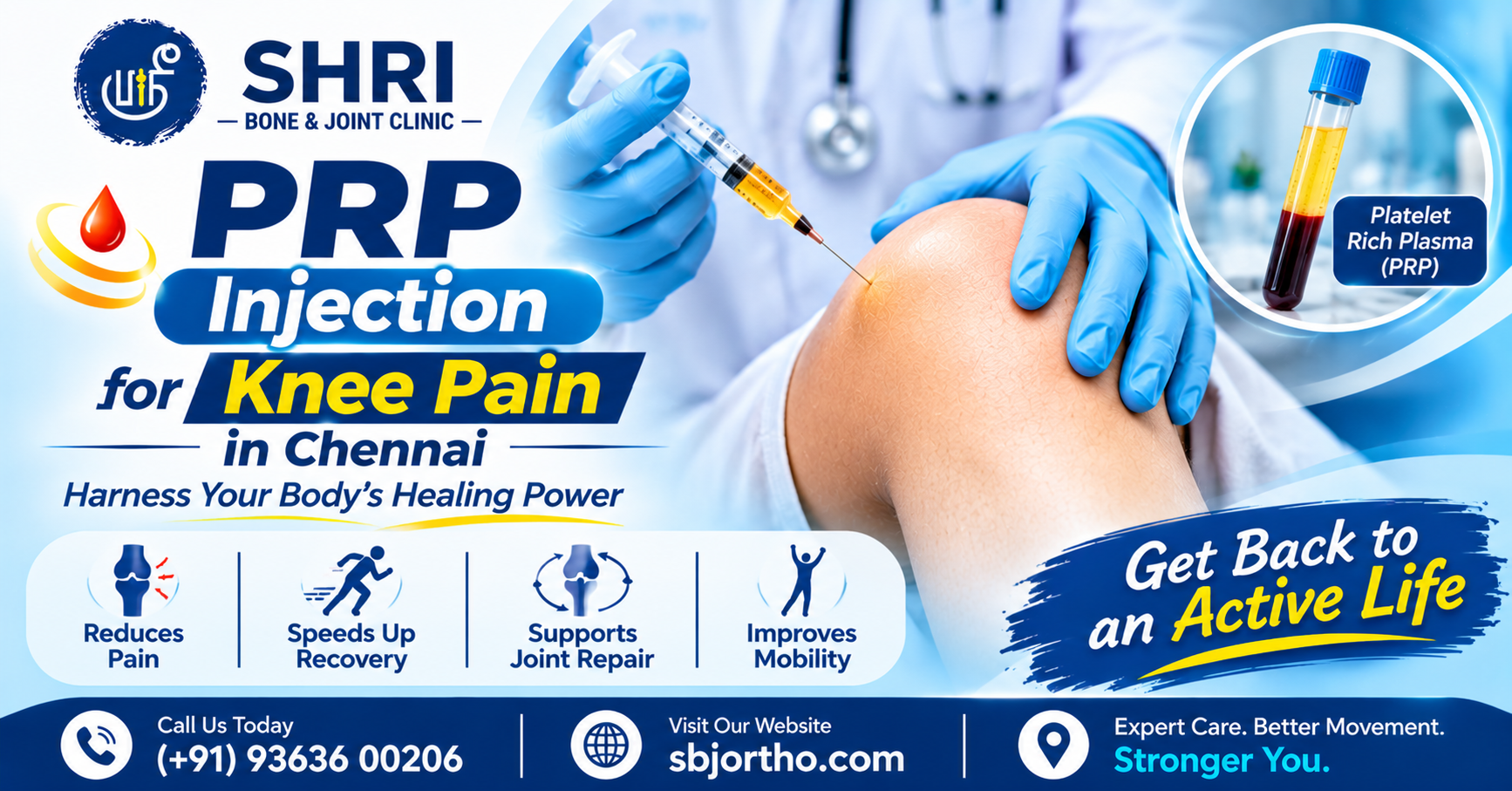
Which is the Best Hospital for PRP Injection for Knee Pain in Chennai?
Choosing a hospital or orthopedic clinic for PRP injection requires careful attention to diagnosis, clinical expertise, procedural safety, and realistic treatment expectations.
Patients should not select a facility solely because it advertises PRP as a cartilage-regeneration treatment.
Important factors include:
- Qualified orthopedic evaluation.
- Accurate diagnosis of knee pain.
- Appropriate imaging when required.
- Sterile blood collection and injection procedures.
- Reliable PRP processing equipment.
- Transparent discussion of clinical evidence.
- Access to physiotherapy and rehabilitation.
- Follow-up assessment.
- Clear explanation of costs and possible complications.
Shri Bone & Joint Clinic in Chennai provides orthopedic consultation and treatment guidance for patients experiencing knee pain, arthritis, and other musculoskeletal conditions.
Patients interested in PRP injections can undergo an assessment to understand the cause of their symptoms and explore suitable non-surgical and surgical treatment options.
The availability of PRP injection at the clinic should be confirmed before scheduling the procedure.
For many patients with knee osteoarthritis, treatment may begin with exercise-based physiotherapy, weight management when appropriate, activity modification, and suitable medication.
Injection-based interventions should be considered according to clinical findings and individual treatment goals.
Who is the Best Doctor for PRP Injection for Knee Pain in Chennai?
The appropriate doctor for PRP injection should have experience diagnosing knee disorders, evaluating joint degeneration, and discussing the benefits and limitations of injection-based treatments.
Patients should choose a specialist who can assess:
- The underlying cause of knee pain.
- Osteoarthritis severity.
- Knee alignment.
- Joint stability.
- Cartilage and meniscus conditions.
- Previous treatment response.
- Medical contraindications.
- Suitability for non-surgical or surgical treatment.
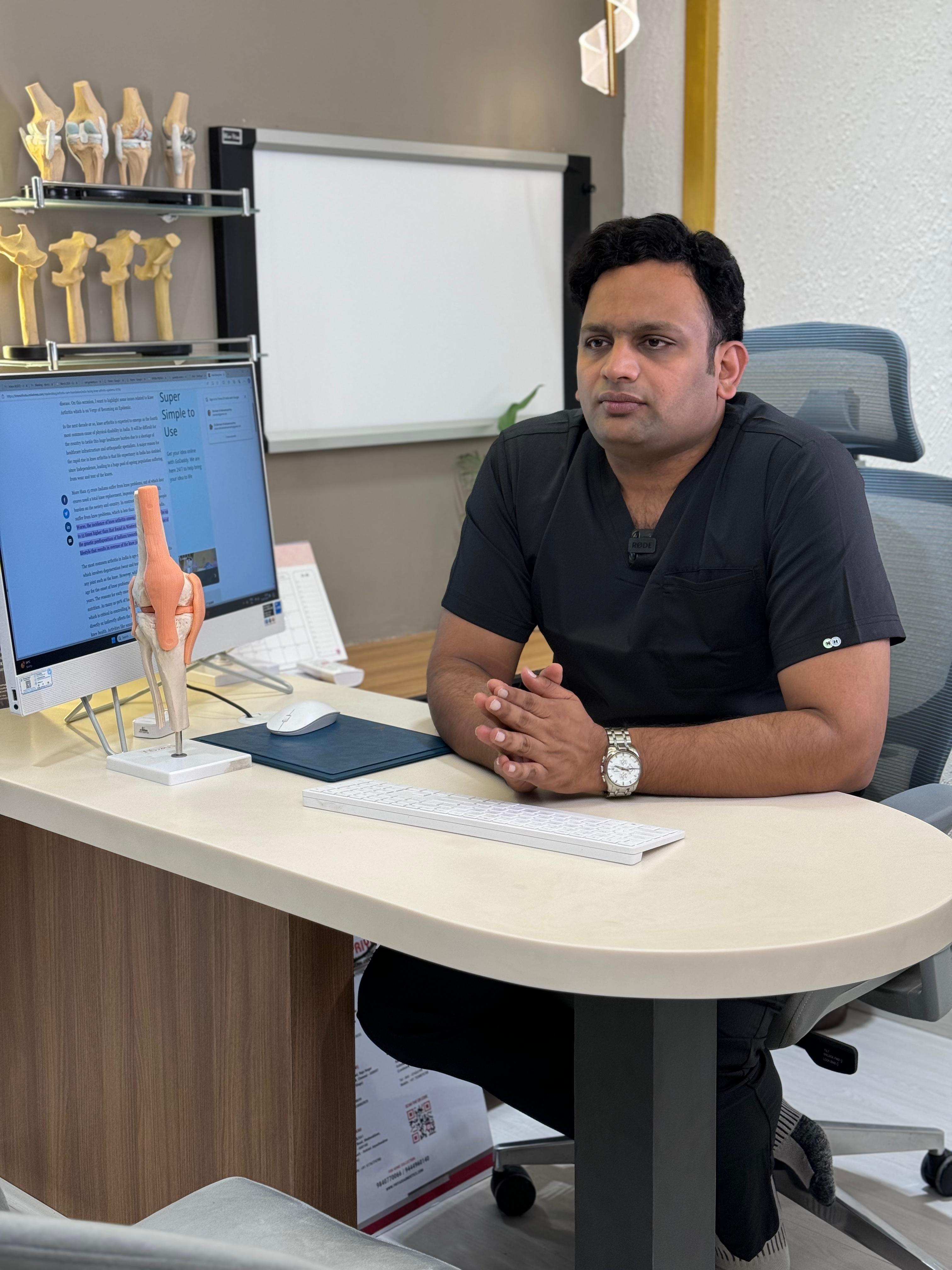
Dr. Shriram Krishnamoorthy, associated with Shri Bone & Joint Clinic, provides orthopedic assessment and treatment guidance for knee and other musculoskeletal conditions.
Patients searching for an Orthopedic Specialist in Chennai can seek a consultation to understand whether their knee pain is caused by osteoarthritis, injury, inflammation, or another orthopedic problem.
For patients with advanced arthritis and substantial functional limitations, established surgical treatments may include Total Knee Replacement in Chennai or Partial Knee Replacement in Chennai, depending on the extent and distribution of joint damage.
Patients exploring other orthobiologic approaches may also encounter BMAC Injection in Chennai, which uses a concentrated preparation derived from bone marrow rather than blood.
PRP and BMAC are different procedures, and neither has been conclusively demonstrated to regenerate advanced cartilage damage or replace the need for joint replacement in suitable surgical candidates.
A thorough clinical evaluation is essential for choosing the most appropriate treatment.
What is the Cost of PRP Injection for Knee Pain in Chennai?
The cost of PRP injection for knee pain in Chennai depends on the treatment facility, PRP preparation method, clinical evaluation, and number of injections recommended.
Because PRP systems and protocols vary, there is no single standard price applicable to every patient.
Factors Affecting PRP Injection Cost
| Cost Factor | Description |
| Initial consultation | Orthopedic examination and diagnosis |
| Diagnostic investigations | X-rays, MRI or other tests when necessary |
| PRP preparation system | Equipment and consumables used to concentrate platelets |
| Number of injections | Single injection or multiple sessions when clinically justified |
| Injection guidance | Ultrasound guidance when required |
| Procedural charges | Sterile preparation and injection administration |
| Physiotherapy | Additional rehabilitation and strengthening |
| Follow-up consultation | Monitoring symptoms and treatment response |
| Additional treatment | Other interventions when medically indicated |
Is PRP Injection Covered by Health Insurance?
Insurance coverage for PRP injections varies.
Many insurance policies exclude PRP or classify it as an elective or investigational treatment.
Some plans may provide limited coverage under specific circumstances, but eligibility should never be assumed.
Patients should obtain written confirmation from their insurer regarding coverage, exclusions, and reimbursement requirements.
How to Get an Accurate PRP Treatment Estimate
Patients should request an itemised quotation before proceeding.
The estimate should clarify:
- Consultation charges.
- Cost per PRP injection.
- Whether imaging guidance is included.
- Number of sessions proposed.
- Follow-up charges.
- Physiotherapy expenses.
- Additional treatment costs, if applicable.
Patients should also ask why a particular injection protocol is recommended and what clinical improvement can reasonably be expected.
The treatment decision should be based on medical suitability and evidence rather than promotional claims or package pricing.
FAQs
1. Is PRP injection effective for knee osteoarthritis?
PRP injections may improve pain and function in some patients with knee osteoarthritis, particularly those with mild to moderate symptoms. However, clinical studies show variable results, and professional recommendations differ because treatment preparations and protocols are inconsistent. PRP is not a proven cure for osteoarthritis and does not reliably restore lost cartilage.
2. How many PRP injections are needed for knee pain?
There is no universally established number of PRP injections. Some clinical protocols use a single injection, while others involve multiple sessions. The appropriate approach depends on the patient's condition, available evidence, and clinical judgement. More injections do not necessarily guarantee better or longer-lasting results.
3. Is PRP injection painful?
Patients may experience mild discomfort during the injection and temporary soreness afterward. Some individuals develop short-term swelling or stiffness. The procedure is generally performed without major surgery, but discomfort varies between patients. Severe or worsening pain should be reported to the treating doctor.
4. Can PRP injection prevent knee replacement surgery?
There is insufficient evidence to conclude that PRP injections reliably prevent or delay knee replacement surgery. Some patients may experience symptom relief, but this does not mean that damaged cartilage has regenerated. Patients with advanced arthritis should discuss established treatment options, including joint replacement when appropriate.
5. How long do the benefits of PRP injection last?
The duration of improvement varies between patients. Some studies report symptom relief lasting several months, while others show limited or no meaningful benefit compared with alternative treatments. Long-term effectiveness remains uncertain, and ongoing exercise, rehabilitation, and appropriate medical management are important for knee health.

Better Health Care is Our Mission
Get an immediate relief to your knee-related problems from Shri Bone & Joint Clinic.
Phone
Shri Bone & Joint clinic
No.14/31, 3rd Avenue Indira Nagar, Adyar, Chennai-600020
Phone: 044 4505 5509