Introduction
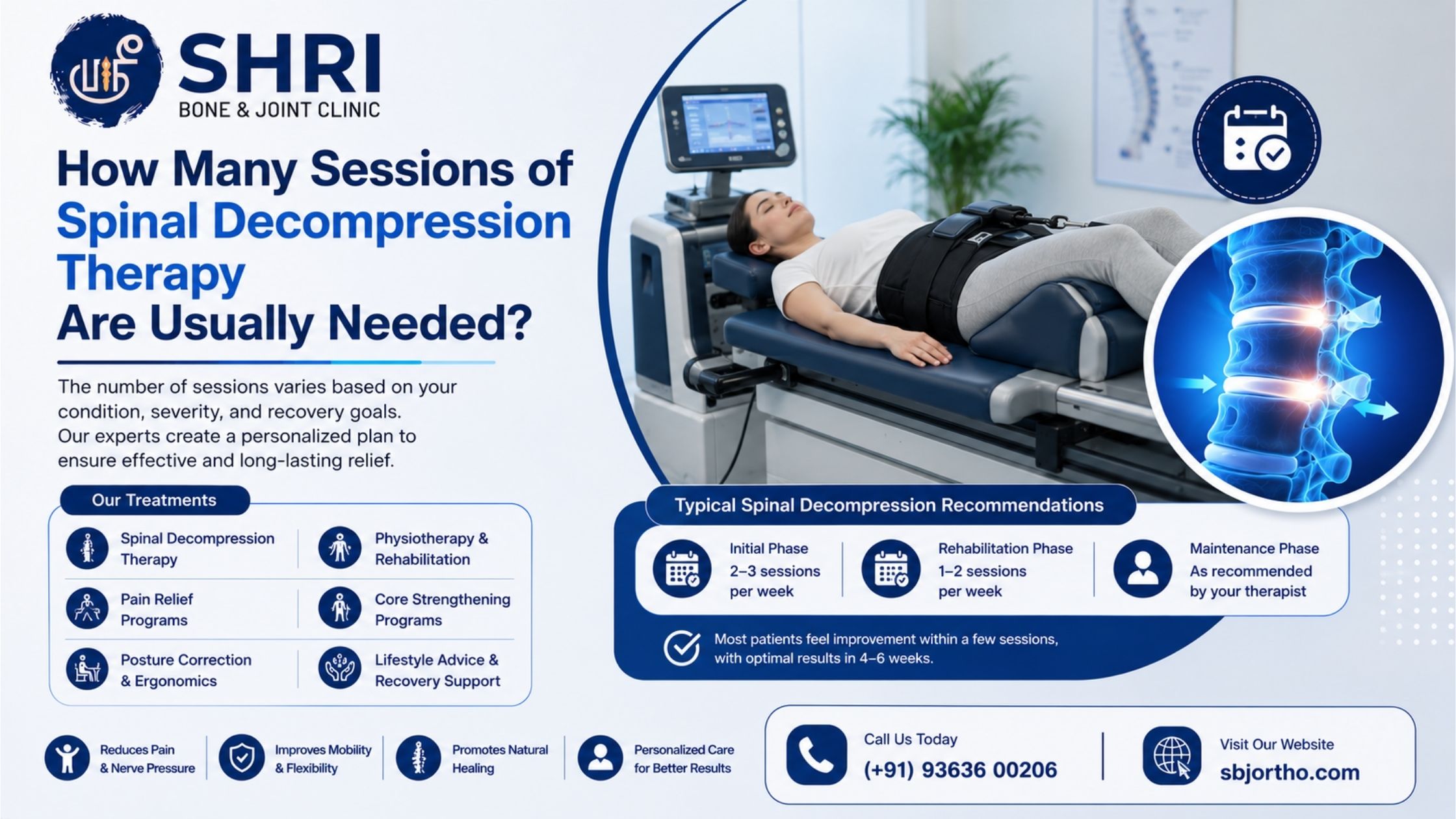
One of the first questions people ask before starting spinal decompression therapy is, “How many sessions will I need?” It is a reasonable question because patients want to know how long treatment will take, when they can expect to feel better, and whether the therapy will fit into their daily routine.
The simple answer is that there is no fixed number of sessions that works for everyone.
Some people experience noticeable improvement within the first few weeks, while others require a longer rehabilitation program depending on the nature of their condition. The number of sessions is influenced by several factors, including the underlying diagnosis, severity of symptoms, duration of the problem, age, activity level, and how well the body responds to treatment.
It is also important to understand that spinal decompression therapy is not intended to be a one-time solution. Like many rehabilitation programs, it works gradually by helping reduce pressure on spinal structures while allowing the body to recover over time.
In this article, we’ll explore the factors that determine treatment duration, what happens during the different stages of rehabilitation, and why completing the recommended program is often more important than simply counting sessions.
What Is Spinal Decompression Therapy?
Spinal decompression therapy is a non-surgical rehabilitation technique designed to gently reduce pressure on the spinal discs and nearby nerves.
Using a specialised decompression system, controlled forces are applied to specific areas of the spine. The treatment is carefully programmed according to the patient’s condition and rehabilitation goals.
It is commonly considered for conditions such as:
- Chronic lower back pain
- Neck pain
- Disc bulges
- Herniated discs
- Degenerative disc disease
- Sciatica
- Nerve compression
- Certain chronic spine-related conditions
The objective is to improve spinal function while supporting movement and reducing mechanical stress on affected structures.
Why Isn’t There a Fixed Number of Sessions?
Every spine condition is different.
Even when two people have the same MRI findings, their symptoms, physical condition, activity levels, and recovery potential may vary considerably.
Treatment duration depends on factors such as:
- The diagnosis
- Severity of symptoms
- Duration of pain
- Overall spinal health
- Muscle strength
- Lifestyle habits
- Rehabilitation goals
For this reason, treatment plans are individualised rather than following a standard number of sessions.
Factors That Influence the Number of Sessions
1. The Underlying Condition
Different spinal conditions respond differently to rehabilitation.
For example:
- Mild disc irritation may improve more quickly.
- Long-standing degenerative conditions often require a longer rehabilitation program.
- Chronic nerve-related symptoms may need additional strengthening and mobility training alongside decompression.
The diagnosis plays a major role in determining treatment duration.
2. How Long Symptoms Have Been Present
Generally, recent symptoms tend to respond more quickly than problems that have been present for several months or years.
When pain becomes chronic, the body often develops:
- Muscle weakness
- Poor movement patterns
- Reduced flexibility
- Protective muscle guarding
These changes also need to be addressed during rehabilitation.
3. Severity of Symptoms
People experiencing mild discomfort may progress more quickly than those with:
- Significant mobility limitations
- Persistent radiating pain
- Muscle weakness
- Multiple spinal problems
The severity of symptoms often influences both the intensity and duration of treatment.
4. Physical Fitness
Individuals who remain physically active often recover differently from those who have avoided movement for long periods.
Muscle strength, flexibility, and overall conditioning all influence rehabilitation progress.
5. Consistency
One of the biggest predictors of success is consistency.
Attending sessions regularly while following home exercise recommendations often produces better outcomes than irregular treatment.
Rehabilitation works best when progress builds steadily over time.
What Happens During the First Few Sessions?
Many patients expect immediate pain relief after one or two sessions.
However, rehabilitation usually follows a gradual progression.
During the early phase, the goals often include:
- Becoming comfortable with treatment
- Reducing mechanical stress on the spine
- Improving movement confidence
- Beginning gentle rehabilitation
Some individuals notice early improvement, while others require additional time before significant changes occur.
The Different Stages of Rehabilitation
Early Phase
The first stage focuses on reducing irritation and helping patients move more comfortably.
Patients often begin learning:
- Better posture
- Safe movement techniques
- Activity modifications
Intermediate Phase
As symptoms improve, rehabilitation becomes more active.
Treatment often includes:
- Strengthening exercises
- Core stability training
- Mobility exercises
- Functional movement training
This stage helps improve spinal support and reduce the likelihood of recurring symptoms.
Advanced Phase
The final stage focuses on long-term function.
Patients continue building:
- Strength
- Endurance
- Flexibility
- Balance
- Confidence during daily activities
The objective is to help patients maintain improvements after rehabilitation is completed.
Why Stopping Treatment Too Early Can Be a Problem
One common mistake is stopping therapy as soon as pain begins to decrease.
Although pain relief is encouraging, it does not necessarily mean the spine has fully recovered.
Underlying issues such as:
- Muscle weakness
- Poor posture
- Reduced mobility
- Functional limitations
may still remain.
Completing the recommended rehabilitation program often helps reduce the likelihood of symptoms returning.
Can More Sessions Produce Better Results?
Not necessarily.
The goal is not to receive as many sessions as possible.
Instead, treatment should continue only for as long as it provides meaningful progress.
As patients improve, rehabilitation gradually shifts toward self-management through exercise, movement education, and long-term spinal care.
A good rehabilitation program aims to make patients increasingly independent rather than dependent on ongoing treatment.
What Can Patients Do to Improve Recovery?
Recovery does not depend entirely on treatment sessions.
Patients who actively participate in rehabilitation often experience better long-term outcomes.
Helpful habits include:
- Performing prescribed exercises
- Maintaining good posture
- Staying physically active
- Avoiding prolonged inactivity
- Following professional advice
- Maintaining a healthy body weight
These lifestyle factors complement decompression therapy and support long-term spinal health.
Is Spinal Decompression Therapy Enough on Its Own?
In most cases, no.
Spinal decompression therapy is usually one component of a broader rehabilitation program.
Depending on the patient’s condition, treatment may also include:
- Physiotherapy
- Strengthening exercises
- Flexibility training
- Posture correction
- Functional rehabilitation
- Lifestyle education
Combining these approaches often provides more comprehensive results than relying on decompression therapy alone.
How Will I Know If Treatment Is Working?
Progress is usually measured by improvements in function rather than pain alone.
Positive signs may include:
- Walking more comfortably
- Sitting longer without discomfort
- Better flexibility
- Improved posture
- Increased activity levels
- Better sleep
- Greater confidence in movement
These improvements often occur gradually throughout rehabilitation.
Setting Realistic Expectations
Every patient recovers at a different pace.
Some individuals notice early improvements, while others require a longer rehabilitation journey.
Rather than comparing progress with someone else, it is more helpful to focus on steady improvements in:
- Daily function
- Mobility
- Strength
- Overall quality of life
Consistency and patience remain important throughout the rehabilitation process.
Conclusion
There is no universal answer to how many sessions of spinal decompression therapy are needed because every patient’s condition is different. Factors such as the diagnosis, severity of symptoms, duration of the problem, physical condition, and response to rehabilitation all influence the treatment plan.
The focus should not be on reaching a specific number of sessions but on achieving meaningful improvements in movement, strength, and daily function. Completing the recommended rehabilitation program and remaining consistent with exercises often leads to better long-term outcomes than stopping treatment as soon as symptoms begin to improve.
If you are considering decompression therapy for a spine-related condition, consulting an experienced Orthopedic Specialist in Chennai can help determine the most appropriate treatment approach for your individual needs. Patients interested in technology-assisted rehabilitation may also benefit from learning more about Automated Spine Decompression Therapy in Chennai and RoboSpine Therapy in Chennai to better understand how these advanced treatment options fit into a comprehensive rehabilitation program.
FAQs
How many sessions of spinal decompression therapy do most people need?
The number of sessions varies depending on the condition being treated, the severity of symptoms, and the individual’s response to rehabilitation. Your treatment plan is usually personalised after a detailed assessment.
Will I feel better after the first session?
Some people notice early improvements, while others require several sessions before meaningful changes occur. Recovery is generally gradual and depends on the underlying condition.
Can I stop treatment once the pain improves?
Pain relief is only one part of recovery. Completing the recommended rehabilitation program helps improve strength, movement, and long-term spinal function, reducing the chance of symptoms returning.
Is spinal decompression therapy used alone?
In many cases, no. It is often combined with physiotherapy, strengthening exercises, posture correction, mobility training, and lifestyle guidance to achieve the best results.
Does everyone respond to spinal decompression therapy in the same way?
No. Every individual responds differently based on factors such as age, diagnosis, physical condition, symptom duration, and participation in rehabilitation.