Introduction
Exercise is one of the most effective ways to manage chronic pain. Whether the pain affects the back, neck, knees, hips, or shoulders, staying active helps improve muscle strength, maintain joint mobility, and support long-term recovery.
However, for many people living with chronic pain, exercising can feel like a challenge. Walking may increase discomfort, bending can become difficult, and even simple strengthening exercises may seem overwhelming during painful episodes. As a result, many individuals avoid movement altogether, believing that rest is the safest option.
Unfortunately, prolonged inactivity often has the opposite effect. Weak muscles, reduced flexibility, poor balance, and decreased endurance can all contribute to worsening pain over time.
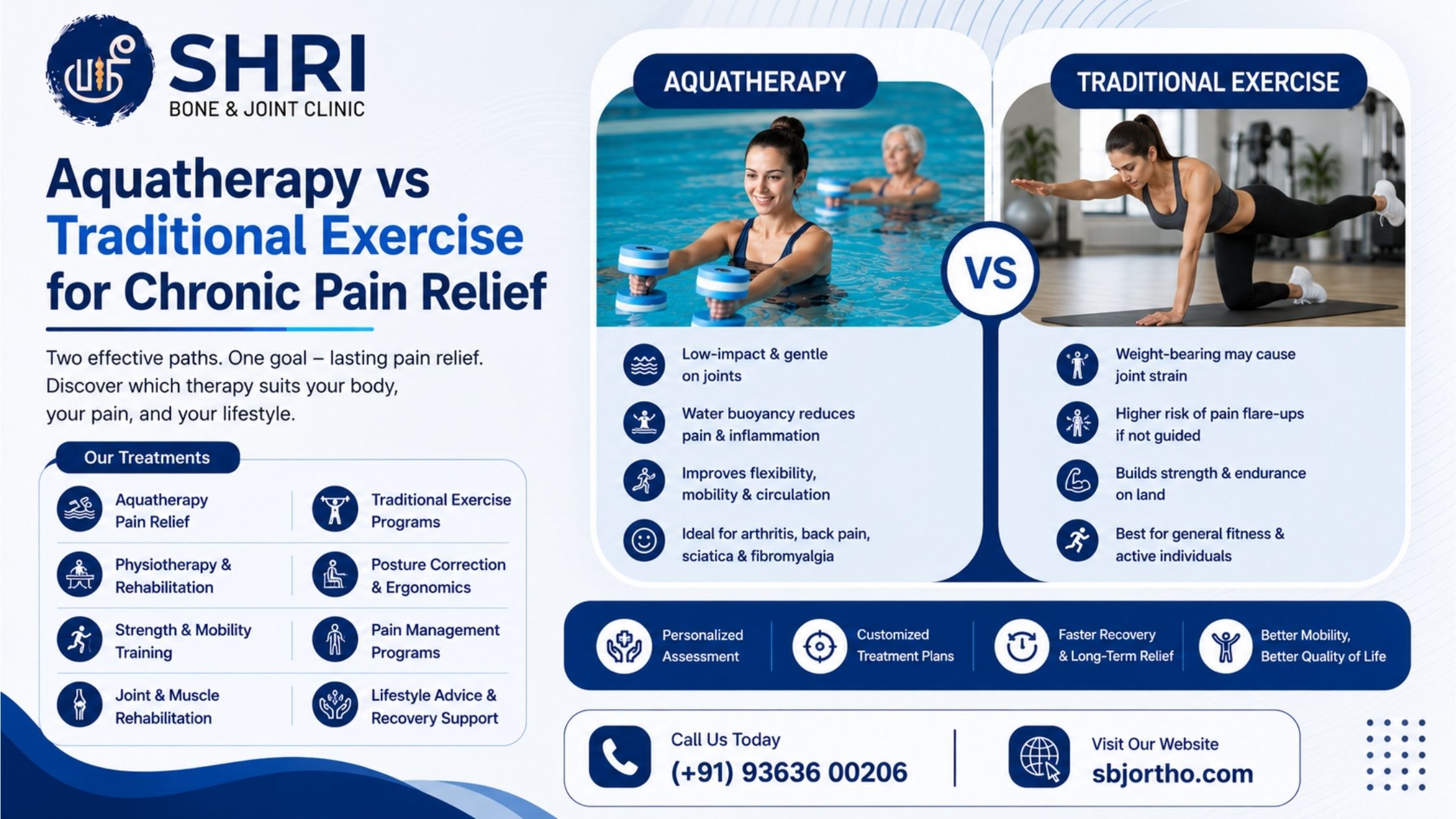
This is where rehabilitation exercises become important. Two of the most commonly recommended approaches are aquatherapy and traditional land-based exercise.
Patients frequently ask which one is better.
The answer is not as simple as choosing one over the other.
Both methods have unique advantages, and in many cases, they work best when used together as part of a structured rehabilitation program.
Understanding how each approach works can help patients make informed decisions about their recovery.
Understanding Chronic Pain
Unlike pain caused by a recent injury, chronic pain continues for several months and may persist even after the original tissue has healed.
It commonly affects people with:
- Chronic back pain
- Chronic neck pain
- Arthritis
- Degenerative spinal conditions
- Disc-related problems
- Joint disorders
- Sports injuries
- Post-surgical stiffness
Over time, chronic pain may also lead to:
- Reduced physical activity
- Muscle weakness
- Poor posture
- Fear of movement
- Reduced confidence
- Limited daily function
Rehabilitation aims to interrupt this cycle by encouraging safe, gradual movement.
What Is Aquatherapy?
Aquatherapy is a rehabilitation program performed in a therapeutic pool under professional supervision.
Unlike recreational swimming, aquatherapy uses carefully planned exercises that are modified according to the patient’s condition and rehabilitation goals.
The natural properties of water make movement easier while still allowing muscles to work effectively.
Water provides:
- Buoyancy
- Gentle resistance
- Reduced joint loading
- Support during movement
This creates an environment where many patients can exercise more comfortably than they can on land.
What Is Traditional Exercise?
Traditional exercise refers to rehabilitation performed on land.
Depending on the individual’s condition, it may include:
- Stretching
- Strength training
- Walking
- Core exercises
- Balance training
- Functional rehabilitation
- Mobility exercises
Land-based exercise prepares the body for the movements required during everyday life.
Most rehabilitation programs eventually include some form of traditional exercise because daily activities naturally occur outside the pool.
How Water Changes Movement
One of the biggest advantages of aquatherapy is buoyancy.
When a person stands in water, the body becomes lighter because the water supports a significant portion of body weight.
This reduces pressure on:
- The spine
- Hips
- Knees
- Ankles
As a result, movements that feel painful on land often become easier in water.
Patients frequently discover they can:
- Walk more comfortably
- Bend more easily
- Improve flexibility
- Exercise with greater confidence
This makes aquatherapy particularly valuable during the early stages of rehabilitation.
Benefits of Aquatherapy
Reduced Joint Loading
Water decreases the amount of force placed on painful joints and the spine.
This allows patients to remain active while minimising discomfort.
Easier Movement
The supportive environment helps patients perform movements that may otherwise feel difficult.
Natural Resistance
Water provides resistance in every direction.
This allows muscles to strengthen without the need for heavy weights.
Improved Balance
The pool provides a safer environment for balance training.
Patients often become more confident while practising movement in water.
Lower Fear of Movement
Many individuals who are anxious about exercising on land feel more comfortable beginning rehabilitation in water.
Benefits of Traditional Exercise
Land-based exercise also offers important advantages.
Functional Strength
Traditional exercise strengthens muscles in ways that directly support everyday activities.
Improved Bone Health
Weight-bearing exercises encourage healthy bone maintenance.
Better Real-World Movement
Daily activities such as climbing stairs, lifting objects, and walking occur on land.
Land-based rehabilitation prepares patients for these tasks.
Long-Term Independence
Traditional exercise is often easier to continue independently after rehabilitation ends.
Which Conditions Benefit Most from Aquatherapy?
Aquatherapy may be particularly helpful for individuals with:
- Arthritis
- Chronic back pain
- Knee pain
- Hip pain
- Sciatica
- Obesity
- Post-surgical rehabilitation
- Balance difficulties
- Reduced mobility
The reduced joint loading allows patients to begin exercising earlier and more comfortably.
Which Conditions Benefit Most from Traditional Exercise?
Land-based rehabilitation remains important for individuals recovering from:
- Muscle weakness
- Sports injuries
- Chronic spinal conditions
- Joint instability
- Functional movement limitations
Strength training and functional exercises play an important role in long-term recovery.
Is One Better Than the Other?
This is probably the most common question patients ask.
The reality is that neither approach is universally better.
Each serves a different purpose.
Aquatherapy is particularly useful when:
- Pain limits movement
- Weight-bearing is difficult
- Early rehabilitation is needed
Traditional exercise becomes increasingly important as patients regain strength and confidence.
Most rehabilitation specialists view these approaches as complementary rather than competing treatments.
Why Many Rehabilitation Programs Combine Both
One of the most effective rehabilitation strategies is to use both methods at different stages of recovery.
For example:
Early Rehabilitation
Aquatherapy helps patients move comfortably while reducing stress on painful joints.
Mid-Rehabilitation
Strengthening and mobility exercises gradually increase on land.
Advanced Rehabilitation
Functional exercises prepare patients for normal work, sports, and daily activities.
This progression allows patients to build confidence while gradually returning to full activity.
Common Misconceptions
“Water Exercise Is Only for Older Adults”
Not true.
Athletes, younger adults, and post-surgical patients also benefit from water-based rehabilitation.
“Traditional Exercise Is Too Painful”
Exercises can be modified according to each person’s condition.
The goal is gradual progression rather than pushing through pain.
“Swimming Is the Same as Aquatherapy”
Swimming is a recreational activity.
Aquatherapy is a structured rehabilitation program supervised by trained professionals.
“Once Pain Improves, Exercise Can Stop”
Pain reduction is only one part of recovery.
Maintaining strength and mobility helps reduce the likelihood of future problems.
How to Choose the Right Approach
The most appropriate rehabilitation plan depends on several factors.
These include:
- Diagnosis
- Pain severity
- Mobility
- Age
- Fitness level
- Rehabilitation goals
- Medical history
Some patients begin with aquatherapy before transitioning to land-based exercises.
Others benefit from combining both throughout rehabilitation.
A professional assessment helps determine the most suitable approach.
Long-Term Management of Chronic Pain
Chronic pain management extends beyond reducing symptoms.
Successful long-term recovery often includes:
- Regular physical activity
- Muscle strengthening
- Good posture
- Healthy movement habits
- Consistency with rehabilitation
Whether rehabilitation begins in water or on land, maintaining an active lifestyle remains one of the most effective ways to support long-term musculoskeletal health.
Conclusion
Aquatherapy and traditional exercise each play an important role in managing chronic pain. Water-based rehabilitation provides a supportive environment that makes movement more comfortable by reducing stress on the joints and spine, while traditional exercise builds the strength, endurance, and functional movement needed for everyday life.
Rather than choosing one over the other, many rehabilitation programs combine both approaches to achieve the best possible outcomes. The right treatment plan depends on the individual’s condition, symptoms, and stage of recovery.
If you are living with persistent pain that affects your daily activities, consulting an experienced Orthopedic Specialist in Chennai can help determine the most appropriate rehabilitation strategy. Individuals looking for comprehensive conservative care may also benefit from learning more about Chronic Back Pain Therapy in Chennai and Chronic Neck Pain Treatment Without Surgery in Chennai to understand the available non-surgical treatment options.
FAQs
Is aquatherapy better than traditional exercise for chronic pain?
Not necessarily. Aquatherapy is often beneficial during the early stages of rehabilitation because it reduces pressure on the joints, while traditional exercise becomes increasingly important for building long-term strength and functional movement.
Can I switch from aquatherapy to land-based exercise?
Yes. Many rehabilitation programs begin with aquatherapy and gradually transition to land-based exercises as pain decreases and strength improves.
Is aquatherapy only useful for arthritis?
No. Aquatherapy may also be helpful for chronic back pain, neck pain, sciatica, sports injuries, post-surgical rehabilitation, and various musculoskeletal conditions.
Why does exercise sometimes increase pain initially?
Some mild discomfort can occur when muscles that have been inactive begin working again. Rehabilitation programs are designed to progress gradually to improve movement without placing excessive stress on the body.
Can chronic pain improve without surgery?
Many people with chronic musculoskeletal conditions experience significant improvements through structured rehabilitation, exercise, posture correction, and lifestyle modifications without requiring surgery.