
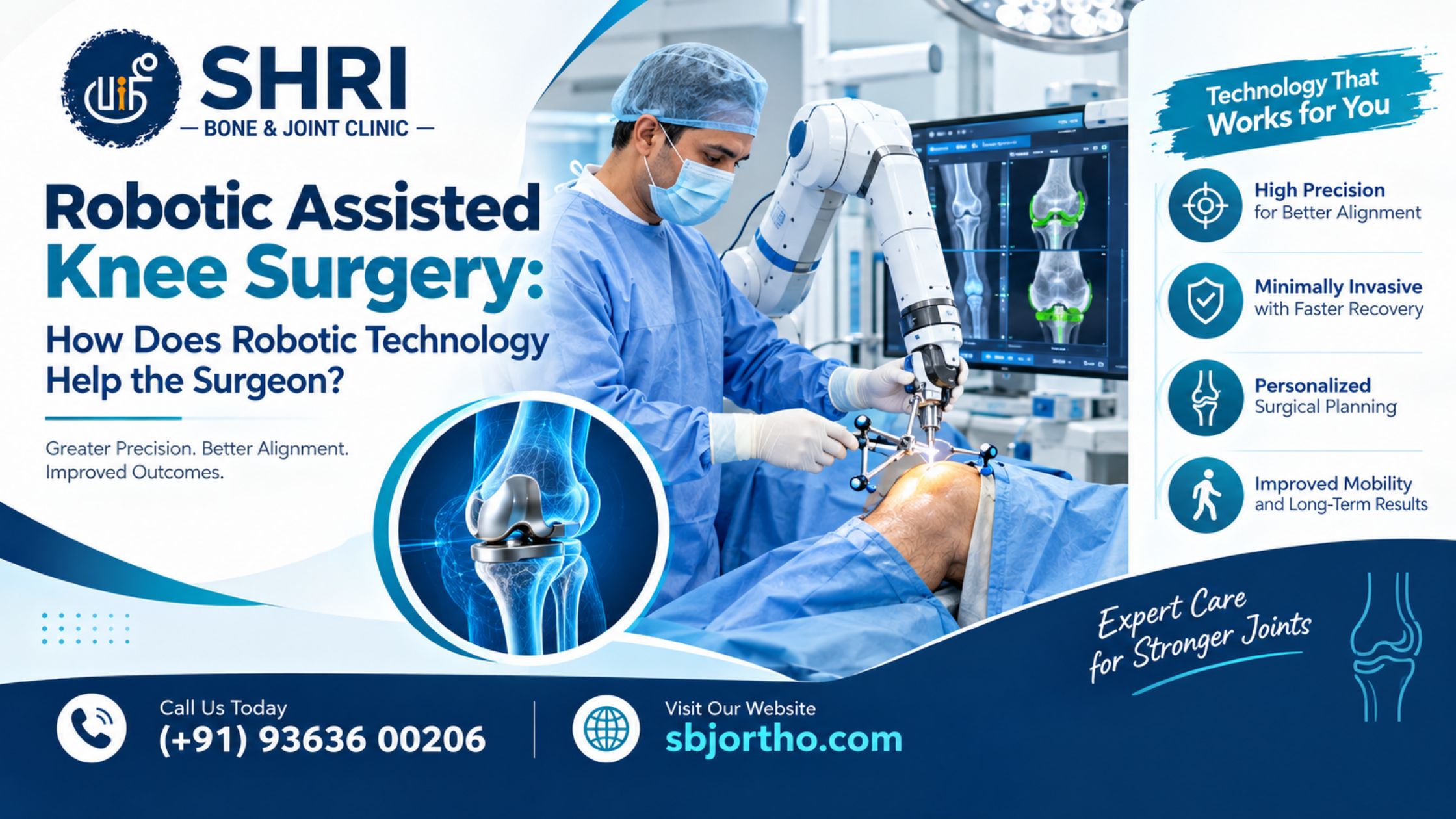
Robotic technology is becoming an increasingly important part of modern orthopedic surgery, particularly in knee replacement. However, the term “robotic surgery” can sometimes create the wrong impression. A robot does not independently perform the operation or replace the orthopedic surgeon.
In robotic assisted knee surgery, the surgeon remains in control throughout the procedure. Robotic technology acts as an advanced surgical tool that provides detailed information about the patient’s knee and helps the surgeon plan and execute specific parts of the operation.
This can include understanding individual knee anatomy, assessing alignment, evaluating soft-tissue balance, planning implant positioning and assisting with bone preparation. The goal is to combine the surgeon’s clinical judgement and surgical experience with additional technological guidance.
Understanding exactly what the technology does—and what the surgeon still does—is important for anyone considering robotic-assisted knee surgery.
How Robotic Assisted Knee Surgery Works
Robotic-assisted knee surgery combines established orthopedic surgical principles with computer-based planning, tracking and robotic assistance. The exact technology varies between robotic systems, but the fundamental concept is similar: provide the surgeon with additional patient-specific information during the operation.
What Is Robotic Assisted Knee Surgery?
Robotic assisted knee surgery refers to a knee procedure in which specialised robotic technology assists the orthopedic surgeon during surgical planning and execution.
It is most commonly associated with knee replacement procedures, where damaged joint surfaces are prepared and artificial components are positioned to reconstruct the knee.
Depending on the system, robotic technology may help the surgeon evaluate:
- Individual knee anatomy
- Leg alignment
- Joint movement
- Soft-tissue balance
- Bone preparation
- Implant size and position
- Knee stability
The surgeon interprets this information and decides how the operation should proceed.
The technology therefore acts as an additional surgical tool rather than an independent surgeon.
Does a Robot Actually Perform Knee Surgery?
No. The surgeon performs the operation.
The word “robotic” can make it sound as though a machine independently carries out the entire procedure. That is not how robotic-assisted knee surgery works.
The orthopedic surgeon remains responsible for evaluating the patient, deciding whether surgery is necessary, developing the surgical plan and controlling the procedure.
Robotic technology provides information and assistance that the surgeon can use during these stages.
The surgeon’s training and experience therefore remain central to the success of the treatment.
How Does the Robotic System Understand the Patient’s Knee?
Every person’s knee is slightly different in its anatomy, alignment and movement.
Robotic systems need information about the individual knee before they can assist the surgeon. How this information is obtained depends on the particular platform being used.
Some systems use imaging performed before surgery. Other systems can collect anatomical information during the operation.
Reference points and tracking technology can help create a digital representation of the knee. The surgeon can then use this information to understand the relationship between the bones, alignment and joint movement.
This patient-specific information forms the basis for robotic-assisted surgical planning.
How Does Robotic Technology Help With Surgical Planning?
Planning is one of the important areas where robotic technology can assist the surgeon.
Traditional knee replacement already involves careful planning. Robotic systems add another source of detailed information that can be considered during the operation.
The surgeon may use this information to plan:
- Bone preparation
- Component size
- Component position
- Overall knee alignment
- Joint balance
The proposed plan can be evaluated before the final bone preparation is completed.
Importantly, the computer does not simply create a plan that the surgeon must follow. The surgeon evaluates the information and makes the final decision based on the individual patient.
How Does Robotic Technology Help With Knee Alignment?
Alignment is an important consideration during knee replacement.
Arthritis can gradually alter the structure of the knee and may contribute to bow-legged or knock-kneed deformity in some patients.
Robotic technology can provide detailed information about the patient’s existing alignment and how different surgical decisions may affect the reconstructed knee.
The surgeon can use this information together with clinical judgement when determining the appropriate alignment strategy for that individual patient.
How Does It Help With Soft-Tissue Balance?
Bones are only one part of the knee.
Ligaments and other soft tissues play an important role in stability and movement. The way these structures behave can influence how the reconstructed knee functions.
During robotic-assisted surgery, the surgeon can assess the knee through different positions and evaluate information relating to joint balance.
This information may help the surgeon understand how the knee responds to the planned reconstruction and whether adjustments should be considered.
How Robotic Technology Supports the Surgeon During Knee Replacement
Once the surgical plan has been established, robotic assistance can continue during several important stages of the operation.
The surgeon remains responsible for performing and controlling the procedure.
How Does Robotic Assistance Help With Bone Preparation?
During knee replacement, damaged joint surfaces must be carefully prepared so that the replacement components can be positioned.
Robotic technology can assist the surgeon in executing the planned bone preparation.
The exact method depends on the robotic platform. Different systems use different forms of tracking, cutting guidance or surgeon-controlled robotic assistance.
The purpose is to help the surgeon translate the surgical plan into the actual procedure.
How Does It Help With Implant Positioning?
Knee replacement components need to be positioned according to the surgical plan.
Robotic technology allows the surgeon to plan component position using information about the individual knee before final placement.
After bone preparation, trial components may be used to assess the reconstructed knee.
The surgeon can evaluate movement, alignment, stability and balance before deciding whether the final components should be positioned according to the current plan or whether an adjustment is appropriate.
Can the Surgeon Make Changes During Robotic Surgery?
Yes. Robotic-assisted surgery is not necessarily based on an unchangeable plan.
One of the useful aspects of intraoperative information is that the surgeon can assess how the knee responds during different stages of the operation.
If the surgeon determines that an adjustment is appropriate, the plan can be modified according to the capabilities of the system and the patient’s surgical requirements.
Clinical judgement remains important throughout this process.
What Is the Role of the Surgeon During the Procedure?
The surgeon remains central at every stage.
Before surgery, the surgeon determines whether knee replacement is appropriate.
During surgery, the surgeon interprets the information provided by the robotic system, establishes the surgical plan, controls bone preparation, evaluates joint balance and determines the final implant position.
After surgery, the surgeon also oversees the patient’s medical recovery and coordinates the next stages of rehabilitation.
Robotic technology can provide sophisticated assistance, but it cannot replace the surgeon’s understanding of the patient as a whole.
Are All Robotic Knee Surgery Systems the Same?
No. Several robotic-assisted systems have been developed for orthopedic surgery, and their workflows are not identical.
Some platforms rely on preoperative imaging, while others can gather the information required for planning during the procedure.
They can also differ in how they assist with planning, tracking and bone preparation.
For patients, the name of the robot is only one part of the decision. The surgeon’s experience with the system, appropriate patient selection and the overall treatment pathway are also important.
What Is VELYS Robotic-Assisted Technology?
VELYS is one of the robotic-assisted technologies used for knee replacement.
The system uses a CT-free workflow, meaning a preoperative CT scan specifically for robotic planning is not required. Information about the knee can instead be gathered during the operation.
This information helps the surgeon evaluate factors such as knee anatomy, alignment, component positioning and soft-tissue balance.
As with other robotic-assisted approaches, VELYS does not independently perform the surgery. The surgeon controls the operation and uses the information provided by the system when making surgical decisions.
Does Robotic Assistance Mean the Surgery Will Be Perfect?
No surgical technology can guarantee a perfect operation or a particular outcome.
Robotic technology is designed to assist the surgeon with information, planning and execution, but knee replacement remains a surgical procedure with potential benefits and risks.
Outcome can be influenced by many factors, including:
- Severity of joint damage
- Patient’s general health
- Muscle strength
- Preoperative mobility
- Surgical factors
- Implant-related factors
- Rehabilitation
- Individual healing
Patients should therefore be cautious about claims suggesting that the use of a robot automatically guarantees better results.
Does Robotic Technology Reduce the Need for Physiotherapy?
No. Physiotherapy remains an important part of recovery.
Even when robotic technology assists during surgery, muscles around the knee still need to regain strength and the patient needs to progressively restore movement, balance and walking ability.
Rehabilitation may focus on:
- Knee bending
- Knee straightening
- Thigh muscle strengthening
- Standing and walking
- Balance
- Gait training
- Progressive functional exercises
The rehabilitation plan should be adapted according to the patient’s condition and progress.
Who May Be Considered for Robotic Assisted Knee Surgery?
Robotic-assisted knee replacement may be considered for patients who have significant knee joint damage and are appropriate candidates for knee replacement.
Advanced osteoarthritis is one common reason.
Patients may require evaluation when persistent knee pain, stiffness, deformity or reduced mobility begins to significantly affect everyday life despite appropriate non-surgical treatment.
However, having knee arthritis does not automatically mean that surgery is necessary.
Some patients can continue with non-surgical management, while selected patients with arthritis confined to part of the joint may be considered for partial rather than total knee replacement.
The appropriate treatment should be determined after clinical examination and review of relevant imaging.
What Should Patients Ask Before Choosing Robotic Knee Surgery?
Patients should understand both the surgery and the technology before making a decision.
Useful questions to discuss with the orthopedic surgeon include:
- Why is knee replacement recommended?
- Are there reasonable non-surgical alternatives?
- Do I need partial or total knee replacement?
- Which robotic system will be used?
- How does the system assist during surgery?
- How experienced is the surgeon with that technology?
- What implant will be used?
- What are the potential risks?
- When will walking begin?
- What rehabilitation will I need?
- What can I realistically expect after recovery?
These questions help shift the discussion away from the robot alone and toward the complete treatment pathway.
Conclusion: Robotic Assisted Knee Surgery and Surgeon Expertise in Chennai
Robotic assisted knee surgery is best understood as a partnership between surgical expertise and advanced technology. The robotic system provides detailed information and assistance with planning, alignment, bone preparation, implant positioning and knee balance, while the orthopedic surgeon remains responsible for the operation.
For patients considering knee surgery in Chennai, Dr. Shriram Krishnamoorthy at Shri Bone & Joint Clinic uses robotic-assisted technology as part of his knee replacement approach. Patients looking for an experienced Orthopedic Specialist in Chennai can undergo a detailed evaluation to determine whether knee replacement is actually required and which procedure is appropriate.
Those specifically considering surgery can learn more about Robotic Assisted Knee Replacement in Chennai, while patients comparing surgical expertise can explore the Best Robotic Knee Replacement Surgeon in Chennai.
Dr. Shriram uses the VELYS Robotic-Assisted Solution for appropriate knee replacement patients. Those interested in understanding this technology in greater detail can explore VELYS Robotic Knee Replacement in Chennai, including how the system supports patient-specific planning while keeping the surgeon in control.
FAQs
1. What is robotic assisted knee surgery?
Robotic assisted knee surgery is an orthopedic procedure in which robotic technology provides additional information and assistance to the surgeon during surgical planning and execution.
In knee replacement, it can assist with areas such as alignment assessment, bone preparation, implant planning and evaluation of knee balance.
2. Does the robot replace the orthopedic surgeon?
No. The orthopedic surgeon remains in control throughout the procedure and makes the surgical decisions.
The robotic system functions as an advanced tool that provides information and assistance. It does not independently decide how the patient’s knee should be treated.
3. How does robotic technology improve surgical planning?
Robotic systems can provide patient-specific information about knee anatomy, alignment, movement and joint balance.
The surgeon can use this information to plan bone preparation and component positioning according to the individual knee rather than relying on a completely standardised approach.
4. Is robotic assisted knee surgery suitable for all knee pain?
No. Most people with knee pain do not automatically require surgery.
Robotic-assisted knee replacement is generally considered only when the underlying joint condition is severe enough to justify replacement. Clinical examination and appropriate imaging are needed before deciding on treatment.
5. Is robotic knee surgery the same as robotic knee replacement?
The terms are sometimes used interchangeably, particularly when people are searching for robotic technology used during knee replacement.
However, “robotic knee surgery” is a broader phrase. Patients should confirm the exact procedure being recommended, whether it is partial or total knee replacement, and the specific robotic technology being used.