
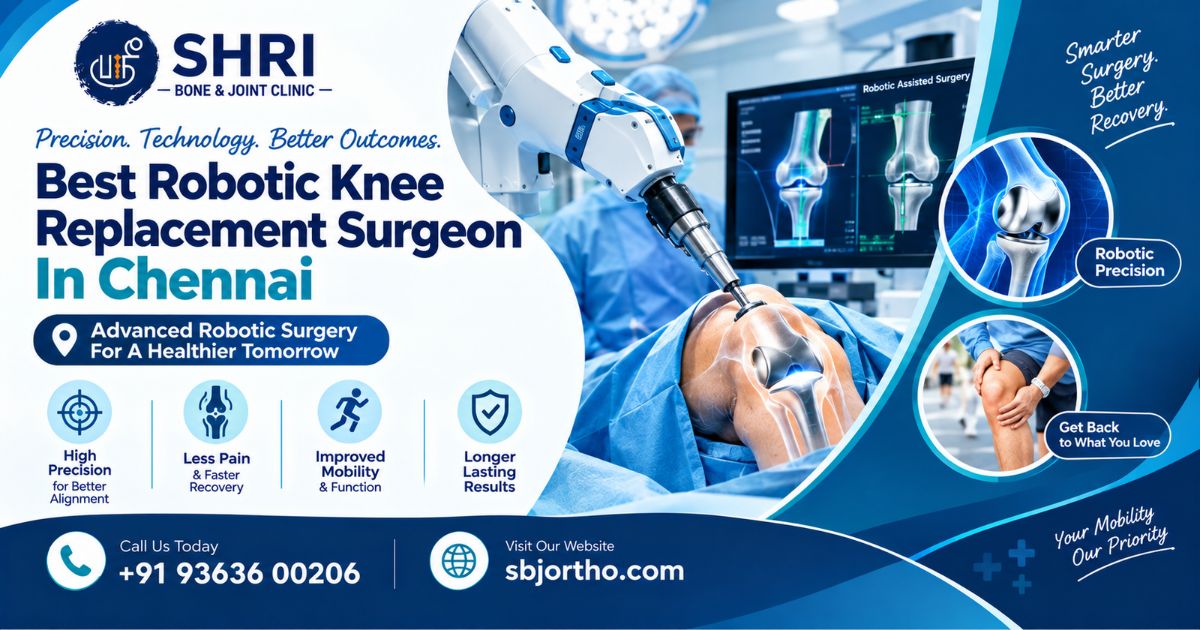
Knee replacement surgery has been performed for decades to help people with advanced knee joint damage regain mobility and reduce pain. Robotic-assisted technology has added another layer of planning and surgical guidance to this established procedure.
A robotic knee replacement procedure does not mean that a robot independently performs the operation. The orthopedic surgeon remains in control throughout surgery. The robotic system provides detailed information about the patient’s knee and assists the surgeon with planning, bone preparation, alignment, implant positioning and assessment of joint balance.
Understanding what happens before, during and after robotic knee replacement can make the procedure easier for patients and families to understand. Here is a detailed step-by-step look at how robotic-assisted knee replacement works.
Understanding Robotic Knee Replacement Before the Procedure
Before looking at the surgical steps, it is important to understand what robotic knee replacement actually involves and why it may be recommended.
What Is a Robotic Knee Replacement Procedure?
Robotic knee replacement is a form of knee replacement surgery in which the orthopedic surgeon uses a robotic-assisted system during planning and execution of the operation.
The basic objective remains similar to conventional knee replacement. Damaged joint surfaces are carefully prepared and replaced with artificial components designed to restore the joint surfaces and support functional knee movement.
The difference is the additional information available to the surgeon.
Depending on the robotic platform, the system can help the surgeon evaluate the patient’s knee anatomy, alignment, soft-tissue balance and planned implant position.
The surgeon interprets this information and remains responsible for every important surgical decision.
Why Might Someone Need Knee Replacement?
Knee replacement is generally considered when significant joint damage causes persistent symptoms that interfere with everyday life and appropriate non-surgical treatments are no longer providing adequate relief.
Advanced osteoarthritis is one of the most common reasons for knee replacement.
As cartilage within the knee deteriorates, the joint surfaces may become increasingly damaged. Patients can develop pain, stiffness, swelling, reduced movement and difficulty performing normal activities.
Common symptoms that may lead to an orthopedic evaluation include:
- Persistent knee pain
- Pain while walking or standing
- Difficulty climbing stairs
- Significant knee stiffness
- Reduced range of movement
- Progressive bow-legged or knock-kneed deformity
- Pain that affects sleep
- Difficulty performing everyday activities
- Reduced mobility despite appropriate treatment
Knee replacement should not be recommended based on one symptom alone. The surgeon considers the patient’s symptoms, examination findings, imaging, previous treatment and overall health.
Is Robotic Knee Replacement Completely Automated?
No. This is one of the most common misunderstandings about robotic surgery.
The robotic system does not independently decide how the knee should be replaced, and the surgeon does not simply start the machine and allow it to complete the procedure.
The orthopedic surgeon remains responsible for the operation.
Robotic technology acts as an advanced surgical assistance system. It provides information and guidance that the surgeon can use when planning and executing different stages of knee replacement.
The surgeon’s experience, understanding of knee anatomy and clinical judgement therefore remain central to the procedure.
How Is Robotic Knee Replacement Different From Conventional Surgery?
Both conventional and robotic-assisted knee replacement are based on established knee replacement principles.
In both procedures, damaged joint surfaces are prepared and replacement components are positioned to reconstruct the knee.
The primary difference is the technological assistance available to the surgeon.
Robotic systems can provide detailed information about the individual patient’s knee and help the surgeon execute a patient-specific surgical plan.
This does not automatically mean robotic surgery is appropriate for every patient. The choice of surgical technique should depend on the patient’s knee condition, anatomy, health and the surgeon’s assessment.
What Happens Before Robotic Knee Replacement?
The process begins with a detailed orthopedic consultation.
The surgeon asks about the patient’s symptoms, how long they have been present, previous treatment and how much the knee problem affects walking and everyday activities.
The knee is examined for:
- Movement
- Stability
- Tenderness
- Swelling
- Alignment
- Deformity
- Muscle strength
- Walking pattern
X-rays are commonly used to evaluate the extent and distribution of arthritis. Other investigations may be recommended when clinically necessary.
If surgery is being considered, the patient’s general health is also evaluated. Blood tests, cardiac evaluation or other investigations may be required depending on age, medical history and existing health conditions.
The aim is not only to plan the knee operation but also to make sure the patient is appropriately prepared for surgery and recovery.
Robotic Knee Replacement Procedure Step by Step
Although the exact workflow differs according to the robotic platform and individual patient, robotic-assisted knee replacement generally follows a structured sequence.
Step 1: Anaesthesia and Preparing the Patient
Before surgery begins, appropriate anaesthesia is administered.
The patient is positioned for the operation, and the knee and surrounding area are prepared under sterile conditions.
The surgical team follows the planned procedure while monitoring the patient’s medical condition throughout the operation.
Step 2: Accessing the Knee Joint
The surgeon makes an incision to access the knee joint.
The joint is carefully exposed so that the damaged surfaces can be evaluated and prepared for replacement.
The exact surgical approach can vary depending on the patient’s anatomy, type of knee replacement and surgeon’s technique.
Step 3: Collecting Information About the Knee
One of the important stages of a robotic knee replacement procedure is obtaining information about the patient’s individual knee.
Depending on the robotic platform, tracking devices or reference points are used to help the system understand the position and anatomy of the knee.
The surgeon moves and assesses the joint while the system collects information.
This creates a detailed representation that can help the surgeon evaluate factors such as:
- Knee anatomy
- Mechanical alignment
- Joint movement
- Bone structure
- Soft-tissue balance
- Planned component position
Some robotic systems require imaging before surgery, while others can create the necessary information during the operation.
Step 4: Developing the Patient-Specific Surgical Plan
Once the required information has been collected, the surgeon develops or refines the surgical plan.
This is an important advantage of robotic assistance because every patient’s knee is different.
The surgeon can consider how the proposed implant position may affect alignment, movement and soft-tissue balance before completing the bone preparation.
The plan is not automatically accepted simply because it has been generated with technology. The surgeon reviews the information and makes the final clinical decisions.
Step 5: Assessing Knee Alignment and Soft-Tissue Balance
A successful knee replacement involves more than replacing damaged bone surfaces.
The ligaments and surrounding soft tissues influence how the knee moves and feels.
During robotic-assisted surgery, the surgeon can assess the knee through different positions and use the available information to understand joint balance.
This can help determine whether adjustments to the surgical plan are appropriate.
Step 6: Preparing the Damaged Bone
Once the surgeon is satisfied with the plan, the damaged surfaces of the knee are prepared for the replacement components.
The robotic system assists with executing the planned bone preparation.
Exactly how this assistance works varies between robotic platforms. Some systems use robotic arms or specialised cutting guidance, while others provide different forms of surgeon-controlled assistance.
The important point is that the surgeon remains responsible for the procedure.
Step 7: Placing Trial Components
Before the final knee components are secured, trial components may be positioned.
These allow the surgeon to assess how the reconstructed knee behaves.
The knee can be moved through a range of motion while the surgeon checks factors such as:
- Stability
- Alignment
- Flexion
- Extension
- Soft-tissue balance
- Overall movement
If necessary, the surgeon can make adjustments before finalising the replacement.
Step 8: Positioning the Final Knee Implant
Once the surgeon is satisfied with the preparation and trial assessment, the final replacement components are positioned.
The components are selected and placed according to the surgical plan and the requirements of the individual knee.
Robotic assistance can help the surgeon execute the planned component position, but implant selection and final positioning remain surgical decisions.
Step 9: Final Assessment of the Knee
After the final components have been positioned, the surgeon assesses the knee again.
Movement, stability, alignment and balance are checked before the operation is completed.
This final assessment helps confirm that the reconstructed knee is functioning as expected within the surgical plan.
Step 10: Closing the Surgical Site
Once the knee has been assessed, the surgical area is closed appropriately and a dressing is applied.
The patient is then moved to the recovery area for postoperative monitoring.
Pain control, medical observation and early recovery measures begin after surgery.
What Happens Immediately After Surgery?
The first stage of recovery begins in the hospital.
The healthcare team monitors the patient’s general condition and manages postoperative pain and swelling.
When medically appropriate, mobilisation usually begins relatively early. A physiotherapist may help the patient sit, stand and begin walking with appropriate support.
Early rehabilitation commonly focuses on:
- Knee bending and straightening
- Thigh muscle activation
- Safe standing
- Assisted walking
- Swelling management
- Gradual improvement in mobility
The exact timeline varies according to the patient’s medical condition and recovery.
Does Robotic Surgery Make Recovery Faster?
Patients should be cautious about assuming that robotic technology automatically produces a dramatically faster recovery.
Recovery after knee replacement depends on many factors, including age, general health, muscle strength, severity of arthritis, preoperative mobility, surgical factors and participation in rehabilitation.
Robotic assistance is primarily a tool for surgical planning and execution. Physiotherapy and progressive rehabilitation remain essential after the operation.
Some patients progress more quickly than others, even when they undergo the same type of knee replacement.
How Long Does Recovery Take?
There is no universal recovery timeline.
Many patients begin walking with assistance relatively early after surgery when medically appropriate. During the following weeks, knee movement, strength and walking ability generally improve progressively.
Basic everyday activities may return earlier, while strength, endurance and confidence can continue improving for several months.
Patients should follow the recovery plan provided by their surgical and rehabilitation teams rather than comparing their progress with another person’s experience.
Are There Risks With Robotic Knee Replacement?
Robotic assistance does not remove the general risks associated with knee replacement surgery.
Potential complications can include infection, blood clots, bleeding, stiffness, persistent pain, nerve or blood vessel injury, implant-related problems and complications associated with anaesthesia.
Individual risk varies according to age, medical conditions and other factors.
Patients should discuss their personal risks, expected benefits and available alternatives with their orthopedic surgeon before deciding on surgery.
Conclusion: Understanding Your Robotic Knee Replacement Options in Chennai
A robotic knee replacement procedure combines established knee replacement principles with technology that can provide additional information for patient-specific planning, alignment assessment, bone preparation and implant positioning. The robot assists the surgeon—it does not replace the surgeon’s judgement or experience.
Patients considering surgery in Chennai can consult Dr. Shriram Krishnamoorthy at Shri Bone & Joint Clinic for an individual evaluation. Consulting an experienced Orthopedic Specialist in Chennai is particularly important because the first decision is whether knee replacement is actually required and which procedure is appropriate.
Patients comparing surgical expertise can also learn more about the Best Robotic Knee Replacement Surgeon in Chennai, while those interested in the robotic system used by Dr. Shriram can explore VELYS Robotic Knee Replacement in Chennai.
Financial planning is another important part of preparing for surgery. The Robotic Knee Replacement Cost in Chennai can vary according to the implant, procedure, hospital requirements, robotic technology and rehabilitation, so a patient-specific estimate should be obtained after evaluation.
FAQs
1. Does a robot actually perform robotic knee replacement?
No. The orthopedic surgeon performs and controls the knee replacement procedure.
The robotic system provides information and technological assistance that can help with surgical planning and execution. The surgeon remains responsible for clinical decisions throughout the operation.
2. How long does a robotic knee replacement procedure take?
The duration can vary depending on the patient’s knee, complexity of the procedure, type of replacement and robotic system being used.
Patients should also remember that total operating-room time includes preparation, anaesthesia and other steps beyond the knee replacement itself.
3. Is a CT scan required before robotic knee replacement?
It depends on the robotic system being used. Some systems use preoperative imaging as part of their planning process, while other platforms can collect the necessary anatomical information during surgery.
Your surgeon can explain the imaging requirements of the specific robotic system being used for your procedure.
4. Can both knees be replaced using robotic-assisted surgery?
Some patients with severe arthritis affecting both knees may be considered for bilateral knee replacement, but this is not appropriate for everyone.
The decision depends on factors such as age, general health, severity of arthritis, medical risks and the surgeon’s assessment.
5. Is robotic knee replacement suitable for everyone with knee arthritis?
No. Many people with knee arthritis can be treated without joint replacement, particularly during earlier stages of the condition.
Knee replacement is generally considered when joint damage and symptoms are significant and appropriate non-surgical treatment is no longer providing sufficient relief. A detailed orthopedic evaluation is necessary before making this decision.