Introduction
Osteoporosis is often called a “silent condition” because it can develop gradually without causing noticeable symptoms. Many people are unaware that their bones have become weaker until they experience a fracture after a minor fall or injury.
When diagnosed with osteoporosis, most people immediately think about medications, calcium supplements, and dietary changes. While these are important components of treatment, one aspect of osteoporosis management is frequently overlooked—exercise.
Many individuals with osteoporosis become afraid of physical activity because they worry that movement may increase their risk of fractures. Ironically, avoiding exercise can often create the very problems they are trying to prevent.
Without regular movement, muscles become weaker, balance deteriorates, and the risk of falls increases. This is why exercise is considered one of the most important non-medication strategies for maintaining bone health and preserving independence.
Understanding how exercise helps osteoporosis can empower individuals to take a more active role in protecting their bones and improving their quality of life.
What Is Osteoporosis?
Osteoporosis is a condition in which bones lose density and strength over time, making them more fragile and susceptible to fractures.
Healthy bones are constantly undergoing a process of breakdown and rebuilding. As we age, this balance may change, causing bone loss to occur faster than bone formation.
As a result:
- Bones become thinner
- Bone strength decreases
- Fracture risk increases
Common fracture sites include:
- Spine
- Hip
- Wrist
- Shoulder
Although osteoporosis is more common in older adults, it can affect both men and women.
Why Bone Health Depends on Movement
Bones are living tissues that respond to the demands placed upon them.
When the body is physically active, bones receive signals that encourage them to maintain their strength and structure.
When physical activity decreases, bones receive less stimulation and may gradually lose density.
This is one reason why prolonged inactivity can contribute to worsening bone health.
Exercise helps create healthy mechanical stress on the skeletal system, encouraging the body to maintain and support bone strength.
The relationship between movement and bone health is one of the key reasons exercise plays such an important role in osteoporosis management.
The Hidden Impact of Inactivity
Many people diagnosed with osteoporosis reduce their activity levels because they fear injury.
While this reaction is understandable, prolonged inactivity can lead to several problems.
Muscle Weakness
Muscles help support and protect the skeleton.
When muscles become weak, the body loses an important layer of protection.
Reduced Balance
Balance naturally declines when physical activity decreases.
Poor balance increases the likelihood of falls.
Joint Stiffness
Regular movement helps maintain flexibility and mobility.
Without activity, stiffness often increases.
Loss of Confidence
Fear of movement can gradually limit independence and participation in daily activities.
This often creates a cycle where reduced activity leads to further physical decline.
How Exercise Helps People with Osteoporosis
Exercise provides benefits that extend far beyond bone health alone.
Improves Muscle Strength
Strong muscles help support joints and reduce the physical demands placed on the skeletal system.
Improved strength also makes everyday activities easier.
Enhances Balance and Coordination
Falls are one of the leading causes of fractures in people with osteoporosis.
Balance-focused exercises help improve stability and reduce fall risk.
Supports Bone Health
Certain forms of exercise stimulate bone tissue and encourage the body to maintain bone density.
While exercise cannot completely reverse osteoporosis, it can play an important role in preserving bone strength.
Improves Posture
Osteoporosis can sometimes contribute to changes in posture, particularly when the spine is affected.
Exercise helps strengthen postural muscles and improve body mechanics.
Maintains Independence
Remaining physically active helps individuals continue performing daily tasks with greater confidence and ease.
What Types of Exercise Are Beneficial?
Not all exercises serve the same purpose.
A comprehensive osteoporosis program often includes several different types of activity.
Strength Training
Strength training is considered one of the most effective forms of exercise for osteoporosis management.
It helps:
- Improve muscle strength
- Support bone health
- Enhance balance
- Improve function
Exercises are adapted according to the individual’s abilities and risk factors.
Weight-Bearing Activities
Weight-bearing exercises encourage bones to respond to physical loading.
Examples may include:
- Walking
- Stair climbing
- Controlled functional movements
These activities help stimulate bone maintenance.
Balance Training
Improving balance is one of the most effective ways to reduce fall risk.
Balance exercises help individuals move more confidently and safely.
Flexibility Exercises
Maintaining flexibility can improve movement quality and reduce stiffness.
However, flexibility exercises should be performed carefully and appropriately.
Functional Movement Training
This type of exercise focuses on activities that mirror real-life tasks such as:
- Standing
- Walking
- Reaching
- Climbing stairs
The goal is to improve everyday function.
Common Misconceptions About Exercise and Osteoporosis
“Exercise Is Dangerous If I Have Osteoporosis”
Many people assume exercise increases fracture risk.
In reality, appropriately prescribed exercise is often one of the most important parts of osteoporosis management.
The key is choosing the right exercises and performing them safely.
“I’m Too Old to Start Exercising”
People of various ages can benefit from physical activity.
Exercise programs can be modified to suit different fitness levels and physical abilities.
“Walking Alone Is Enough”
Walking is beneficial, but it may not address strength, balance, and functional limitations on its own.
A comprehensive exercise program often provides greater benefits.
“Exercise Cannot Help Bone Health”
While exercise cannot eliminate osteoporosis, it plays an important role in maintaining strength, function, and overall bone health.
Why Strength Training Plays a Special Role
Among all forms of exercise, strength training deserves special attention.
As people age, muscle mass naturally declines.
This loss of muscle strength can:
- Increase fall risk
- Reduce mobility
- Place greater stress on joints
- Limit independence
Strength training helps counteract these changes by improving muscular support and functional capacity.
For many individuals with osteoporosis, it becomes one of the most valuable long-term management tools.
How Long Does It Take to See Benefits?
Exercise benefits develop gradually.
Many individuals begin noticing improvements in:
- Balance
- Strength
- Confidence
- Mobility
within several weeks of consistent participation.
Long-term improvements continue to build over months and years.
The most important factor is consistency rather than intensity.
The Importance of Professional Guidance
Because osteoporosis affects bone strength, exercise programs should be designed carefully.
A structured program takes into account:
- Bone density
- Fracture risk
- Mobility limitations
- Medical history
- Current fitness level
Professional guidance helps ensure exercises are safe, appropriate, and effective.
Conclusion
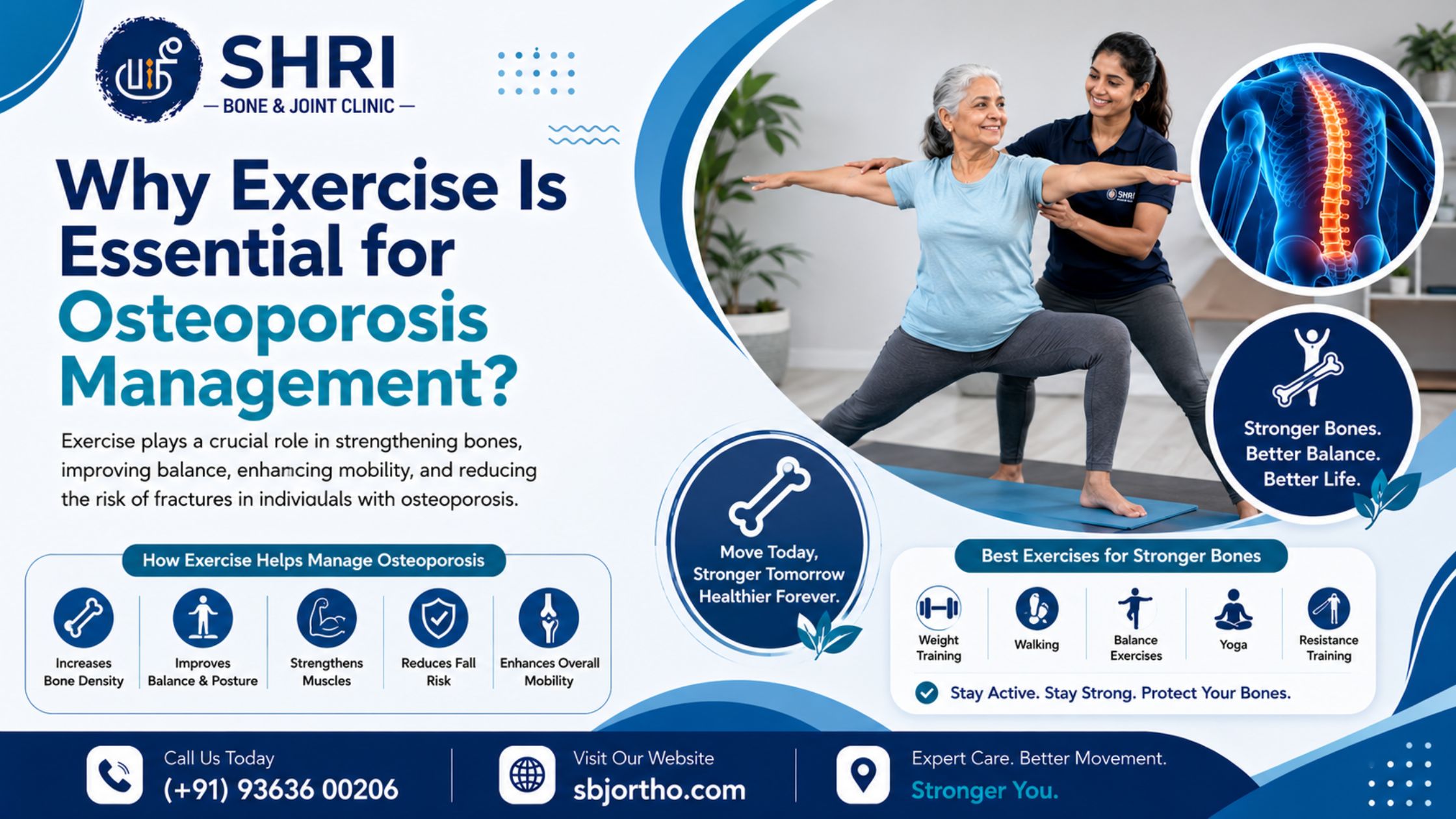
Exercise is one of the most important components of osteoporosis management. While medications and nutrition play valuable roles, movement remains essential for maintaining strength, balance, mobility, and overall function.
Regular exercise helps reduce fall risk, supports bone health, improves confidence, and allows individuals to remain active and independent. Rather than avoiding movement, most people with osteoporosis benefit from participating in a structured and supervised exercise program tailored to their needs.
If you have been diagnosed with osteoporosis or are concerned about bone health, consulting an experienced Orthopedic Specialist in Chennai can help you understand the most appropriate management strategies. Individuals looking for structured rehabilitation and exercise programs may also benefit from learning more about Strength Training for Osteoporosis in Chennai and how targeted strengthening can support long-term bone health.
FAQs
Can exercise reverse osteoporosis?
Exercise generally does not completely reverse osteoporosis, but it can help maintain bone strength, improve balance, reduce fall risk, and support overall physical function.
What is the best type of exercise for osteoporosis?
A combination of strength training, weight-bearing activities, balance exercises, and functional movement training is often recommended for osteoporosis management.
Is it safe to exercise if I have osteoporosis?
In most cases, yes. However, exercises should be selected carefully based on bone health, mobility, and fracture risk. Professional guidance is often recommended.
How often should someone with osteoporosis exercise?
The ideal frequency depends on individual health, fitness levels, and treatment goals. A healthcare professional can help create an appropriate exercise plan.
Why is strength training important for osteoporosis?
Strength training helps improve muscle support, enhance balance, reduce fall risk, and contribute to maintaining overall physical function, making it an important part of osteoporosis management.