Introduction
Hearing the words “degenerative disc disease” can be worrying for many people. The term itself sounds serious, and when it appears on an MRI report, it often leads to concerns about surgery, long-term disability, or permanent damage to the spine.
In reality, degenerative disc disease is one of the most common spine-related conditions seen in adults, particularly as they get older. Surprisingly, many people with disc degeneration continue to lead active and productive lives without ever requiring surgery.
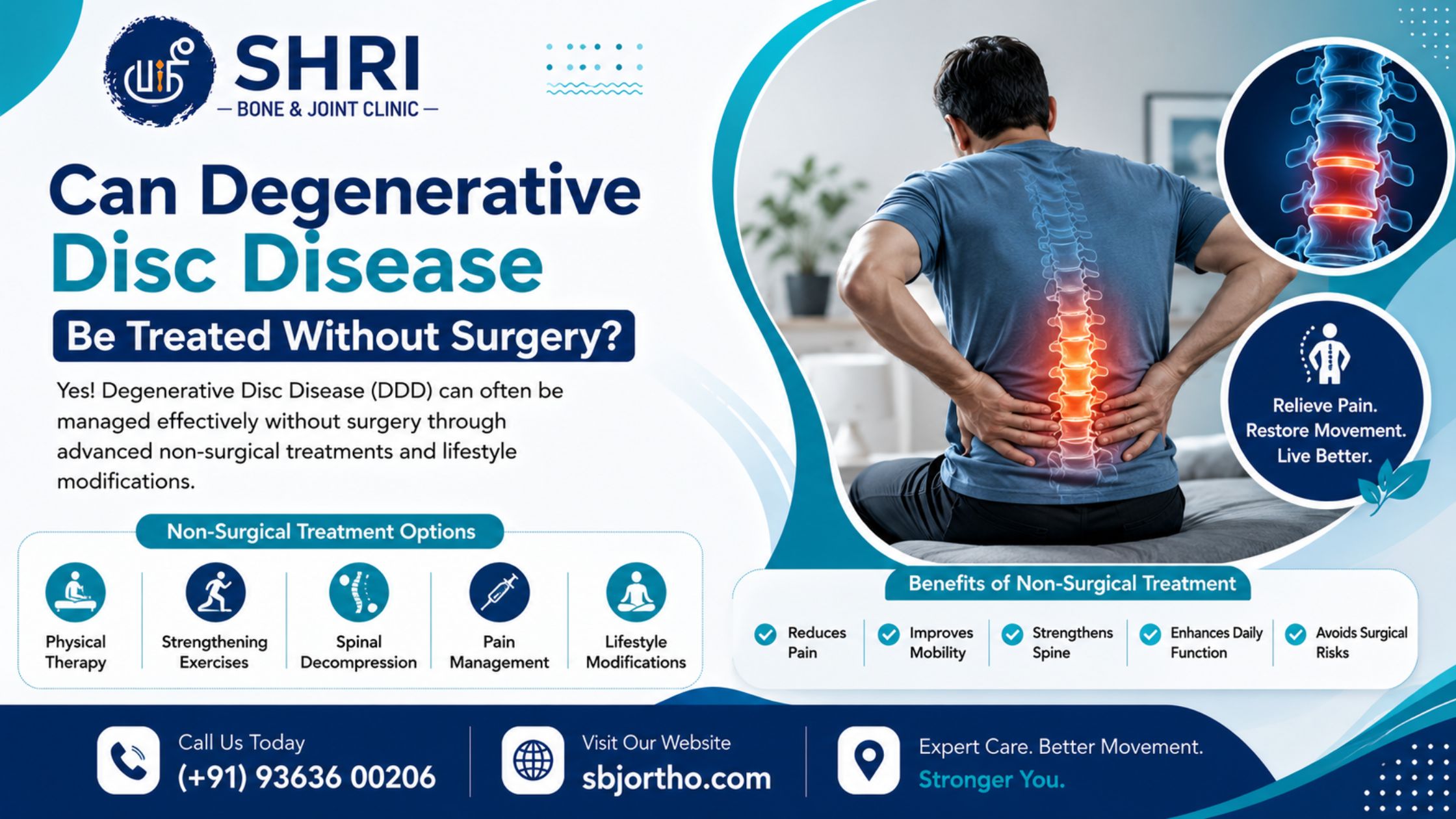
One of the biggest misconceptions surrounding degenerative disc disease is that it automatically leads to an operation. The truth is that most individuals are initially managed through non-surgical treatment approaches focused on reducing pain, improving movement, and helping them return to their normal activities.
Understanding what degenerative disc disease actually is and how it can be managed without surgery can help patients make more informed decisions about their treatment options.
What is Degenerative Disc Disease?
The spine is made up of a series of bones called vertebrae. Between these vertebrae are spinal discs, which act as cushions and shock absorbers.
These discs help:
- Absorb impact during movement
- Allow flexibility in the spine
- Support normal posture
- Reduce stress between vertebrae
As we age, spinal discs naturally undergo changes.
Over time, discs may:
- Lose water content
- Become less flexible
- Lose some of their height
- Develop small tears within their structure
These age-related changes are often referred to as degenerative disc disease.
Despite the name, it is not a disease in the traditional sense. It is generally considered part of the body’s natural ageing process.
Does Disc Degeneration Always Cause Pain?
Not necessarily.
One of the most interesting findings in spine research is that many people have degenerative changes on MRI scans without experiencing any symptoms.
Some individuals may have significant disc degeneration and no pain at all, while others may experience symptoms even when imaging changes appear relatively mild.
This is because pain is influenced by several factors, including:
- Disc health
- Nerve involvement
- Muscle function
- Movement patterns
- Inflammation
- Overall spinal mechanics
For this reason, MRI findings alone do not determine whether surgery is necessary.
Common Symptoms of Degenerative Disc Disease
Symptoms vary depending on which part of the spine is affected and how advanced the changes are.
Some common symptoms include:
Lower Back Pain
Pain in the lower back is one of the most frequent complaints.
The discomfort may worsen with prolonged sitting, bending, or lifting.
Neck Pain
When degeneration affects the cervical spine, patients may experience neck stiffness and discomfort.
Reduced Flexibility
The spine may feel less mobile during everyday activities.
Pain During Certain Movements
Twisting, bending, or prolonged sitting may trigger symptoms.
Nerve-Related Symptoms
In some cases, disc degeneration contributes to nerve irritation, leading to:
- Tingling
- Numbness
- Pain radiating into the arms or legs
When is Surgery Usually Considered?
Many people assume surgery is the first treatment option.
In reality, surgery is often considered only after other treatments have been explored.
A surgical evaluation may be necessary when:
- Symptoms become severe
- Significant neurological deficits develop
- Progressive weakness occurs
- Conservative treatment fails to improve function
Even then, treatment decisions are based on several factors rather than imaging findings alone.
Why Non-Surgical Treatment is Often the First Choice
The majority of patients with degenerative disc disease begin with conservative management.
This approach focuses on:
- Improving movement
- Strengthening supporting muscles
- Reducing stress on the spine
- Improving overall function
The goal is not necessarily to reverse degeneration but to help the spine function more efficiently despite these changes.
Many patients experience meaningful improvement without requiring surgery.
Non-Surgical Treatment Options for Degenerative Disc Disease
Physiotherapy
Physiotherapy is often one of the most important components of treatment.
A structured rehabilitation program may focus on:
- Improving flexibility
- Restoring mobility
- Strengthening supporting muscles
- Correcting movement patterns
Core Strengthening
The spine relies heavily on surrounding muscles for support.
Improving core strength can help reduce stress on affected spinal segments.
Posture Correction
Poor posture can place additional strain on the spine.
Learning proper sitting, standing, and movement habits may help reduce symptoms.
Activity Modification
Patients are often advised on how to modify activities that aggravate their symptoms while remaining physically active.
Spinal Rehabilitation Programs
Comprehensive rehabilitation programs combine multiple treatment approaches to improve movement, strength, and function.
Can Exercise Really Help Disc Degeneration?
This is one of the most common questions patients ask.
Many people worry that movement will worsen disc degeneration.
In most cases, appropriately prescribed exercise does the opposite.
Exercise helps by:
- Improving spinal support
- Enhancing flexibility
- Improving circulation
- Reducing stiffness
- Supporting long-term function
The key is choosing exercises that match the individual’s condition and abilities.
What Happens if Degenerative Disc Disease is Left Untreated?
Not everyone with disc degeneration requires formal treatment.
However, when symptoms are present and ignored, several problems may develop.
These can include:
- Reduced mobility
- Chronic pain
- Progressive weakness
- Reduced physical activity
- Loss of strength and flexibility
Over time, inactivity itself can become a major contributor to ongoing symptoms.
Can Degenerative Disc Disease Be Reversed?
This is another common misconception.
Current treatments generally do not reverse age-related disc changes.
However, many patients experience substantial improvements in:
- Pain levels
- Mobility
- Strength
- Function
- Quality of life
The focus is on improving how the spine works rather than attempting to restore discs to their previous condition.
The Importance of Early Intervention
One of the biggest advantages of early treatment is preventing the cycle of pain, inactivity, and weakness.
When symptoms are addressed early:
- Movement is maintained
- Strength is preserved
- Functional decline is reduced
This often leads to better long-term outcomes.
Waiting until symptoms become severe may make rehabilitation more challenging.
Living Well with Degenerative Disc Disease
Many people continue to work, exercise, travel, and remain active despite disc degeneration.
Successful long-term management often involves:
- Staying active
- Maintaining strength
- Practicing good posture
- Following rehabilitation recommendations
- Managing symptoms early
The diagnosis itself does not mean a person must stop doing the things they enjoy.
Conclusion
Degenerative disc disease is a common condition that often develops as part of the natural ageing process. While it can cause pain, stiffness, and movement limitations, surgery is not automatically required.
In many cases, symptoms can be managed successfully through physiotherapy, rehabilitation, strengthening programs, posture correction, and lifestyle modifications. The goal of treatment is to improve function, reduce discomfort, and help individuals remain active and independent.
If symptoms are affecting your daily activities, consulting an experienced Orthopedic Specialist in Chennai can help identify the most appropriate treatment pathway. Individuals looking for structured rehabilitation options may also benefit from learning more about Degenerative Disc Disease Treatment Without Surgery in Chennai and the non-surgical approaches available for long-term spine health.
FAQs
Is degenerative disc disease a normal part of ageing?
In many cases, yes. Disc degeneration commonly occurs as people get older. However, not everyone with disc degeneration develops symptoms.
Can degenerative disc disease heal on its own?
While age-related disc changes generally do not reverse, symptoms often improve with appropriate rehabilitation, exercise, and lifestyle modifications.
Is surgery always necessary for degenerative disc disease?
No. Many patients are successfully managed through non-surgical treatment approaches that focus on improving movement, strength, and overall function.
What activities should be avoided with degenerative disc disease?
Activities that significantly worsen symptoms may need modification. However, complete inactivity is usually not recommended, as movement plays an important role in recovery and long-term spine health.
Can exercise worsen degenerative disc disease?
When properly prescribed, exercise is generally beneficial. Strengthening and mobility exercises often help support the spine and improve function rather than causing additional damage.