The natural reaction is often to rest the knee as much as possible. While temporary rest may help during the initial stages of an injury, long-term recovery often requires the exact opposite—movement and strengthening.
Over the last several years, research and rehabilitation practices have consistently shown that strength training is one of the most effective non-surgical approaches for managing many types of knee pain.
The reason is simple. The knee does not work alone. It depends heavily on the muscles around it for support, stability, and movement. When these muscles become weak, the knee is forced to handle more stress than it was designed to tolerate.
This article explains why strength training plays such an important role in knee pain management and how it helps improve long-term joint health.
Understanding the Relationship Between Muscle Strength and Knee Pain
The knee is often viewed as a simple hinge joint, but in reality it is part of a much larger movement system.
Every step you take involves coordination between:
- The quadriceps
- Hamstrings
- Gluteal muscles
- Calf muscles
- Core muscles
- Hip stabilizers
When these muscles work together properly, forces are distributed efficiently throughout the body.
However, when one or more of these muscle groups become weak, the knee often absorbs more stress during daily activities.
This additional load can contribute to:
- Joint irritation
- Poor movement patterns
- Reduced stability
- Increased pain during activity
In many cases, strengthening these muscles can significantly reduce stress on the knee and improve overall function.
Why Rest Alone Often Doesn’t Solve Knee Pain
Many people assume that avoiding activity will allow the knee to heal.
While short-term rest can be beneficial immediately after an injury, prolonged inactivity often creates new problems.
Extended inactivity may lead to:
- Muscle weakness
- Reduced flexibility
- Poor balance
- Joint stiffness
- Loss of movement confidence
As muscles weaken, the knee receives even less support, which can make symptoms worse over time.
This is one of the reasons why modern rehabilitation focuses on progressive strengthening rather than complete rest.
How Strength Training Helps Reduce Knee Pain
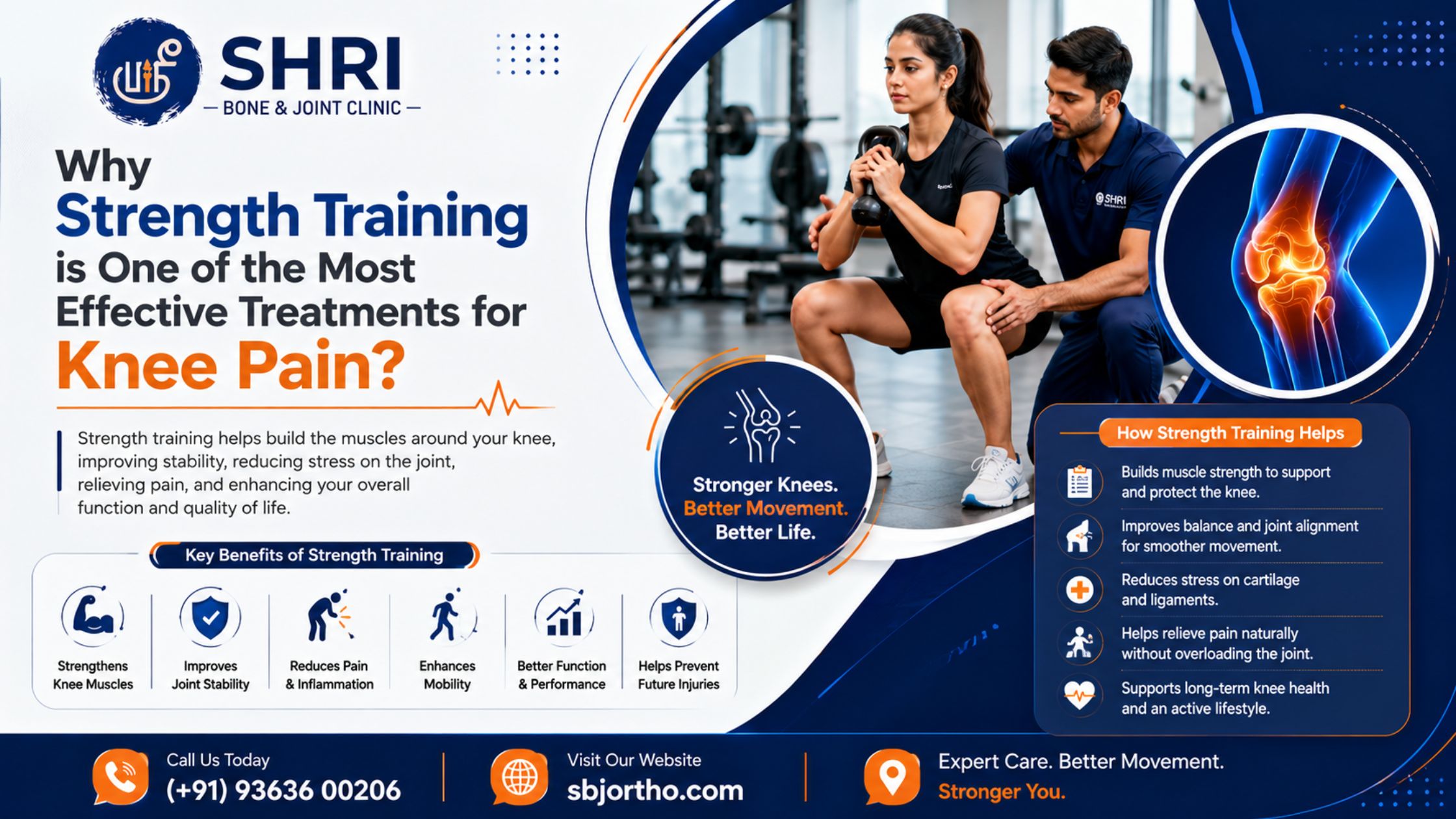
Strength training helps address many of the underlying factors that contribute to knee discomfort.
Improved Joint Support
Muscles act as natural shock absorbers for the body.
When the muscles around the knee become stronger, they absorb more of the forces generated during walking, running, climbing stairs, and other activities.
This reduces the amount of stress transferred directly to the joint.
Better Knee Stability
A stable knee experiences less unnecessary movement and strain.
Strengthening the muscles around the knee improves control and stability during movement.
This can help reduce discomfort during activities that previously triggered pain.
Improved Movement Patterns
Pain often causes people to change the way they move.
They may shift weight to one side, avoid bending the knee fully, or develop compensatory movement patterns.
Strength training helps restore normal movement mechanics, allowing the body to move more efficiently.
Reduced Stress on Cartilage and Soft Tissues
Weak muscles can increase pressure on structures inside the knee.
As strength improves, force distribution becomes more balanced, reducing stress on:
- Cartilage
- Tendons
- Ligaments
- Joint surfaces
This can help improve comfort during daily activities.
Conditions That Commonly Benefit from Strength Training
Strength training is frequently used as part of rehabilitation for a variety of knee conditions.
Patellofemoral Pain Syndrome
Often referred to as “runner’s knee,” this condition commonly improves when surrounding muscles become stronger and movement mechanics improve.
Chondromalacia Patella
Strengthening programs can help reduce pressure on the kneecap and improve knee tracking during movement.
Osteoarthritis
Many people are surprised to learn that exercise is one of the most effective ways to manage arthritis-related knee pain.
Improved muscle strength often leads to better joint support and improved function.
Sports-Related Knee Injuries
Athletes recovering from knee injuries frequently use strength training to restore performance and reduce the risk of future injury.
Age-Related Knee Weakness
As people age, muscle mass naturally decreases.
Strength training helps maintain mobility, balance, and independence while reducing stress on the knees.
Which Muscles Are Most Important?
Many people assume knee rehabilitation focuses only on the quadriceps.
While the quadriceps are important, several muscle groups contribute to knee health.
Quadriceps
Help control knee extension and absorb forces during movement.
Hamstrings
Provide support and stability to the knee joint.
Gluteal Muscles
Strong glutes help control hip and knee alignment during walking and exercise.
Core Muscles
A strong core improves overall movement mechanics and reduces stress throughout the lower body.
Calf Muscles
Play an important role in balance, walking, and force absorption.
Common Mistakes People Make
Even though strength training is beneficial, mistakes can limit progress.
Doing Too Much Too Soon
Increasing exercise intensity too quickly can aggravate symptoms.
Strength should be developed gradually.
Ignoring Technique
Poor exercise form may increase stress on the knee rather than reducing it.
Movement quality is often more important than the amount of resistance used.
Focusing Only on the Knee
The knee is influenced by the hips, core, and ankles.
A comprehensive strengthening program should address the entire movement chain.
Stopping Once Pain Improves
Many people stop exercising as soon as symptoms improve.
Continuing strength training helps maintain results and reduce recurrence.
How Long Does It Take to See Results?
The timeline varies depending on the condition, severity of symptoms, and consistency of training.
Many patients begin noticing improvements in:
- Walking comfort
- Joint stability
- Activity tolerance
- Confidence during movement
within several weeks of starting a structured program.
Long-term improvements often continue for several months as strength and movement patterns improve.
Why Strength Training Works Better Than Many Passive Treatments
Passive treatments may provide temporary symptom relief, but strength training focuses on improving how the knee functions.
Instead of simply reducing pain for a short period, strengthening helps address:
- Muscle weakness
- Movement dysfunction
- Joint instability
- Functional limitations
This is one reason why strengthening remains a cornerstone of modern knee rehabilitation.
Conclusion
Knee pain is often influenced by more than just the joint itself. Weakness in the surrounding muscles can increase stress on the knee and contribute to ongoing discomfort.
Strength training helps improve joint support, movement quality, stability, and overall function. When performed correctly and consistently, it can be one of the most effective ways to manage knee pain without surgery.
For individuals dealing with ongoing knee problems, a structured strengthening program can play an important role in long-term recovery. Patients looking to improve knee function may benefit from learning more about Strength Training for Knee Pain in Chennai. Those managing joint degeneration and mobility concerns may also explore how Strength Training for Arthritis in Chennai can support long-term joint health and everyday movement.
FAQs
Can strength training make knee pain worse?
When performed incorrectly or progressed too quickly, exercise can increase discomfort. However, a properly designed strength training program is usually intended to improve knee function and reduce pain over time.
Is strength training safe for older adults with knee pain?
Yes. In fact, strength training is often recommended for older adults because it helps maintain mobility, balance, and joint support. Exercises should be adapted to individual abilities and limitations.
How often should strength training be done for knee pain?
The frequency depends on the individual’s condition and rehabilitation goals. A structured program designed by a healthcare professional typically provides the best results.
Can strength training help arthritis-related knee pain?
Many studies have shown that strengthening the muscles around the knee can help improve joint support, reduce discomfort, and improve daily function in people with arthritis.
How long before I notice improvement?
Some patients notice changes within a few weeks, while others require a longer period of consistent training. Improvement depends on the condition being treated and adherence to the program.