Spinal decompression therapy is increasingly discussed as a non-surgical option for people dealing with persistent back pain, neck pain, disc-related problems, and certain types of nerve irritation. As awareness of the treatment grows, so do questions about its safety.
Is spinal decompression painful? Can it make a disc problem worse? Is it safe for older adults? How many sessions are required? And, perhaps most importantly, who should not undergo the treatment?
These are sensible questions because back and neck pain can have many different causes. A treatment that is appropriate for one person may not be suitable for another.
Spinal decompression therapy uses specialised equipment to apply controlled forces to selected areas of the spine. The objective is to alter mechanical loading on spinal structures and, in appropriately selected patients, support a broader rehabilitation program.
However, spinal decompression should not be viewed as a universal treatment for every type of back or neck pain. Safety depends on proper patient selection, an accurate diagnosis, appropriate treatment settings, professional supervision, and integration with active rehabilitation.
This guide answers the most common questions patients have about spinal decompression therapy and explains what to consider before starting treatment.
What Exactly Is Spinal Decompression Therapy?
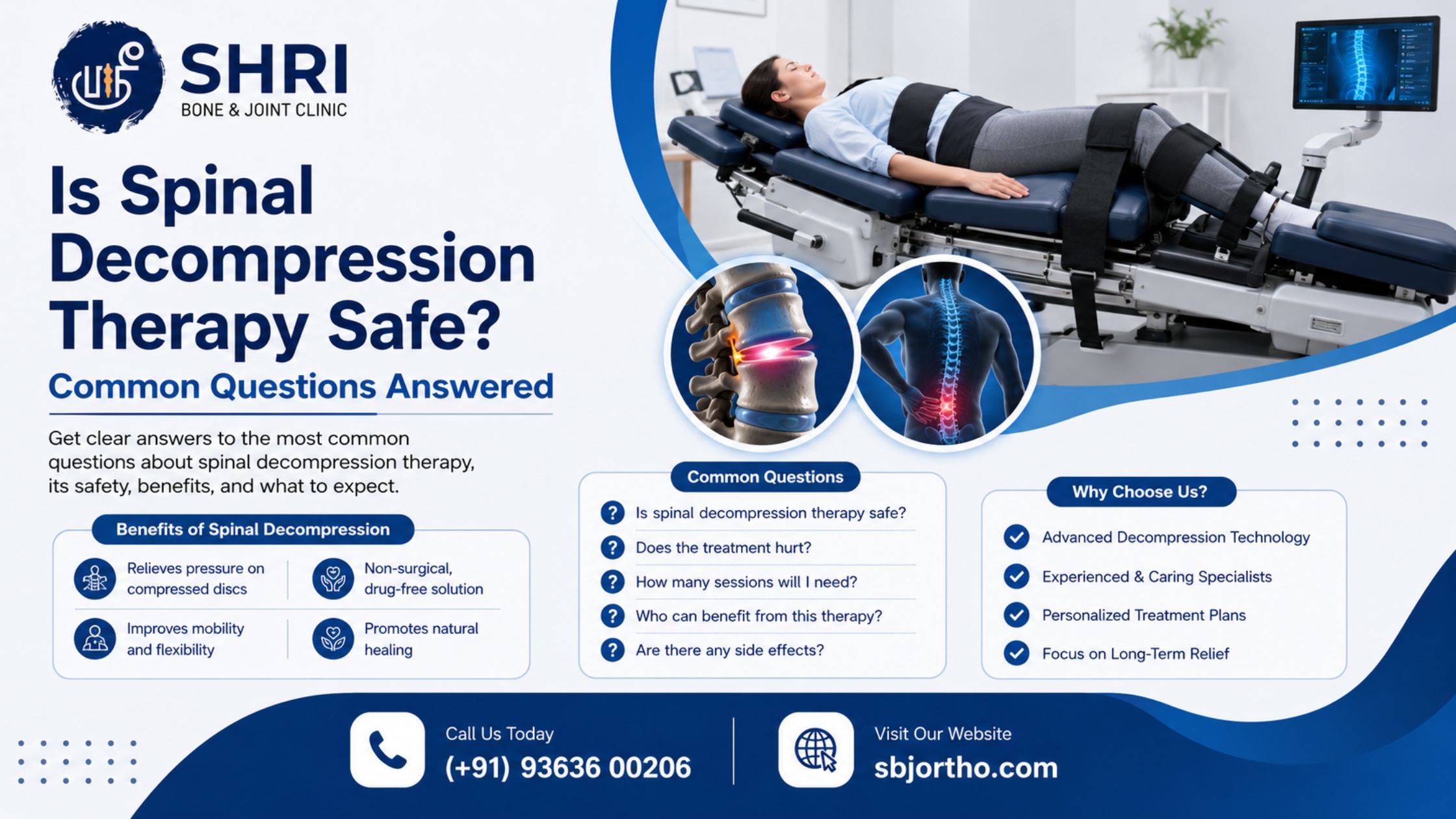
Spinal decompression therapy is a non-surgical technique in which specialised equipment applies controlled traction or decompressive forces to the spine.
Depending on the system and the condition being treated, therapy may be directed towards the lumbar spine in the lower back or the cervical spine in the neck.
The patient is positioned on a treatment table or specialised machine, and treatment parameters are selected according to the rehabilitation plan.
These may include:
- Amount of force
- Duration of treatment
- Treatment cycles
- Area of the spine being targeted
- Patient positioning
Modern decompression systems allow these settings to be controlled rather than simply applying a continuous pulling force.
Spinal decompression is generally used as one component of conservative spine care rather than as an isolated treatment.
What Conditions Is Spinal Decompression Used For?
Spinal decompression may be considered for selected patients with conditions such as:
- Disc bulges
- Certain herniated discs
- Degenerative disc-related symptoms
- Sciatica associated with nerve irritation
- Chronic lower back pain
- Certain forms of neck pain
- Disc-related nerve compression
- Persistent spine pain that has not responded sufficiently to basic conservative measures
Having one of these conditions does not automatically mean decompression therapy is appropriate.
For example, two people may both have a disc bulge on an MRI but experience completely different symptoms. One may have significant radiating leg pain, while the other may have no symptoms at all.
Clinical findings therefore need to be considered alongside imaging.
So, Is Spinal Decompression Therapy Safe?
For appropriately selected patients, non-surgical spinal decompression is generally intended to provide controlled treatment without surgery or injections.
The important phrase is appropriately selected patients.
Safety depends on several factors:
- Correct diagnosis
- Screening for contraindications
- Appropriate treatment settings
- Professional supervision
- Monitoring the patient’s response
- Adjusting treatment when necessary
Simply placing every person with back pain on a decompression machine would not be appropriate.
A proper evaluation should come first.
Is Spinal Decompression Painful?
Spinal decompression therapy is generally intended to be comfortable.
Patients may notice a stretching or pulling sensation during treatment, but the session should not involve forcing the spine through severe pain.
Individual responses vary. Someone with a sensitive or irritated spine may initially be more aware of the treatment than someone with mild symptoms.
The therapist should monitor how the patient feels throughout the session.
If treatment produces significant or worsening symptoms, the program may need to be modified or reassessed.
Pain should not be treated as proof that the therapy is “working.”
Can Spinal Decompression Make Back Pain Worse?
Temporary changes in symptoms can sometimes occur with many forms of physical rehabilitation, particularly when the body is adapting to a new activity.
However, significant or progressively worsening pain should not simply be ignored.
If symptoms increase after treatment, the rehabilitation team should consider:
- Whether the force needs adjustment
- Whether treatment duration should change
- Whether the patient’s position needs modification
- Whether decompression remains appropriate
- Whether another condition may be contributing to the symptoms
The goal is controlled rehabilitation, not pushing through severe discomfort.
Can Spinal Decompression Make a Disc Bulge Worse?
This is a common concern, especially among people who have seen a disc bulge or herniation mentioned in an MRI report.
The presence of a disc bulge does not automatically indicate whether decompression is appropriate or inappropriate. The size and location of the disc change, symptoms, neurological findings, and overall spinal condition all need to be considered.
This is why treatment should not be selected solely from an MRI report.
A clinical assessment helps determine whether the imaging findings actually correspond with the patient’s symptoms.
Is Spinal Decompression the Same as Traction?
The terms are sometimes used interchangeably, but treatment systems can differ.
Traditional traction generally applies a pulling force to the spine. More advanced decompression systems may use programmable cycles and adjustable forces intended to provide more controlled treatment.
The exact mechanism depends on the equipment being used.
From a patient’s perspective, the more important question is not whether a machine is described as “traction,” “decompression,” “automated,” or “robotic.”
The important questions are:
- Why is it being recommended?
- Is it appropriate for the diagnosis?
- How will progress be measured?
- What other rehabilitation will accompany it?
Technology should support clinical decision-making rather than replace it.
Who Should Be Careful About Spinal Decompression Therapy?
Spinal decompression is not appropriate for everyone.
Certain medical or spinal conditions may require treatment to be avoided or modified. Examples can include some fractures, significant spinal instability, severe osteoporosis, certain post-operative situations, infections, tumours involving the spine, and other conditions where mechanical treatment may not be appropriate.
Pregnancy may also affect whether and how certain forms of spinal treatment can be performed.
The specific contraindications depend on the patient’s condition and the equipment being used.
For this reason, patients should disclose their medical history, previous surgeries, fractures, current medications, and known spine conditions before treatment begins.
What About Older Adults?
Age alone does not determine whether someone can undergo spinal decompression.
A physically active older adult with good bone health may have very different treatment considerations from a younger person with significant spinal instability.
Factors that matter include:
- Bone health
- Osteoporosis
- Previous fractures
- Arthritis
- Previous spine surgery
- General physical condition
- Neurological symptoms
- Other medical conditions
Older adults therefore require individual assessment rather than being included or excluded based solely on age.
Is Spinal Decompression Safe for Sciatica?
Sciatica describes symptoms caused by irritation or compression of the sciatic nerve or its contributing nerve roots.
People may experience:
- Lower back pain
- Buttock pain
- Pain travelling down the leg
- Tingling
- Numbness
- Burning sensations
- Weakness
Because sciatica has several possible causes, decompression therapy is not automatically appropriate for every case.
If symptoms are related to a disc problem that is affecting a nerve, decompression may be considered as part of conservative management in selected patients.
If the symptoms have another cause, a different rehabilitation approach may be more appropriate.
What Should You Feel During a Session?
A typical session should feel controlled.
Patients are usually positioned comfortably before treatment begins. Depending on the equipment, supports or harnesses may be used to help target the appropriate spinal region.
During treatment, some people describe:
- Gentle pulling
- Stretching
- Reduced pressure
- Mild muscular relaxation
Patients should communicate any unexpected change in symptoms during treatment.
Particular attention should be given to new or increasing:
- Numbness
- Tingling
- Radiating pain
- Weakness
- Severe discomfort
Treatment settings can then be reviewed.
How Many Sessions Are Usually Needed?
There is no scientifically meaningful single number that applies to every patient.
Treatment duration depends on:
- Diagnosis
- Severity of symptoms
- Duration of symptoms
- Response to initial sessions
- Physical condition
- Rehabilitation goals
Some patients may undergo treatment over several weeks, but the number and frequency of sessions should be individualised.
More treatment is not automatically better.
If a patient is not demonstrating meaningful functional improvement, repeatedly continuing the same treatment without reassessment may not be appropriate.
How Do You Know Whether Decompression Is Working?
Pain scores provide useful information, but they should not be the only measure.
A rehabilitation team may also look for improvements in:
- Walking tolerance
- Sitting tolerance
- Standing comfortably
- Spinal mobility
- Ability to sleep
- Radiating arm or leg symptoms
- Ability to work
- Exercise tolerance
- Strength
- Confidence with movement
For example, a patient who initially could sit for only 20 minutes but can later work comfortably for longer periods has made a meaningful functional improvement.
These changes can sometimes be more useful than asking whether pain has completely disappeared.
Does Spinal Decompression Permanently Fix the Spine?
Patients should be cautious about any treatment described as a guaranteed permanent solution.
Spine problems are influenced by many factors, including:
- Age
- Physical activity
- Muscle strength
- Previous injuries
- Work demands
- General health
- Lifestyle
Decompression may be useful for selected conditions, but long-term recovery generally requires more than machine-based treatment.
The muscles supporting the spine still need to function effectively.
The patient still needs to move.
And everyday physical capacity still needs to be restored.
This is why exercise and rehabilitation remain important.
Is Spinal Decompression Enough on Its Own?
Usually, a broader rehabilitation plan is more appropriate than relying exclusively on passive treatment.
Depending on the condition, treatment may also include:
Physiotherapy
Physiotherapy can address mobility restrictions, weakness, movement limitations, and functional problems.
Strength Training
The abdominal, back, hip, and surrounding muscles help support the spine during everyday activities.
Progressive strengthening helps prepare these muscles for normal physical demands.
Mobility Work
Pain often causes people to reduce movement.
Appropriate mobility exercises can gradually restore comfortable movement.
Functional Rehabilitation
Patients eventually need to return to activities such as:
- Walking
- Sitting
- Bending
- Lifting
- Driving
- Working
- Exercising
Rehabilitation should prepare the body for these real-world demands.
Why Assessment Before Treatment Matters
“Back pain” is a symptom rather than a single diagnosis.
It can arise from:
- Muscles
- Spinal discs
- Facet joints
- Nerves
- Degenerative changes
- Injuries
- Other medical conditions
Neck pain is similarly complex.
Using spinal decompression without understanding the likely source of symptoms can result in inappropriate treatment.
A proper assessment may include a medical history, physical examination, neurological assessment, and imaging when clinically necessary.
This allows treatment to be selected according to the patient rather than according to the availability of a particular machine.
What Symptoms Require Prompt Medical Attention?
Most episodes of back or neck pain are not medical emergencies. However, certain symptoms require prompt assessment rather than beginning routine decompression or exercise.
These can include:
- Significant or rapidly worsening muscle weakness
- New problems controlling the bladder or bowel
- Numbness around the groin or saddle region
- Severe symptoms following significant trauma
- Back pain associated with fever or systemic illness
- Unexplained severe or progressively worsening symptoms
These situations require appropriate medical evaluation before routine rehabilitation is considered.
What Should Patients Ask Before Starting Treatment?
Patients do not need to understand every technical aspect of a decompression machine.
A few practical questions can provide much more useful information:
What is causing my symptoms?
Understanding the diagnosis should come before choosing the treatment.
Why is decompression being recommended for me?
There should be a clinical reason rather than simply a general claim that decompression treats all back pain.
How will we measure whether it is helping?
Improvement should ideally include functional measures, not just temporary symptom changes.
Will I also be exercising?
A plan for progressive movement and strengthening is important for long-term recovery.
When will my progress be reassessed?
Treatment should evolve according to the patient’s response.
These questions help patients participate more actively in their rehabilitation.
The Role of Technology in Modern Spine Rehabilitation
Technology has become increasingly common in rehabilitation.
Automated and computer-controlled systems can help clinicians deliver consistent treatment parameters and adjust therapy according to individual requirements.
However, advanced technology does not change the basic principles of good rehabilitation.
The process still requires:
- Appropriate diagnosis
- Patient selection
- Individualised treatment
- Regular reassessment
- Progressive exercise
- Return to normal function
The machine can assist the rehabilitation process, but it cannot replace these steps.
Conclusion
So, is spinal decompression therapy safe?
For appropriately selected patients, it can be used as part of a supervised, non-surgical rehabilitation program. Its safety depends on identifying the underlying condition, screening for situations where decompression may not be appropriate, selecting suitable treatment parameters, and monitoring how the patient responds.
It is equally important to remember that spinal decompression is usually only one part of recovery. People with persistent back, neck, disc, or nerve-related problems often need a broader program that restores mobility, builds strength, and gradually prepares the body for everyday activity.
Depending on the condition, Spine Pain Physiotherapy Treatment may help address movement limitations and weakness, while patients exploring Spine Recovery Without Surgery may require a combination of physiotherapy, strengthening, activity progression, and appropriate non-surgical interventions. For selected conditions, Advanced Spine Therapy Machine Treatment can also form part of a technology-assisted rehabilitation plan after proper assessment.
The most appropriate treatment is therefore not determined by the machine alone. It depends on the patient, the diagnosis, and how treatment fits into the overall recovery process.
FAQs
1. Is spinal decompression therapy painful?
Spinal decompression is generally intended to be comfortable and controlled. Some patients may notice a stretching or pulling sensation during treatment, but severe pain should not be considered a normal part of the process.
If symptoms become significantly worse or new radiating pain, numbness, or other symptoms develop during treatment, the therapist should reassess the settings and the overall treatment plan.
2. Can spinal decompression therapy be used for a herniated disc?
Spinal decompression may be considered for selected patients with disc-related conditions, including certain herniated discs. However, the presence of a herniated disc on an MRI does not automatically mean that decompression is the correct treatment.
The location of the disc problem, symptoms, neurological findings, severity of the condition, and overall spinal health should be assessed before deciding on treatment.
3. How quickly can I expect results from spinal decompression?
There is no standard point at which every patient should expect improvement. Some people may notice changes relatively early, while others require several weeks of treatment and rehabilitation.
Progress should also be measured through improvements in walking, sitting, mobility, sleep, strength, and everyday function rather than expecting pain to disappear immediately.
4. Can spinal decompression therapy replace physiotherapy and exercise?
Spinal decompression generally should not be viewed as a replacement for active rehabilitation. Even when decompression helps manage symptoms, patients may still need to improve strength, mobility, movement control, and physical conditioning.
Combining appropriate technology-assisted treatment with progressive rehabilitation can provide a more complete approach to returning to normal daily activity.
5. Who should avoid spinal decompression therapy?
Certain patients may not be suitable for spinal decompression, including people with some fractures, significant spinal instability, severe osteoporosis, particular post-operative conditions, or other medical problems where mechanical treatment could be inappropriate.
Because suitability depends on individual circumstances, a proper medical and physical assessment should be completed before starting a spinal decompression program.