Introduction
For many people living with joint pain or knee problems, exercise can feel like a challenge. Walking may cause discomfort, climbing stairs may become difficult, and even simple movements can feel stressful on the joints.
At the same time, avoiding exercise completely is rarely the answer. Joints need movement to stay healthy, muscles need activity to remain strong, and the body needs regular exercise to maintain mobility and function.
This creates a common dilemma: how do you stay active when movement itself causes pain?
This is where water-based exercise can make a significant difference.
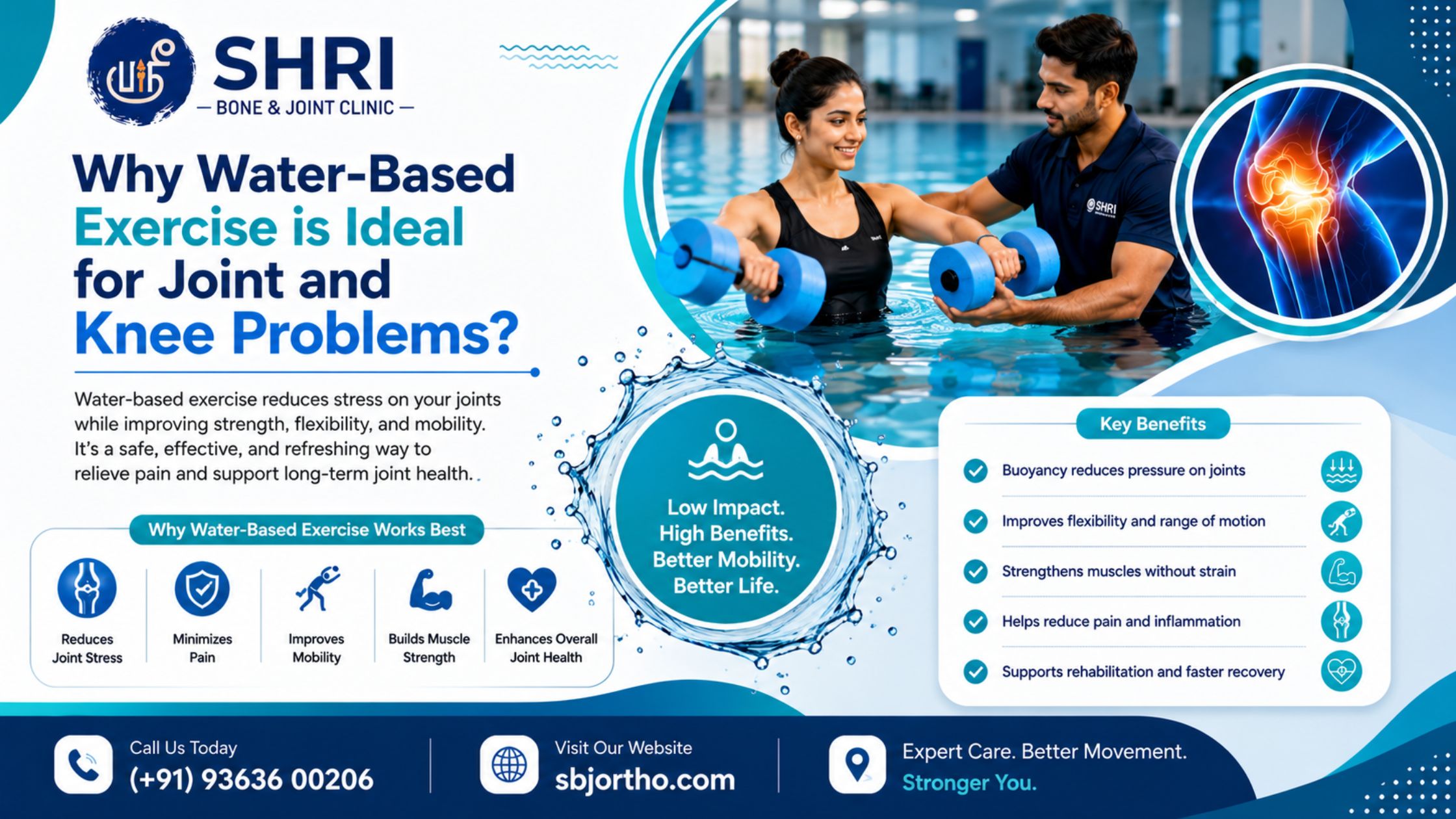
Water-based rehabilitation and exercise programs have become increasingly popular because they allow people to move, strengthen, and exercise with much less stress on the joints. Whether someone is recovering from an injury, managing arthritis, dealing with knee pain, or trying to improve mobility, exercising in water offers unique advantages that are difficult to achieve on land.
Understanding why water works so well can help explain why aquatic rehabilitation is often recommended for people struggling with joint and knee problems.
Why Joint and Knee Problems Make Exercise Difficult
The knee is one of the most heavily used joints in the body.
Every step, squat, jump, and climb places force through the knee joint. In healthy individuals, the body manages these forces efficiently. However, when pain, injury, cartilage damage, arthritis, or weakness is present, even normal activities can become uncomfortable.
Joint pain often creates a cycle:
- Pain leads to reduced movement
- Reduced movement leads to weakness
- Weakness increases joint stress
- Increased stress causes more pain
Over time, this cycle can affect:
- Mobility
- Balance
- Muscle strength
- Confidence in movement
- Overall quality of life
Breaking this cycle is one of the primary goals of rehabilitation.
What is Water-Based Exercise?
Water-based exercise refers to physical activity performed in a therapeutic pool or controlled aquatic environment.
Unlike traditional exercise performed on land, water-based exercise uses the unique physical properties of water to support movement and rehabilitation.
Programs may include:
- Walking exercises
- Mobility exercises
- Strengthening activities
- Balance training
- Functional movement exercises
- Rehabilitation programs
These exercises are adapted to the individual’s condition and recovery goals.
The biggest difference is that water changes how the body experiences gravity and movement.
The Science Behind Why Water Helps
The effectiveness of water-based exercise comes from several natural properties of water.
Buoyancy
Buoyancy is the upward force provided by water.
When a person stands in water, a significant portion of their body weight is supported by the water itself.
Depending on water depth:
- Weight-bearing forces may be reduced substantially
- Pressure on painful joints decreases
- Movement becomes easier
For someone with knee pain, this can mean the difference between struggling to walk on land and being able to move comfortably in water.
Reduced Joint Loading
One of the main reasons people experience pain during exercise is because their joints are forced to absorb body weight repeatedly.
Water reduces this loading effect.
As a result:
- Knee joints experience less stress
- Hip joints experience less compression
- Pain during movement is often reduced
This allows individuals to remain active without placing excessive strain on the affected areas.
Natural Resistance
Water provides resistance in every direction.
Unlike weights that work primarily in one direction, water creates continuous resistance during movement.
This means muscles can be strengthened while placing less impact on the joints.
The faster a movement is performed, the greater the resistance becomes.
This allows exercises to be adjusted naturally according to ability and recovery stage.
Improved Balance and Stability
Many people with joint pain become hesitant to move because they fear falling or losing balance.
Water provides a safer environment for movement.
The support of the water helps:
- Improve confidence
- Reduce fear of movement
- Encourage more natural motion
This is particularly helpful for older adults and individuals recovering from injury.
Benefits of Water-Based Exercise for Knee Problems
Reduced Pain During Activity
Many patients find they can perform movements in water that would normally cause discomfort on land.
This allows rehabilitation to begin earlier and more comfortably.
Improved Knee Mobility
Gentle movement in water can help improve flexibility and range of motion without placing excessive stress on the joint.
This can be particularly beneficial for individuals experiencing stiffness.
Better Muscle Strength
Strong muscles help support and protect the knee joint.
Water resistance provides a safe way to strengthen:
- Quadriceps
- Hamstrings
- Gluteal muscles
- Calves
without exposing the knee to high-impact forces.
Improved Walking Mechanics
Walking in water allows patients to practice movement patterns with reduced joint loading.
This can help improve:
- Walking confidence
- Balance
- Functional mobility
Benefits for Arthritis and Joint Conditions
Water-based exercise is often recommended for people living with arthritis.
This is because it helps address several common arthritis-related challenges.
Reduced Joint Stress
The buoyancy of water reduces compressive forces on painful joints.
Improved Mobility
Regular movement in water can help maintain flexibility and reduce stiffness.
Enhanced Physical Activity Levels
Many individuals who struggle to exercise on land are able to remain active in water.
This helps improve overall fitness and function.
Better Quality of Life
Maintaining movement often improves confidence, independence, and participation in daily activities.
Who Can Benefit from Water-Based Exercise?
Water-based exercise may be suitable for:
- Individuals with knee pain
- People with arthritis
- Patients recovering from sports injuries
- Individuals with cartilage-related conditions
- Older adults with mobility limitations
- Patients recovering from surgery
- People struggling with weight-bearing activities
Suitability depends on the individual’s condition and rehabilitation goals.
Is Water-Based Exercise Better Than Land-Based Exercise?
This is one of the most common questions.
The answer is not necessarily.
Water-based exercise and land-based exercise serve different purposes.
Water-based exercise is particularly useful when:
- Pain limits movement
- Weight-bearing is difficult
- Early rehabilitation is needed
As recovery improves, land-based exercises are often introduced to continue building strength and function.
Many rehabilitation programs combine both approaches for the best results.
Common Misconceptions About Water-Based Rehabilitation
“It’s Only for Older Adults”
Water-based rehabilitation benefits people of all ages, including athletes and active individuals recovering from injury.
“It’s Too Easy to Be Effective”
Although movements may feel easier, water provides constant resistance that can challenge muscles significantly.
“It’s Only for Severe Problems”
Many people use aquatic exercise early in recovery to maintain activity and prevent loss of strength.
The Role of Water-Based Exercise in Long-Term Joint Health
One of the biggest advantages of water-based exercise is sustainability.
Many people find it easier to continue exercising in water because:
- Pain is reduced
- Movement feels more comfortable
- Confidence improves
Long-term consistency is often one of the most important factors in maintaining healthy joints and preventing future problems.
Conclusion
Water-based exercise offers a unique combination of support, resistance, and reduced joint stress that makes it particularly valuable for people dealing with knee pain and joint-related conditions.
By reducing the impact of gravity while still allowing muscles to work, aquatic rehabilitation creates an environment where movement becomes easier, safer, and more comfortable.
For many individuals, it provides an opportunity to stay active while protecting painful joints and supporting recovery. Patients interested in structured aquatic rehabilitation may benefit from learning more about Aquatherapy for Sports Injury in Chennai. Those looking to improve knee function and long-term joint support may also explore how Strength Training for Knee Pain in Chennai can complement water-based rehabilitation as part of a comprehensive recovery program.
FAQs
Why does exercise feel easier in water?
Water supports a portion of body weight through buoyancy. This reduces the amount of stress placed on the joints, making movement more comfortable.
Is water-based exercise suitable for arthritis?
Yes. Water-based exercise is commonly recommended for people with arthritis because it allows movement with less joint loading while still promoting strength and mobility.
Can water-based exercise help knee pain?
Many individuals with knee pain find that exercising in water allows them to move more comfortably while improving strength, flexibility, and overall function.
How often should aquatic exercise be performed?
The ideal frequency depends on the individual’s condition, goals, and rehabilitation plan. A healthcare professional can recommend an appropriate schedule.
Do I still need land-based exercise?
In many cases, yes. Water-based exercise is often used alongside land-based strengthening and functional training to achieve the best long-term outcomes.